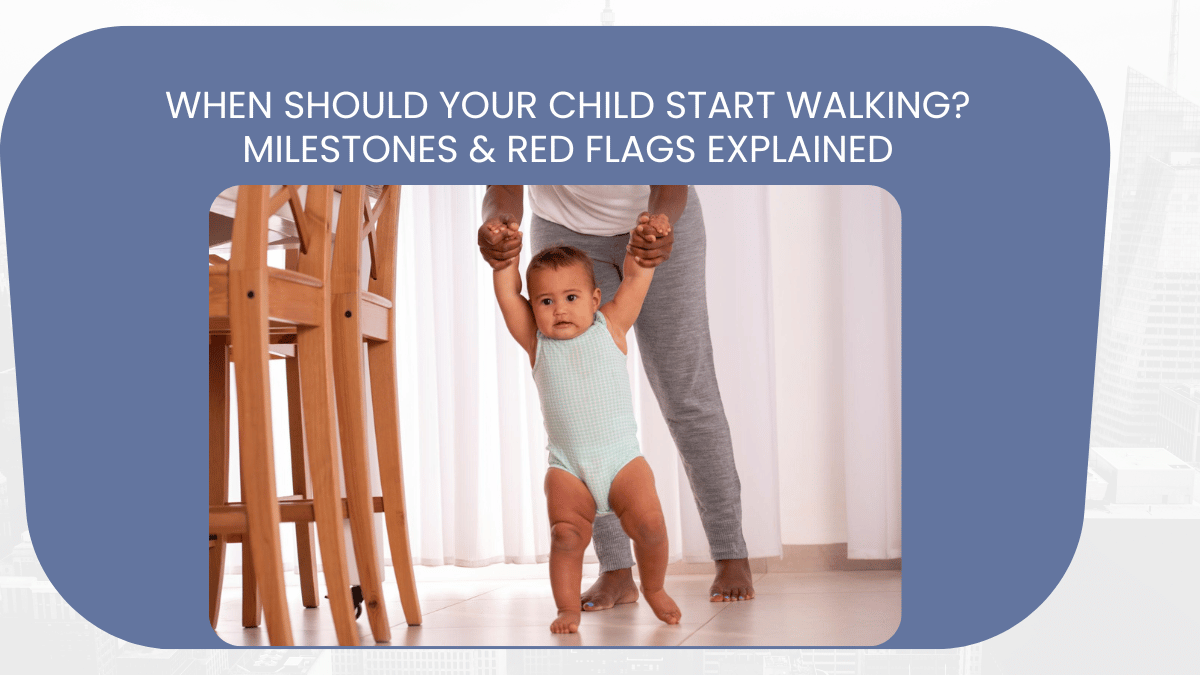
One of the most exciting milestones in a child’s development is their first step. Naturally, many parents wonder, “when do babies start walking?” or worry if their child seems slower than others. The truth is, every child develops at their own pace. While there is a general walking age for babies, slight variations are completely normal. However, understanding typical timelines and recognizing warning signs can help ensure your child’s development is on track.
In my experience as a paediatric physiotherapist, I often meet parents concerned about delayed walking in toddlers. Some children take their first steps early, while others need more time to build strength, balance, and coordination. I always reassure families that development is a journey but at the same time, I emphasize the importance of identifying signs of developmental delay walking early, so timely intervention can support better outcomes.
When Should a Baby Start Walking?
Parents frequently ask, “when should a baby start walking?”
Most babies begin walking between 9 to 15 months. This is considered the normal walking age for babies.
- Typical progression includes:
- Rolling and sitting (4–7 months)
- Crawling (6–10 months)
- Pulling to stand (8–12 months)
- Cruising (walking while holding furniture)
- Independent walking (9–15 months)
👉 So if you’re wondering, “is it normal if my baby is not walking at 1 year?”, the answer is yes—many babies walk after their first birthday.
Signs Your Baby Will Walk Soon
Before taking independent steps, babies show certain readiness cues. Common signs baby will walk soon include:
- Pulling themselves up to stand
- Cruising along furniture
- Standing briefly without support
- Attempting small steps with assistance
- Increased curiosity and mobility
👉 These signs indicate that your child is building the strength and confidence needed to walk.
Reasons for Delayed Walking in Babies
There are several reasons for delayed walking in babies, and most are not serious. Common child walking late causes include:
- Natural variation in development
- Premature birth
- Lack of opportunity for movement (excessive use of walkers or carriers)
- Muscle weakness or low tone
- Nutritional deficiencies (like vitamin D deficiency)
- Family history of late walking
👉 However, persistent delay should always be evaluated.
Signs of Developmental Delay Walking
It’s important to recognize signs of developmental delay walking that may require professional attention:
- Not standing with support by 12 months
- Not walking independently by 18 months
- Stiff or floppy muscle tone
- Asymmetrical movements (favoring one side)
- Lack of interest in movement or mobility
- If you notice these signs, consult a specialist for early assessment.
When Should You Be Concerned?
Parents should seek help if:
- Your child shows delayed walking in toddlers beyond 18 months
- There are other developmental delays (speech, social interaction)
- There is regression (loss of previously achieved skills)
- Early physiotherapy and guidance can make a significant difference.
👉 Supporting Your Child’s Walking Journey
To encourage walking:
- Provide safe space for free movement
- Avoid overuse of baby walkers
- Encourage barefoot walking indoors
- Engage in play that promotes standing and balance
- Ensure proper nutrition for bone and muscle development
- Support, patience, and encouragement are key.
Conclusion
Understanding what are walking milestones for babies helps parents feel confident and informed. While it’s natural to compare, every child develops at their own pace. If you’re wondering, “when do babies start walking?”, remember that a range of normal exists. However, recognizing delays early and seeking timely care ensures your child receives the best support. With the right guidance, most children go on to achieve this milestone successfully and thrive in their development journey.
Add a Comment