
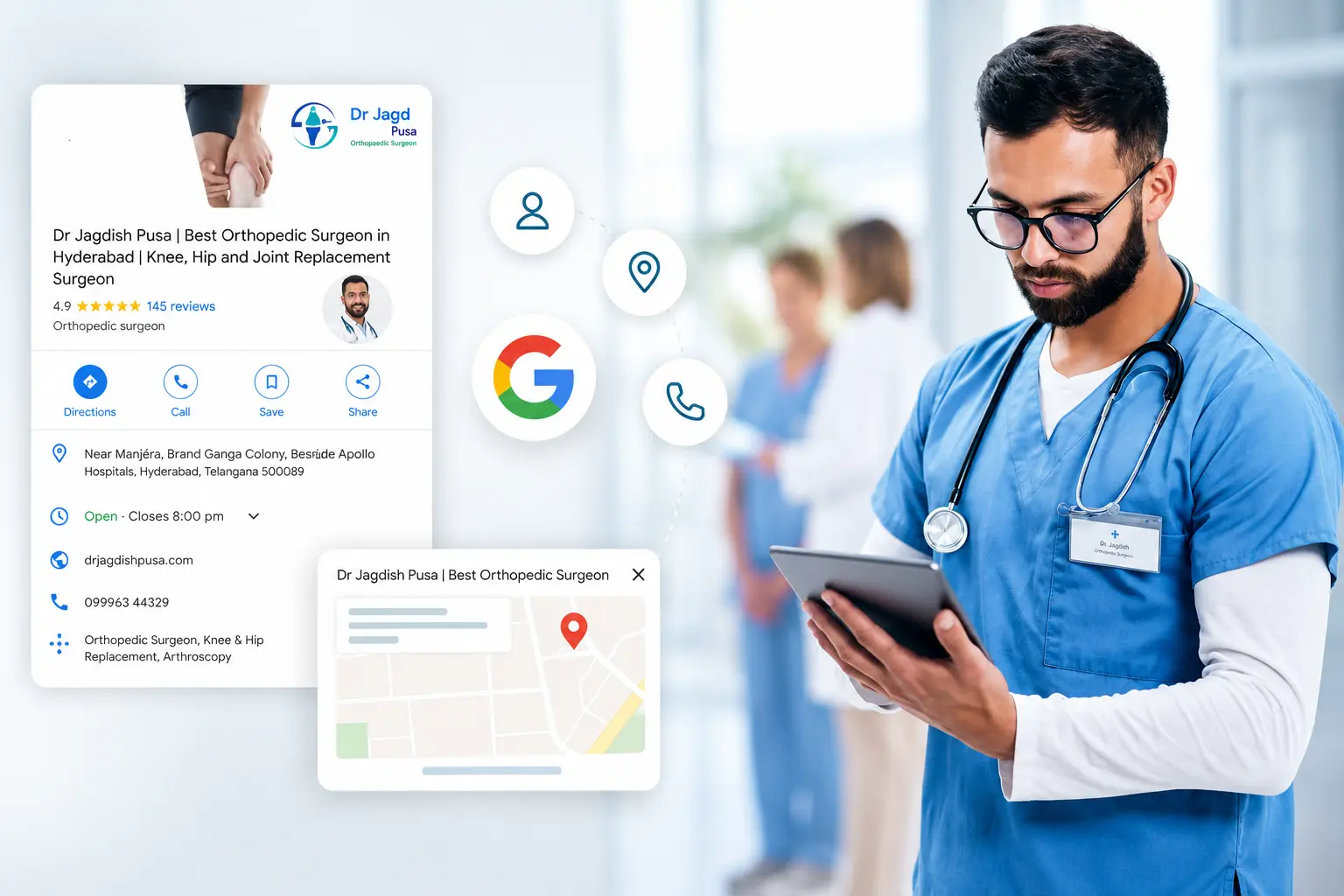
A doctor building a digital presence often pictures it as a collection of separate pages: a profile here, a few blogs there, an appointment page somewhere else. But a strong presence is not a collection. It is a connected structure. The connections between the pages – ‘how they link to one another form what’, is called a link map. It is one of the least visible parts of a digital presence and one of the most important.
What a link map is
A link map is the pattern of internal links that connect a doctor’s pages to one another. When a blog links to a related blog, when an article links back to the doctor’s profile, when the profile links out to appointment access - each of these is a thread. The full set of threads is the link map.
It is easiest to picture as a web rather than a list. A presence without a link map is a set of isolated pages, each standing alone, with no path between them. A presence with a good link map is a network; every page reachable from the others, every page aware of the rest. The pages may be the same. The structure connecting them is what differs.
Why a link map matters for patients
For a patient, a link map is the difference between a dead end and a journey. A patient rarely arrives where a doctor expects. They may land on a single blog, found through a search or a shared link, with no plan to go further.
What happens next depends entirely on the links. If that blog connects to the doctor’s profile, the patient can move from a useful answer to learning who wrote it. From the profile, a link can lead to related articles, and to appointment access. A good link map turns one accidental visit into a path - answer, to author, to trust, to booking. Without it, the patient reads one page and leaves, because there was nowhere else to go.
Why a link map matters for search and AI
Search engines and AI systems read links to understand structure. When they crawl a doctor’s pages, the links between those pages tell them how everything relates - which blog supports which, which pages point back to the central profile, what the doctor’s main areas of focus are.
A well-linked presence is one a search engine can understand fully and confidently. Links also pass credibility between pages: when a strong profile links to a blog, some of that authority flows to the blog, and a cluster of well-connected articles on one topic signals genuine depth in that area. A presence of isolated, unlinked pages gives a search engine far less to work with. The link map is much of how a digital presence becomes legible to the systems that surface it.
How a Practice Hub builds the link map
The difficulty with link maps is that, built by hand, they are easy to neglect. Remembering to connect every new article to the profile, to related blogs and to appointment access - every time, is the kind of task that quietly slips.
A Practice Hub removes that burden by building the link map structurally. Profile, blogs, FAQs and appointment access are designed as one connected system, so every new article is woven into the existing structure as it is published: linked to what relates to it, linked back to the doctor’s identity. The doctor writes the content; the connected structure forms on its own. This is the quiet value of a Practice Hub. It does not just hold a doctor’s pages. It connects them into a presence that both patients and search engines can move through with ease.