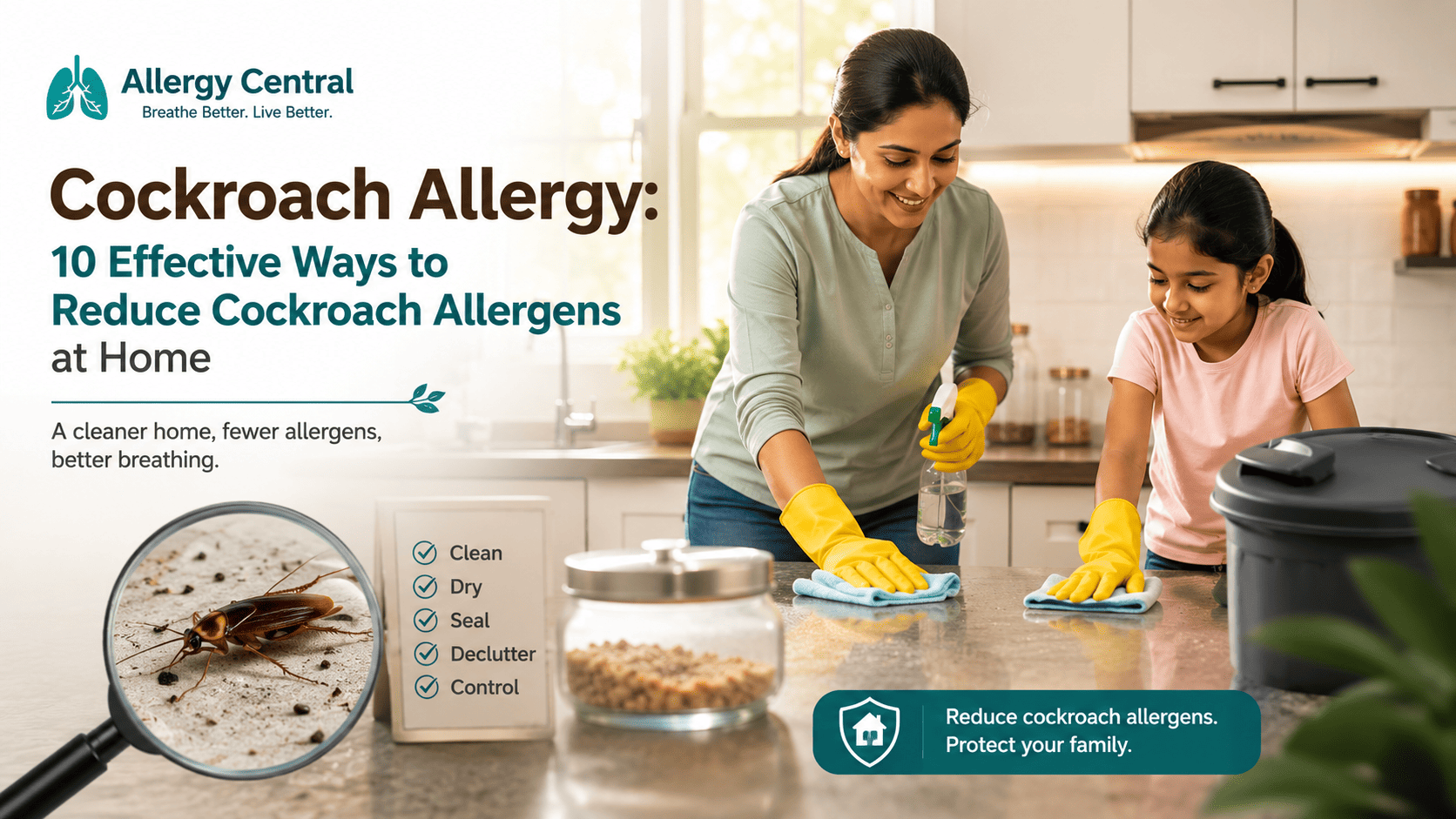
Cockroaches are more than an unpleasant household pest. Their droppings, saliva, secretions and body parts contain proteins that can trigger allergic reactions and worsen asthma symptoms in sensitized individuals.
For people with cockroach allergy or asthma, reducing exposure is an important part of creating a healthier indoor environment.
How Do Cockroaches Trigger Allergies?
Cockroach allergens can accumulate in household dust, particularly in areas where cockroaches live and feed. Exposure may contribute to wheezing, coughing and asthma symptoms, especially in people who are sensitized.
Simply killing visible cockroaches may not be enough. Their allergens can remain in the environment, so effective control should combine cleaning, moisture control, sealing entry points and appropriate pest management.
10 Ways to Reduce Cockroach Allergens
- Keep kitchens clean – Wipe counters and clean food spills promptly.
- Don't leave food exposed – Store food in tightly sealed containers.
- Remove crumbs and leftovers – Clean dishes and food waste regularly.
- Keep garbage covered – Use closed waste bins and empty them regularly.
- Control moisture – Repair leaking taps and pipes and keep damp areas dry.
- Seal cracks and gaps – Check cabinets, walls, plumbing openings and skirting.
- Reduce clutter – Remove cardboard boxes, paper piles and other hiding places.
- Clean affected areas carefully – Regularly clean floors, cabinets and surfaces where allergens may accumulate.
- Use safer pest-control approaches – Integrated Pest Management (IPM) combines sanitation, exclusion and targeted pest control while reducing unnecessary pesticide exposure.
- Avoid unnecessary sprays and foggers – These can irritate the airways and may trigger asthma symptoms.
Can Cockroach Allergy Be Tested?
Yes. If symptoms repeatedly occur in environments with cockroach exposure, an allergy specialist may consider skin-prick testing or blood-based specific IgE testing, depending on the clinical history.
Frequently Asked Questions
What are the symptoms of cockroach allergy?
Symptoms may include sneezing, nasal congestion, coughing, wheezing and asthma symptoms in sensitized individuals.
Can cockroaches trigger asthma?
Yes. Cockroach allergens can trigger or worsen asthma symptoms in sensitized people.
Does killing cockroaches remove the allergens?
Not necessarily. Allergens can remain in household dust and surfaces even after cockroaches are eliminated. Environmental cleaning and sustained pest control are important.
Are cockroach sprays safe for people with asthma?
Some sprays and foggers can irritate the airways and trigger asthma. Prefer appropriate, targeted pest-management methods and follow product safety instructions.
How can I prevent cockroaches at home?
Remove food and water sources, store food properly, clean spills quickly, reduce clutter and seal cracks and openings where cockroaches can enter.
For cockroach allergy, prevention starts with the environment.
Keep your home clean, dry, sealed and free from food sources, and use appropriate integrated pest management when infestation occurs.
If you experience persistent allergy or asthma symptoms, consult an allergy specialist at Allergy Central, Indiranagar, Bengaluru for appropriate evaluation and management.



Add a Comment