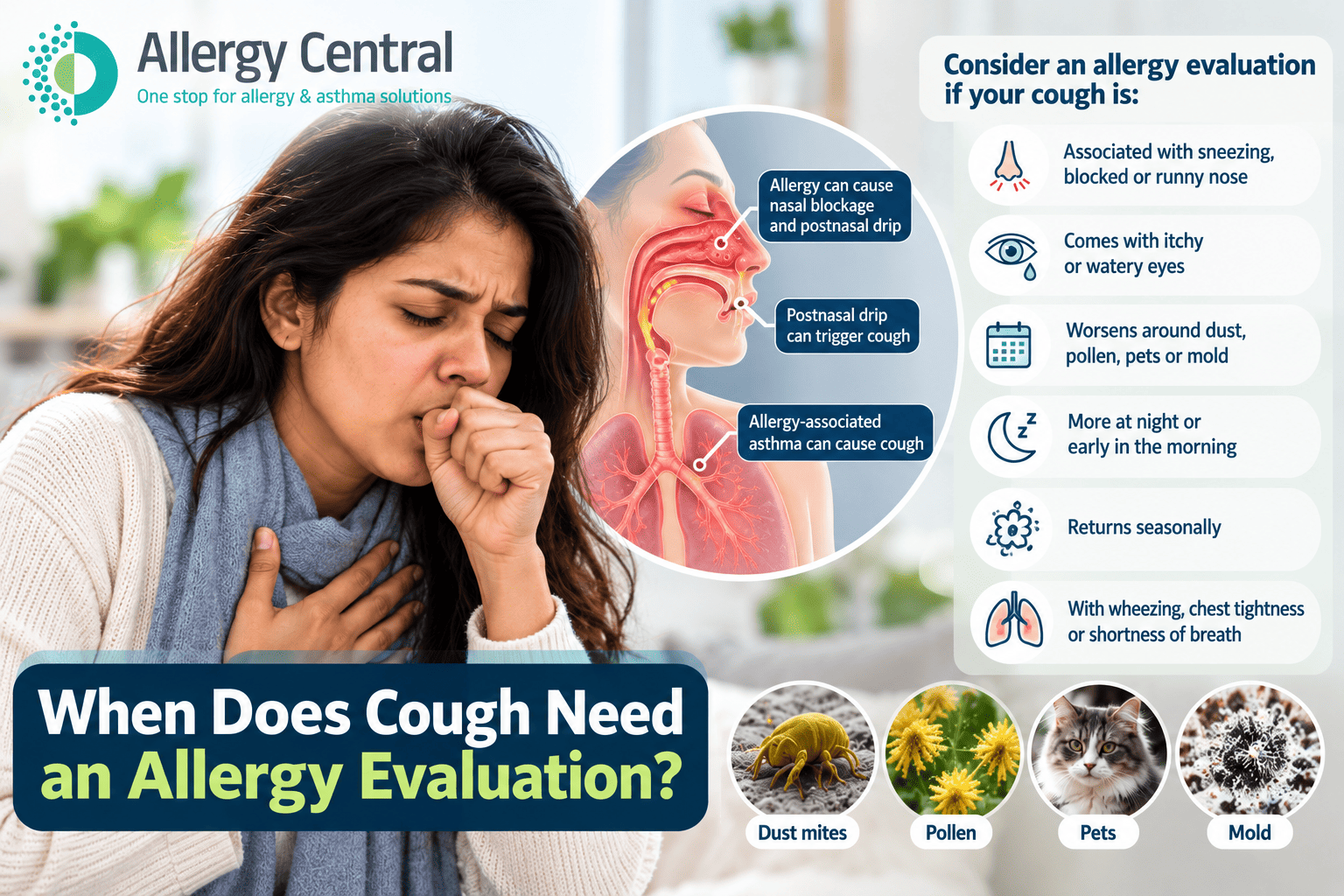
A cough is a normal protective reflex that helps clear the throat and airways. But when a cough keeps returning, lasts for weeks, or appears around certain triggers, it may be worth looking beyond a simple infection.
Allergies can contribute to cough, particularly through postnasal drip, allergic rhinitis or asthma.
When Could Cough Be Related to Allergy?
An allergy evaluation may be useful when your cough is associated with:
- Repeated sneezing or an itchy, blocked nose
- Clear runny nose or postnasal drip
- Itchy or watery eyes
- Cough that worsens around dust, pollen, pets or mold
- Cough that returns seasonally
- Night-time or early-morning cough
- Wheezing, chest tightness or shortness of breath
Sometimes cough-variant asthma can cause cough as the main symptom, even without obvious wheezing.
How Long Is Too Long?
A cough lasting more than 8 weeks in adults or more than 4 weeks in children is considered chronic and deserves medical evaluation.
However, you do not necessarily need to wait that long if the cough is recurrent, disturbing sleep, affecting daily activities, or accompanied by breathing symptoms.
What Happens During an Allergy Evaluation?
Your doctor may review your cough pattern, nasal symptoms, environmental exposures, medications and medical history. Depending on the suspected cause, evaluation may include spirometry or other lung-function tests, and allergy testing such as skin-prick or specific IgE blood testing.
Remember, not every chronic cough is caused by allergy. Acid reflux, infections, medications and other respiratory conditions can also cause persistent cough.
FAQs
1. Can allergies cause a cough?
Yes. Allergies can contribute to coughing through nasal inflammation, postnasal drip or allergy-associated asthma.
2. Is a dry cough a sign of allergy?
It can be, but a dry cough has many possible causes. The overall symptom pattern is important.
3. Can asthma cause only a cough?
Yes. Cough-variant asthma can present mainly with coughing, without obvious wheezing.
4. Should I get an allergy test for a persistent cough?
Testing may be appropriate when your symptoms suggest an allergic trigger. An allergy specialist can decide which tests are useful.
5. When should I seek urgent medical care?
Seek prompt medical attention for cough associated with significant breathing difficulty, chest pain, coughing up blood, fainting or other severe symptoms.
Final Thoughts
A cough that keeps coming back should not always be treated as “just a cough.” If it occurs with nasal allergy symptoms, specific environmental triggers or asthma-like symptoms, an allergy evaluation may help identify the underlying cause.
Visit Allergy Central, Indiranagar, Bangalore, for professional evaluation of persistent cough, allergies, asthma and related respiratory symptoms.



Add a Comment