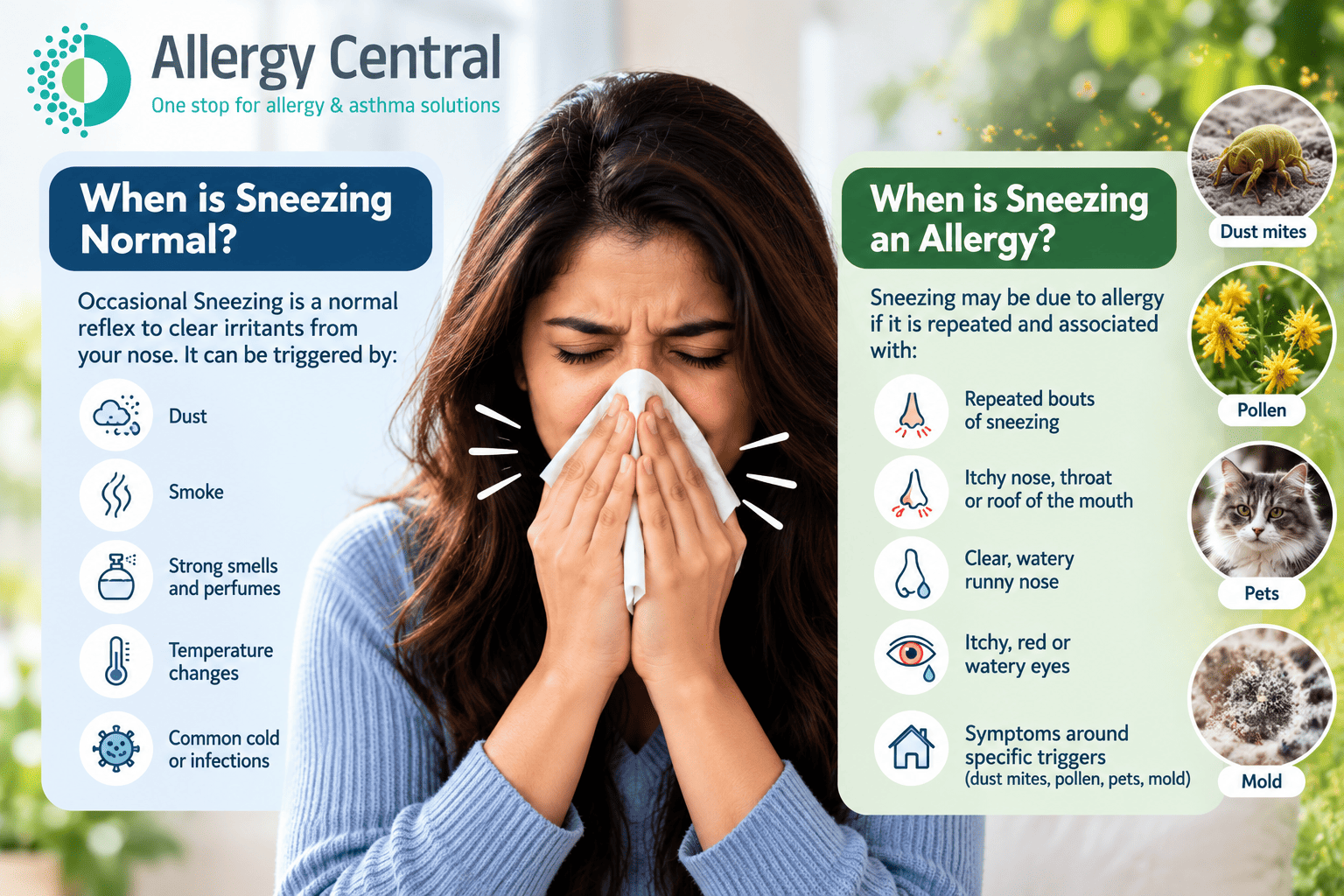
Sneezing is one of the body's natural ways of clearing irritants from the nose. An occasional sneeze is completely normal. But if you find yourself sneezing repeatedly, especially in the morning or around certain triggers, it may be a sign of allergic rhinitis.
Why Do We Sneeze?
Sneezing can happen when the inside of your nose is irritated by dust, smoke, strong smells, temperature changes, infections or allergens. A common cold can also cause sneezing and a runny or blocked nose.
So, sneezing does not automatically mean you have an allergy.
When Is Sneezing More Likely to Be an Allergy?
Allergic sneezing often has a recognisable pattern:
- Repeated bouts of sneezing
- Itchy nose, throat or roof of the mouth
- Clear, watery runny nose
- Blocked nose
- Itchy, red or watery eyes
- Symptoms that return around specific triggers such as dust mites, pollen, pets or mold
- Symptoms without fever
Sneezing is particularly common in allergic rhinitis, and itching of the nose and eyes strongly supports an allergic cause.
Sneezing: Cold or Allergy?
A cold commonly causes sneezing along with sore throat, cough, tiredness, body aches or fever and usually improves within about a week. Allergies can continue for weeks or return whenever you encounter the trigger.
However, symptoms can overlap, so the pattern alone may not always provide the answer.
When Should You Consider Allergy Testing?
If sneezing is frequent, keeps returning, affects sleep or daily activities, or consistently occurs around particular environments, an allergy evaluation may be useful.
An allergy specialist can review your symptoms and, when appropriate, use skin-prick testing or specific IgE blood testing to identify relevant allergens.
FAQs
1. Is sneezing every day normal?
Occasional sneezing is normal. Frequent or persistent sneezing may need evaluation, particularly when accompanied by nasal or eye symptoms.
2. How many sneezes indicate an allergy?
There is no specific number. Repeated sneezing together with itching, watery eyes and clear nasal discharge is more suggestive of allergy.
3. Can dust cause sneezing without an allergy?
Yes. Dust and other airborne irritants can trigger nasal symptoms even without an allergic reaction.
4. Does allergy cause fever?
Fever is not typical of allergic rhinitis. Fever, body aches or feeling unwell may point more toward an infection.
5. Should I get an allergy test for frequent sneezing?
If symptoms are recurrent or trigger-related, an allergy specialist can determine whether testing would be appropriate.
Final Thoughts
Sneezing is normal—but frequent, repetitive sneezing with an itchy nose or watery eyes may be your body's response to an allergen. Identifying the cause can help you manage symptoms rather than simply treating them repeatedly.
Visit Allergy Central, Indiranagar, Bangalore, for professional evaluation of sneezing, allergic rhinitis and other allergy-related symptoms.


Add a Comment