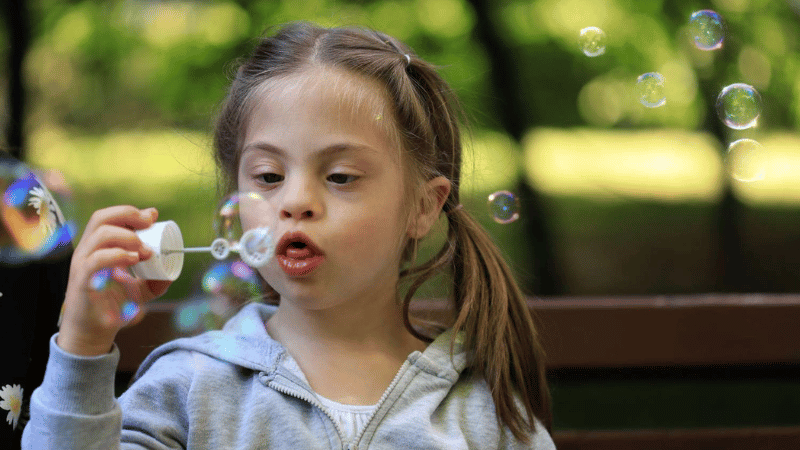
Learning that your child has Down syndrome can bring many questions about their health, development, education and future. With the right information, regular medical care and supportive interventions, families can help their children learn, participate in everyday activities and reach their individual potential.
Down syndrome is a genetic condition, and every child’s needs and abilities are different. Understanding the condition early can help parents make informed decisions about their child’s care.
What Is Down Syndrome?
Down syndrome is a genetic condition caused by extra genetic material from chromosome 21. It can influence physical growth, learning, muscle tone and development.
There are three main types:
• Trisomy 21: The most common type, accounting for approximately 95% of cases.
• Translocation Down syndrome: Extra chromosome 21 material is attached to another chromosome. Some cases are inherited.
• Mosaic Down syndrome: Only some cells have the extra chromosome 21 material.
A chromosome analysis, usually performed using a blood sample, can confirm the diagnosis and identify the type. Genetic counselling may be recommended, particularly when a translocation is identified.
Important: Down syndrome is not caused by something a parent did during pregnancy. Parents should not blame themselves.
What Health Checks Does a Child With Down Syndrome Need?
Children with Down syndrome have a higher likelihood of certain medical conditions. Regular follow-up helps identify concerns early and arrange appropriate treatment.
1. Heart health
Congenital heart defects are relatively common. An echocardiogram and paediatric cardiac assessment are important after diagnosis, even if no obvious symptoms are present. Some heart conditions require monitoring, while others may need treatment or surgery.
2. Thyroid function
Thyroid problems, particularly an underactive thyroid, are more common in children with Down syndrome. Your doctor will recommend thyroid blood tests at the appropriate intervals, often beginning in infancy and continuing regularly throughout childhood.
3. Hearing and vision
Hearing difficulties can affect speech and language development. Regular hearing assessments are important, even when a child appears to respond to everyday sounds.
Eye examinations help detect conditions such as refractive errors, squint and cataracts. Glasses or other treatments may be recommended when needed.
4. Sleep and breathing
Obstructive sleep apnoea is more common in children with Down syndrome. Watch for loud snoring, restless sleep, pauses in breathing, unusual sleep positions or excessive daytime sleepiness. Your doctor may recommend a sleep study, including screening according to age-specific guidance.
5. Growth, feeding and development
Regular appointments help monitor growth, feeding, muscle tone, motor skills, communication and learning. Your doctor may also recommend other investigations based on your child’s symptoms and age.
The exact screening schedule should be individualised with your child’s paediatrician.
Why Is Early Intervention Important?
Children with Down syndrome may develop certain skills more slowly and can benefit from support tailored to their needs.
• Physiotherapy: Supports movement, balance, strength and motor milestones such as sitting, standing and walking.
• Occupational therapy: Helps develop fine motor skills and everyday activities, including feeding, dressing and play.
• Speech and language therapy: Supports communication, understanding, speech and feeding skills when indicated.
• Developmental support: Helps children learn through play, structured activities and appropriate educational opportunities.
Early intervention can help build skills and participation. Therapy should be individualised rather than based on a fixed timetable or comparison with other children.
Before beginning vigorous physical activities, ask your doctor whether any precautions or assessments are needed, particularly if there are concerns about the neck or spine.
How Can Parents Support Their Child at Home?
Everyday interactions are valuable opportunities for learning.
• Talk, read and sing together regularly.
• Use simple language, gestures, pictures and repetition when helpful.
• Encourage play, exploration and age-appropriate independence.
• Practise skills recommended by your child’s therapists.
• Celebrate progress without comparing your child with others.
• Include your child in family, school and community activities.
Avoid assuming that your child cannot learn or achieve a particular milestone. Equally, remember that every child has an individual developmental path and may need different levels of support.
What Support and Rights Are Available in India?
Families can ask their doctor or local disability-support services about:
• Disability certification: Eligibility and assessment under the Rights of Persons with Disabilities (RPwD) Act, 2016.
• Rashtriya Bal Swasthya Karyakram (RBSK): Government child-health screening and referral services, with availability depending on local implementation.
• National Trust resources: Information on eligible schemes and support for people with specified developmental disabilities.
• Educational support: School accommodations, inclusive education options and alternative learning pathways where appropriate.
Eligibility, benefits and procedures vary. Check current requirements with the relevant government office or authorised service provider.
Frequently Asked Questions
1. Can a child with Down syndrome walk, talk and attend school?
Many children develop these skills, although the timing and level of support vary. Individualised therapy, health care and educational support can help children participate and learn.
2. Is Down syndrome inherited?
Most cases result from a chance chromosome event and are not inherited. Some translocation cases can be inherited, so genetic counselling and parental chromosome testing may be recommended in selected cases.
3. Does every child with Down syndrome need heart surgery?
No. Some children have no heart defect, some require monitoring, and others need medical or surgical treatment depending on the specific condition.
4. How often should my child have health check-ups?
Children need regular, age-appropriate health supervision, including recommended heart, thyroid, hearing, vision, sleep and developmental assessments. Your paediatrician can provide an individual follow-up schedule.
5. Can early therapy make a difference?
Early intervention can support communication, movement, daily living skills and learning. The type and frequency of therapy should be guided by the child’s needs and progress.
Final Thoughts
A diagnosis of Down syndrome does not define a child’s entire future. Children deserve opportunities to learn, form relationships, participate in their communities and develop their abilities with dignity and respect.
Regular medical monitoring, early intervention, family involvement and appropriate educational support can make a meaningful difference. The most useful first step is to understand your child’s individual needs and build a care plan with the right professionals.
For guidance on your child’s health, developmental milestones and follow-up care, consult Dr. Balachandra B V at Chirayu Multispeciality Clinic, Kasturi Nagar, Bangalore.



Add a Comment