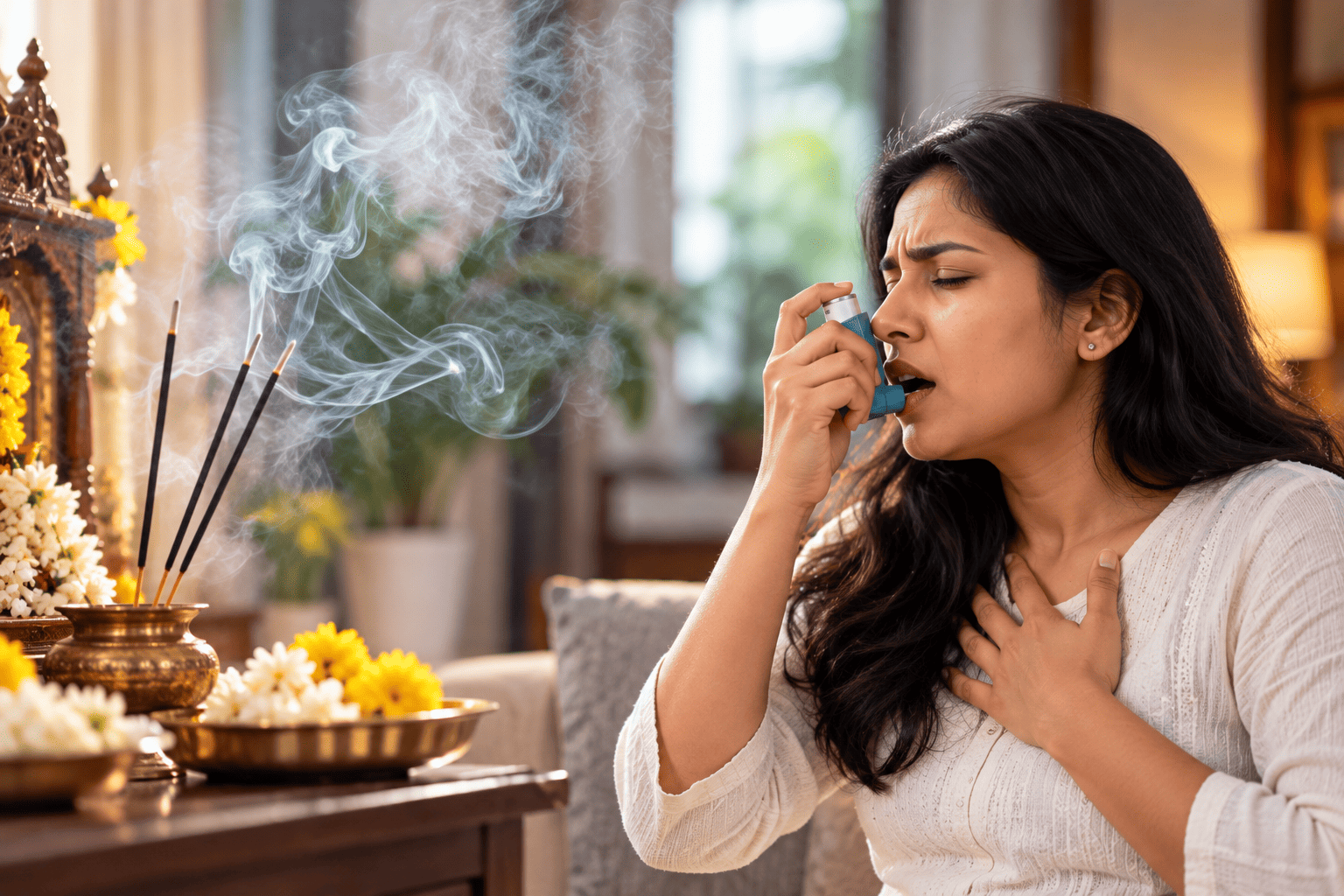
Incense sticks, or agarbatti, are commonly used during daily prayers and religious ceremonies in Indian homes. However, have you noticed coughing, sneezing or breathing discomfort when incense is burning?
Yes, incense stick smoke may trigger asthma symptoms in some people. Smoke contains fine particles and combustion products that can irritate sensitive airways, particularly in people with asthma or other respiratory conditions.
How Can Incense Smoke Affect Your Airways?
Asthma causes inflammation and increased sensitivity of the airways. Exposure to smoke and airborne irritants may worsen this sensitivity and trigger symptoms such as:
- Coughing, especially during or after exposure
- Wheezing or noisy breathing
- Chest tightness
- Shortness of breath
- Worsening of existing asthma symptoms
Not everyone reacts in the same way. Incense smoke may act as an irritant rather than a true allergen, so symptoms do not automatically mean you have an incense allergy.
Who Should Be More Careful?
People with asthma, children with sensitive airways, and individuals who notice symptoms around smoke or strong fragrances should take extra care.
Burning several incense sticks in a small, poorly ventilated room may increase exposure. Remember that even natural or traditionally used products produce smoke when burned.
5 Ways to Reduce Exposure
1. Avoid burning incense indoors if it triggers coughing, wheezing or breathing discomfort.
2. Keep the room well ventilated when smoke-producing activities cannot be avoided.
3. Avoid direct exposure. Keep children and people with asthma away from burning incense and accumulated smoke.
4. Never ignore recurring symptoms. Note whether symptoms occur during prayers or other smoke exposure and discuss the pattern with your doctor.
5. Follow your asthma action plan. Continue prescribed controller medication and use your reliever as directed. Do not stop or change treatment without medical advice.
Frequently Asked Questions
1. Can agarbatti trigger an asthma attack?
Yes. Its smoke may trigger symptoms or an asthma flare-up in susceptible individuals.
2. Is incense smoke an allergen?
Not necessarily. It can irritate the airways without causing a specific allergic reaction.
3. Are herbal or natural incense sticks safer?
Not automatically. Burning them still produces smoke and airborne particles.
4. Should children with asthma be exposed to incense smoke?
It is best to minimise their exposure, particularly if they develop symptoms around smoke.
5. When should I seek medical help?
Seek urgent care for severe breathlessness, difficulty speaking, bluish lips or rapidly worsening symptoms.
Final Thoughts
Religious and cultural practices are important to many families, but protecting respiratory health matters too. If incense smoke repeatedly triggers symptoms, reducing exposure is a sensible step.
Visit Dr. Balachandra B V at Chirayu Multispeciality Clinic, Kasturi Nagar, Bangalore, for professional evaluation of asthma, allergies and recurring respiratory symptoms.
This article is for educational purposes and does not replace individual medical advice.



Add a Comment