Hello! I am Dr. Balachandra.
Many patients come to me with a history of severe reactions to medications or insect stings, yet their routine allergy tests are negative. In such situations, we sometimes need a more sensitive test called the Intradermal Allergy Test.
Think of it as a "deeper investigation" when we strongly suspect an allergy but need more evidence.
What is an Intradermal Allergy Test?
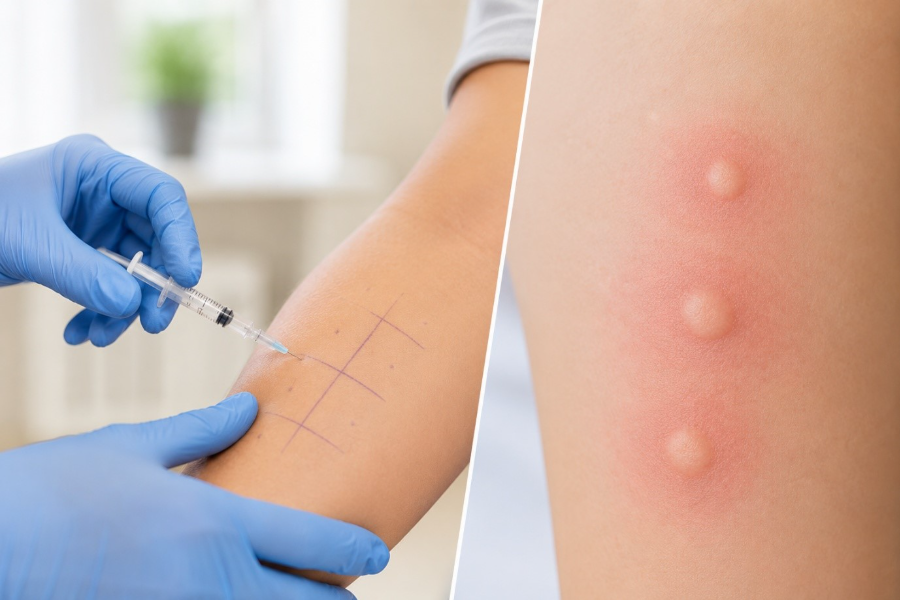
An Intradermal Allergy Test is a specialized allergy test in which a tiny amount of allergen is given as a small injection just beneath the skin.
The test helps identify allergies that may not always be detected through a standard Skin Prick Test.
It is commonly used for:
- Drug Allergy
- Penicillin allergy
- Certain medication reactions
- Insect venom allergy (bee, wasp, and other stinging insects)
How is the Test Performed?
The procedure is simple and usually takes less than an hour.
Step 1: Preparation
The skin is cleaned, usually on the forearm.
Step 2: Injection
A very small quantity of allergen is injected into the superficial layer of the skin using a fine needle.
Step 3: Observation
The site is monitored for 15–30 minutes.
If a raised bump (wheal) and surrounding redness (flare) develop, it may indicate allergic sensitization.
Why Not Just Do a Skin Prick Test?
A Skin Prick Test remains the first-line allergy test for most patients.
However, an Intradermal Allergy Test may be recommended when:
- Skin prick results are negative
- Clinical suspicion remains high
- Detailed evaluation for drug allergy is required
- Investigating insect venom allergy
- More sensitive testing is needed
Is the Test Safe?
Yes, when performed by trained allergy specialists.
Most reactions are mild and may include:
- Temporary redness
- Mild itching
- Small swelling at the test site
Because the test uses allergens directly, it should always be performed in a medical setting equipped to handle rare allergic reactions.
Preparing for the Test
To ensure accurate results:
- Stop antihistamines at least 7 days before testing
- Inform your doctor about all current medications
- Share details of previous allergic reactions
- Follow all pre-test instructions carefully
When is an Intradermal Allergy Test Helpful?
This test is particularly valuable for patients who have:
- Suspected drug allergy
- Previous reactions to antibiotics
- Penicillin allergy history
- Severe reactions to bee or wasp stings
- Inconclusive skin prick test results
FAQs
1. What is an Intradermal Allergy Test?
An Intradermal Allergy Test involves injecting a small amount of allergen beneath the skin to detect allergic sensitivity.
2. Is an Intradermal Allergy Test more accurate than a Skin Prick Test?
It is generally more sensitive for certain allergies, particularly drug allergy and insect venom allergy.
3. Is the test painful?
Most patients feel only a mild sting during the injection, which lasts a few seconds.
4. Can Intradermal Testing diagnose Drug Allergy?
Yes. It is commonly used as part of the evaluation for suspected drug allergy, including certain antibiotic allergies.
5. Why is Intradermal Testing used for Insect Venom Allergy?
Because it is highly sensitive and helps identify allergies to bee, wasp, and other stinging insect venoms.
Final Thoughts
The Intradermal Allergy Test is an important tool when routine allergy testing does not provide clear answers. It helps identify medication and insect sting allergies with greater sensitivity, allowing safer treatment decisions in the future.
Contact Chirayu Multispeciality Clinic
Dr. Balachandra B V
Allergy & Asthma Specialist
Chirayu Multispeciality Clinic, Kasturi Nagar, Bangalore
For comprehensive allergy testing, drug allergy evaluation, insect venom allergy assessment, and personalized allergy care, book an appointment today.




Add a Comment