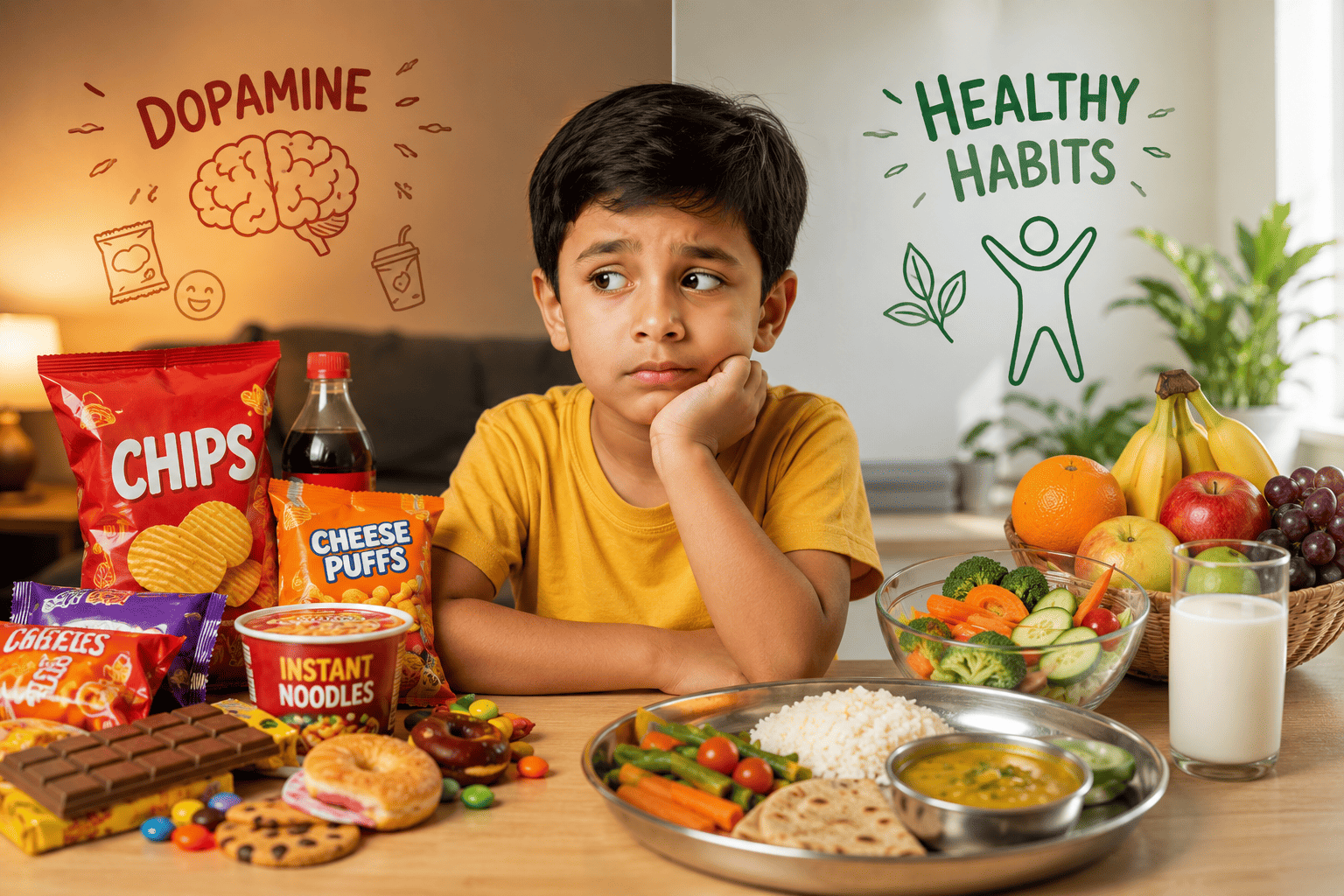
Aarav is eight years old.
Every evening after school, he walks into the kitchen and asks for the same thing—a brightly colored packet of chips.
His mother thinks, "It's only one packet. What harm can it do?"
The truth is, the story begins long before the packet is opened.
Why Packet Food Feels So Hard to Resist
Most Packet Food and Junk Food products are designed to be irresistible. The perfect combination of salt, sugar, fat, and flavor stimulates the brain's reward center and triggers the release of dopamine, the "feel-good" chemical.
The brain quickly learns:
"This feels good. Ask for it again."
Over time, simple home-cooked meals such as dal, rice, fruits, and vegetables start to feel less exciting. This is not because children are stubborn - it is because their taste preferences are being trained by highly processed foods.
What Happens Inside the Body?
While the brain enjoys the dopamine rush, the body faces a different reality.
Many packaged foods are:
- High in sugar
- High in salt
- High in unhealthy fats
- Low in fiber
- Low in essential nutrients
When consumed regularly, these foods can contribute to:
- Excess weight gain
- Childhood Overweight
- Poor eating habits
- Reduced appetite for healthy foods
- Dental cavities
- Increased risk of Fatty Liver
- Long-term lifestyle diseases
The effects are usually silent. They build slowly, month after month, year after year.
Building Healthy Eating Habits at Home
The goal is not perfection. The goal is consistency.
1. Make Healthy Food Easy to Reach
Keep:
- Fresh fruits
- Roasted chana
- Nuts (age appropriate)
- Homemade snacks
Visible and accessible.
2. Limit Junk Food, Don't Ban It
Children respond better to clear boundaries than strict restrictions.
A "once-a-week treat" works better than daily negotiations.
3. Skip Packaged Juices
Whole fruits provide:
- Fiber
- Vitamins
- Better satiety
Juices often provide mostly sugar.
4. Eat Together
Family meals encourage healthier food choices and better portion control.
5. Involve Children in Cooking
Children are far more likely to eat foods they help prepare.
Small Changes Create Big Results
Healthy eating is not built in one day.
It grows through small daily choices, repeated consistently.
One less packet.
One extra fruit.
One family meal.
That is how lifelong healthy habits are formed.
Frequently Asked Questions (FAQs)
Why do children prefer packet food over home food?
Packet foods are designed to stimulate dopamine release, making them more appealing than natural foods.
Can junk food cause overweight in children?
Yes. Regular consumption of junk food increases the risk of childhood overweight and obesity.
What is fatty liver in children?
Fatty liver occurs when excess fat accumulates in the liver, often linked to unhealthy diets and excess weight gain.
How often can children eat packaged snacks?
Limiting packet food to occasional consumption, such as once a week, is generally a healthier approach.
How can parents encourage healthy eating habits?
Offer nutritious foods consistently, eat together as a family, and involve children in meal preparation.
Contact Chirayu Multispeciality Clinic
If you are concerned about your child's diet, eating habits, overweight, growth, or nutritional health, consult:
👉 Dr. Balachandra B V, Consultant Pediatrician & Allergy Specialist Chirayu Multispeciality Clinic, Kasturi Nagar, Bangalore
Final Thought
Children don't learn healthy eating from lectures. They learn it from the food available at home, the habits they see every day, and the choices we make together as a family.
👉 Small shifts today can prevent obesity, fatty liver, and lifestyle diseases tomorrow.




Add a Comment