Hello! I am Dr. Balachandra.
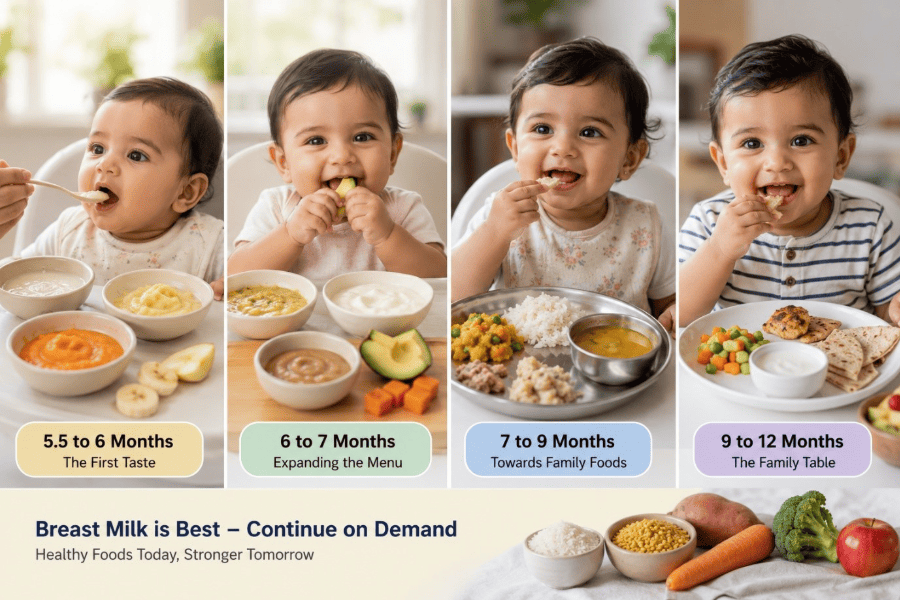
One of the most exciting milestones in a baby's life is starting Supplementary Feeding. Around the age of 6 months, your baby is ready to explore new tastes, textures, and nutrients beyond milk.
Many parents ask me:
"Doctor, what should I start first? How much should my baby eat?"
The answer is simple. Supplementary feeding should be a gradual journey. Remember, during the first year, Breast Milk (or formula milk) remains the most important source of nutrition. Solid foods are introduced to complement milk, not replace it.
Think of this guide as your practical Parental Guide and Diet Plan for introducing healthy foods safely and confidently.
General Rules to Remember
• Breast milk/formula remains the most important food. Continue feeding on demand.
• The 3-Day Rule: Introduce only one new food every 3 days to watch for allergies.
• No Salt, No Sugar: Avoid salt, sugar, and honey until after 1 year of age.
• Maintain Hygiene: Wash hands, utensils, and prepare fresh food every time.
• Focus on Nutrient-Rich Foods: Iron-rich and protein-rich foods become important as natural iron stores begin to reduce after 6 months.
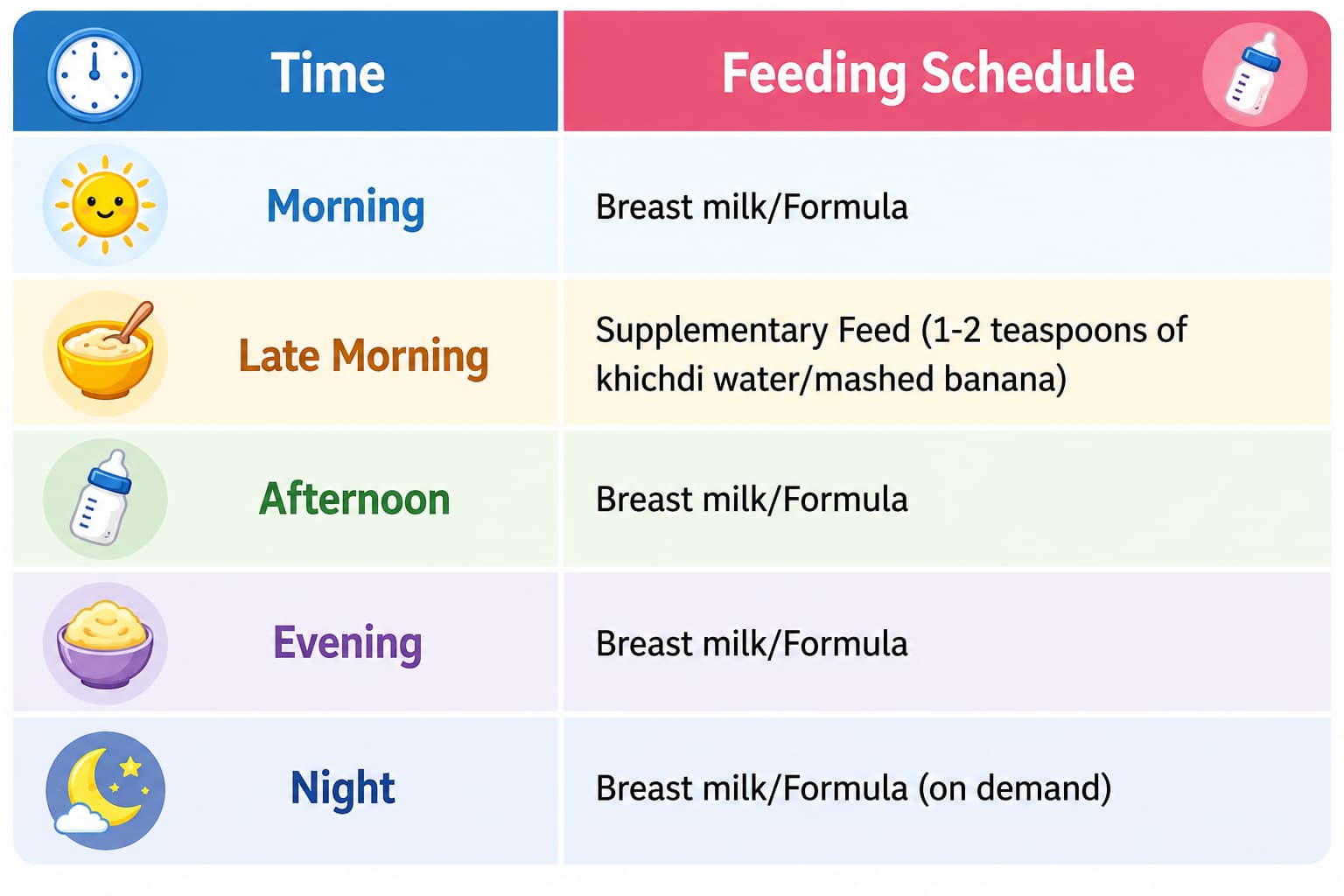
5.5 to 6 Months: The First Taste
At this stage, the goal is introduction, not quantity.
First Foods:
- Khichdi Water
- Mashed Banana
- Mashed Pumpkin
- Sweet Potato
- Rice Water (Kanji)
- Steamed & Mashed Apple or Pear
Feeding Schedule
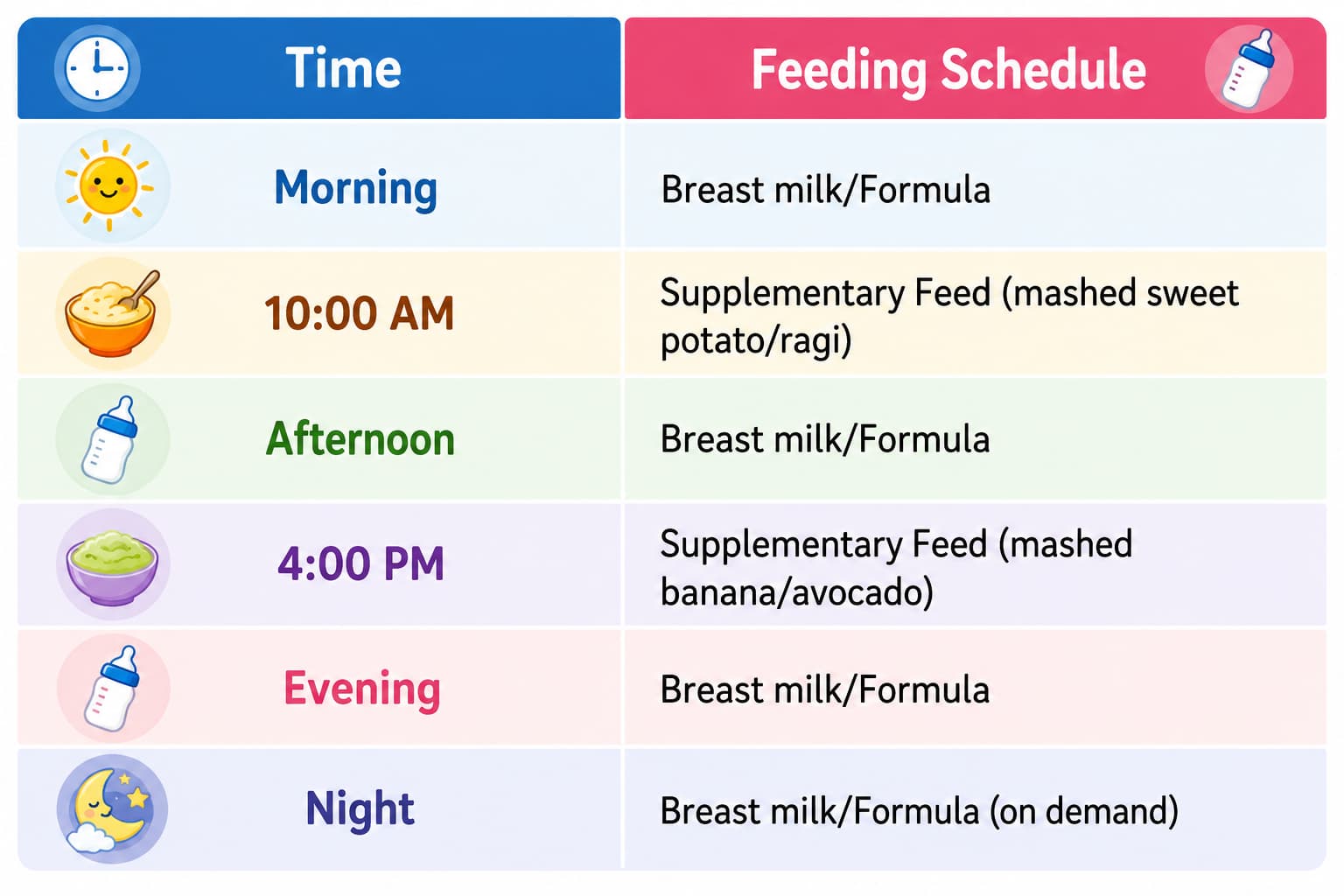
6 to 7 Months: Expanding the Menu
Introduce thicker textures and greater variety.
Foods to Introduce:
- Soft Moong Dal Khichdi
- Ragi Porridge
- Rice Cereal
- Plain Yogurt (Dahi)
- Mashed Avocado
Feeding Schedule
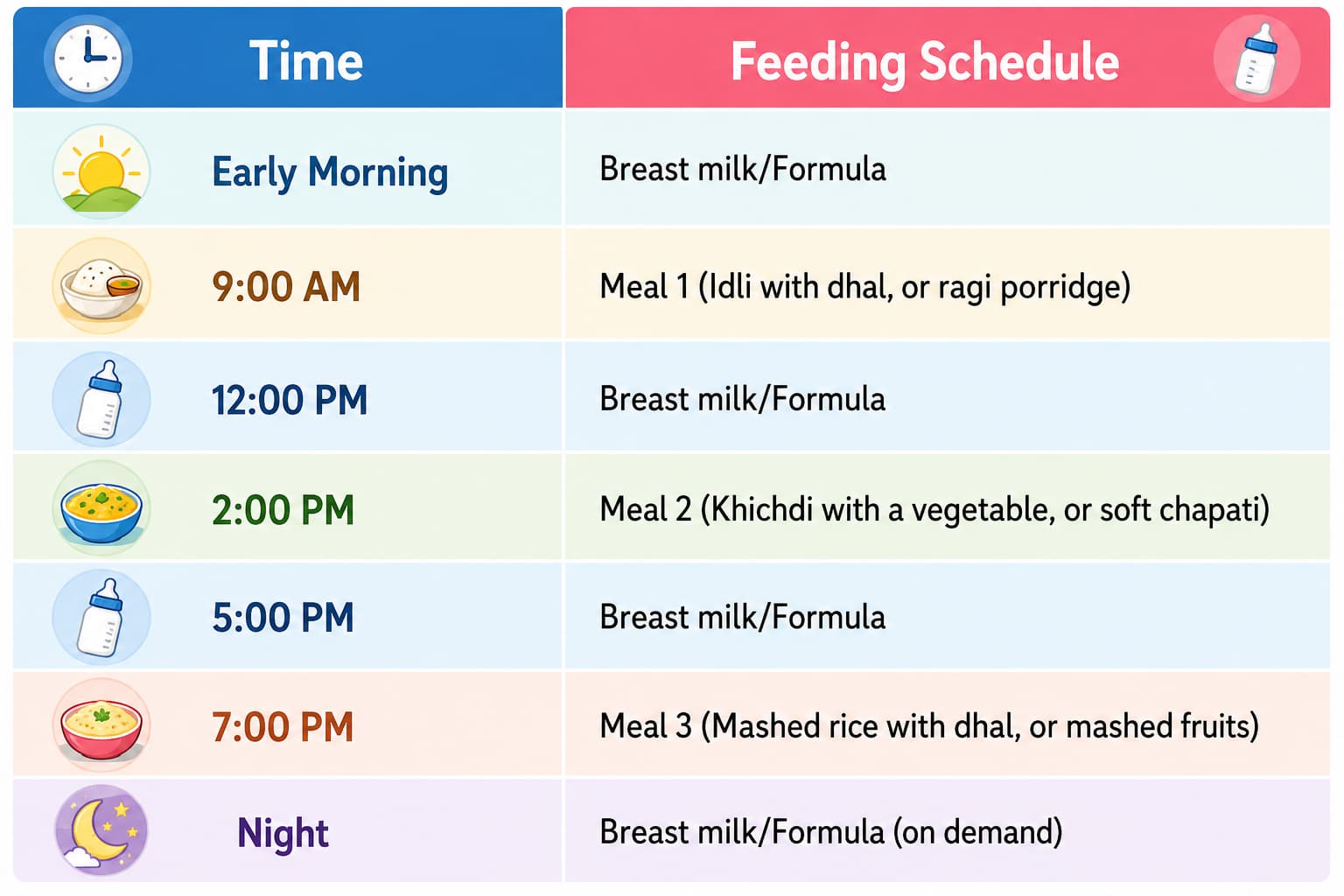
7 to 9 Months: Towards Family Foods
Your baby can now enjoy 2–3 supplementary meals daily.
Foods to Introduce:
- All fruits and vegetables
- Mashed dals and legumes
- Soft idli and dosa
- Well-cooked rice
- Finely minced chicken or fish (if applicable)
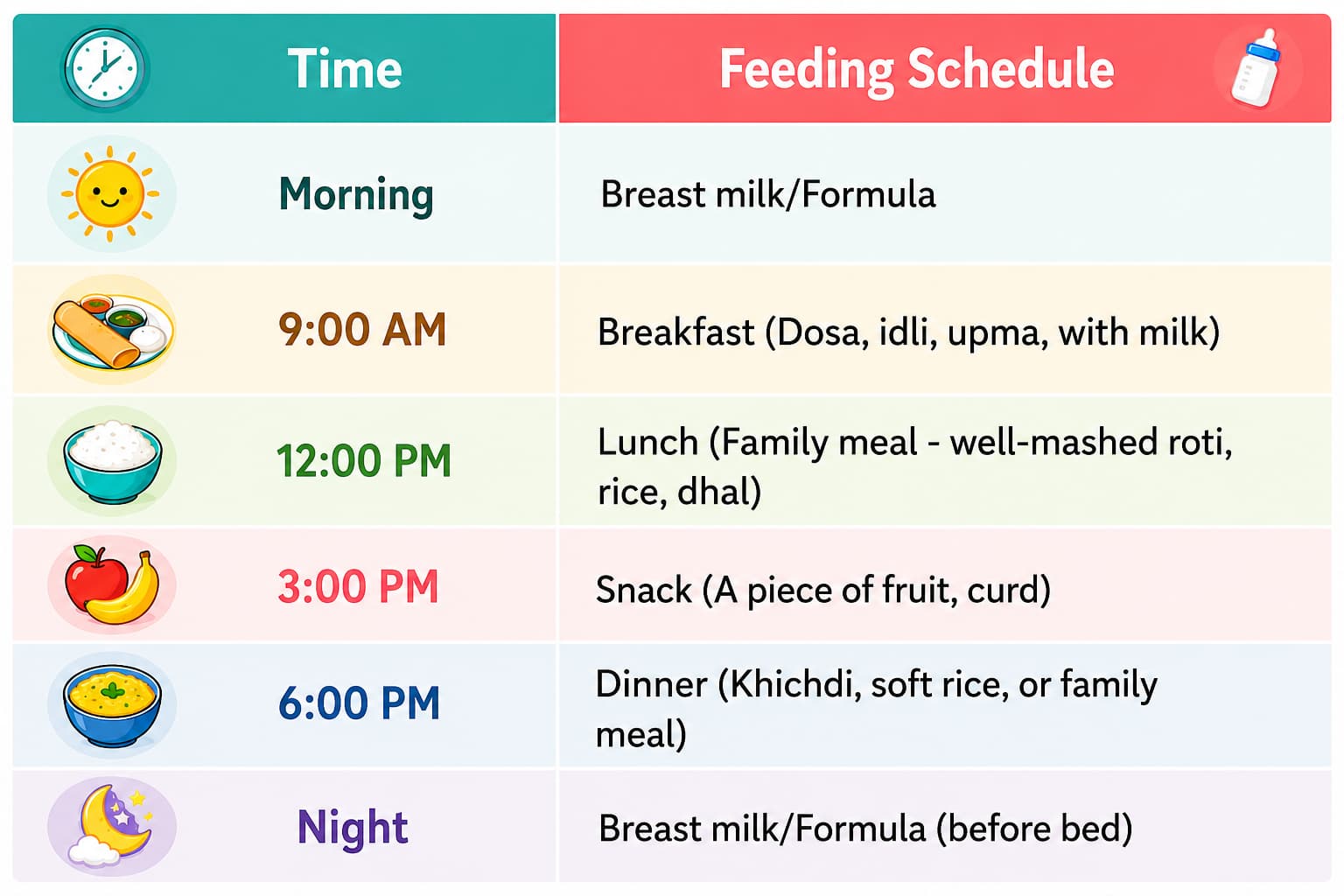
Feeding Schedule
9 to 12 Months: The Family Table
By now, your baby can begin eating most family foods with modifications.
Foods to Introduce:
- Finger foods
- Soft cheese
- Steamed vegetables
- Eggs
- All grains and legumes
- Mild spices
Feeding Schedule
Frequently Asked Questions (FAQs)
When should I start Supplementary Feeding for my baby?
Most babies are ready for Supplementary Feeding around 6 months of age while continuing Breast Milk or formula feeding.
Is Breast Milk still important after starting solids?
Yes. Breast Milk remains the primary source of nutrition throughout the first year.
What is the 3-Day Rule?
Introduce one new food every 3 days to monitor for allergic reactions or intolerance.
Can I add salt or sugar to baby food?
No. Avoid salt, sugar, and honey until your baby is at least one year old.
What is the best first food for a 6-month baby?
Soft foods such as mashed banana, khichdi water, rice water, and mashed vegetables are excellent starting options.
Final Thoughts
Starting Supplementary Feeding is not a race. Every baby develops at their own pace.
Focus on fresh home-cooked foods, continue Breast Milk feeding, maintain patience, and make mealtimes enjoyable. The goal is to build healthy eating habits that will support growth, immunity, and brain development for years to come.
Contact Chirayu Multispeciality Clinic
Dr. Balachandra B V
Pediatric Specialist
Chirayu Multispeciality Clinic, Kasturi Nagar, Bangalore
For personalized infant feeding advice, growth monitoring, nutrition counseling, and pediatric care, book an appointment today.



Add a Comment