Hello! I am Dr. Balachandra.
One of the most common concerns I hear from parents today is:
"Doctor, my child cries if I take away the phone. What should I do?"
In today's digital world, screens are everywhere. However, for children under 5 years of age, excessive Screen Time can affect Brain Development, learning, behavior, sleep, and social skills.
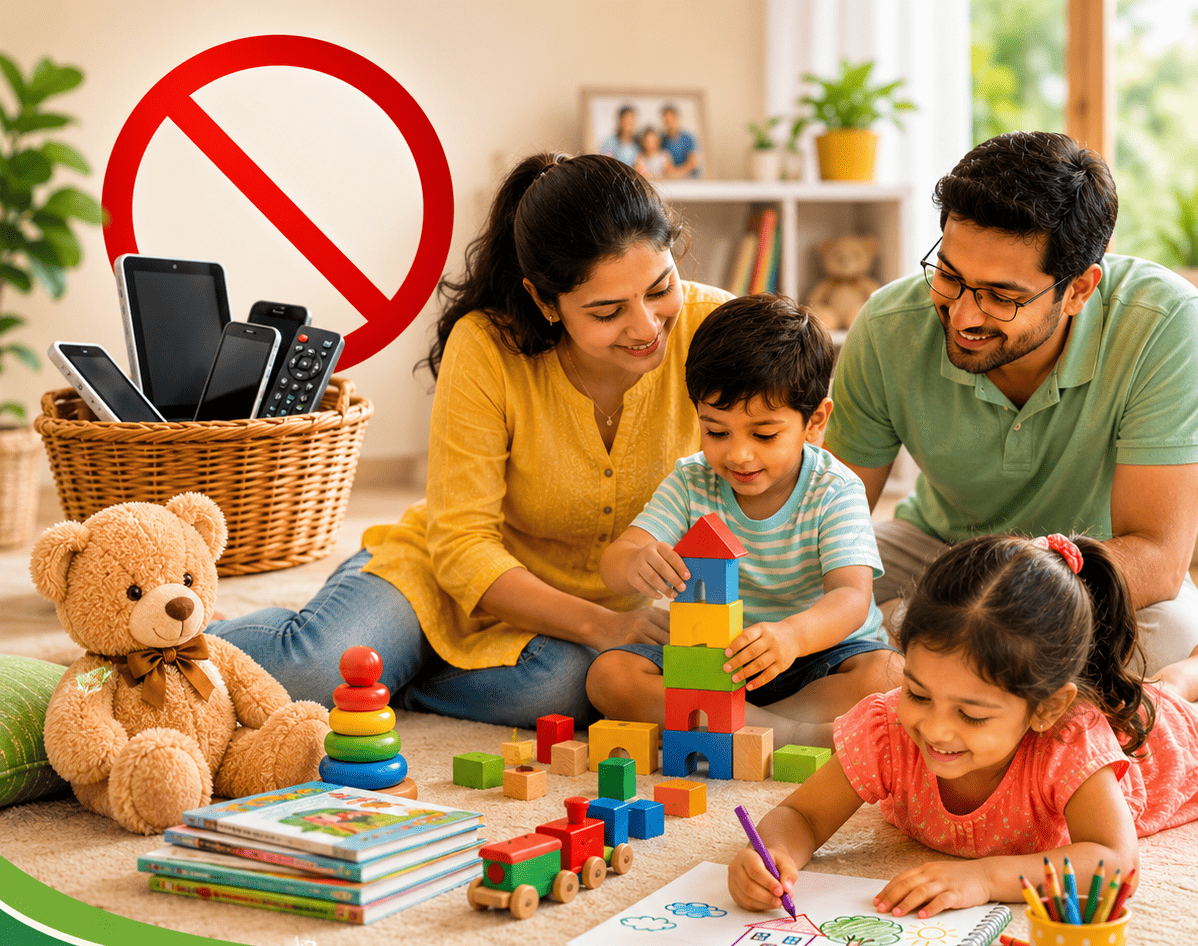
That is why I strongly encourage parents to follow a Zero Screen Time Policy whenever possible during the early years. This is not about punishment or strict parenting-it is about protecting your child's rapidly developing brain.
Why Early Childhood Matters
The first five years are the most important years for brain growth.
During this period, children learn through:
- Touching
- Exploring
- Playing
- Talking
- Reading
- Social interaction
A screen can entertain a child, but it cannot replace real-world experiences that build language, creativity, and emotional intelligence.
5 Steps to Prevent Screen Time
1. Lead by Example
Children copy what they see.
If parents are constantly using phones, children will naturally want screens too.
Put the phone away during family time and become your child's favorite activity.
2. Make Bedrooms Screen-Free
Bedrooms should be places for:
- Sleep
- Reading
- Imaginative play
Keeping screens out of bedrooms helps prevent future Sleep Problems and encourages healthy routines.
3. Create Screen-Free Zones
Designate specific areas such as:
- Dining tables
- Playrooms
- Study areas
as completely screen-free spaces.
4. Use a Calm and Consistent "No"
Children thrive on consistency.
Instead of negotiating every time, confidently redirect them:
"Let's build blocks instead."
5. Turn Off Background Screens
Even when children are not actively watching, background television can distract them and reduce attention span.
Breaking the Screen Habit
If your child is already used to screens, don't panic.
Try These Strategies:
- Reduce screen exposure gradually
- Replace screen time with exciting alternatives
- Redirect attention immediately when they ask for a device
- Maintain consistency across caregivers
Better Alternatives to Screen Time
Outdoor Play
Running, climbing, and exploring improve physical and cognitive development.
Reading Together
Books are one of the best tools for language development.
Sensory Activities
Sand, water play, clay, and play-dough stimulate creativity and learning.
Art and Crafts
Drawing, coloring, and painting strengthen fine motor skills.
Kitchen Activities
Simple supervised tasks help children learn responsibility and independence.
Why a Zero Screen Time Policy Matters
Research has linked excessive Screen Time in young children to:
- Delayed language development
- Reduced attention span
- Increased behavioral issues
- Poorer social skills
- Higher risk of obesity
- Increased Sleep Problems
- Impaired Brain Development
The earlier healthy Habits are established, the easier they become for life.
Frequently Asked Questions (FAQs)
1. What is the recommended screen time for children under 5?
For children under 2 years, most pediatric guidelines recommend avoiding screens entirely. For older preschoolers, screen exposure should be minimal and supervised.
2. How does screen time affect brain development?
Excessive screen use may interfere with language development, attention skills, and social-emotional learning during critical stages of Brain Development.
3. Can screen time cause sleep problems?
Yes. Blue light from screens can suppress melatonin production and contribute to Sleep Problems.
4. What activities can replace screen time?
Reading, outdoor play, sensory play, art, music, and family interaction are excellent alternatives.
5. How can parents successfully implement a zero screen time policy?
Lead by example, create screen-free zones, maintain consistent boundaries, and provide engaging alternatives.
Final Thoughts
The goal is not simply to remove screens.
The goal is to replace screens with richer experiences that help children learn, grow, communicate, and thrive.
Children need conversations more than cartoons, outdoor play more than videos, and family interaction more than devices.
The habits built during the first five years often shape a child's future health, learning, and emotional well-being.
Contact Chirayu Multispeciality Clinic
👉 Dr. Balachandra B V Consultant Pediatrician & Allergy Specialist Chirayu Multispeciality Clinic Kasturi Nagar, Bangalore
For guidance on child development, nutrition, behavior, screen time concerns, and parenting support, schedule a consultation today.
👉 Healthy Habits Today. Stronger Minds Tomorrow.




Add a Comment