Understanding Eczema and Atopic Dermatitis in Children
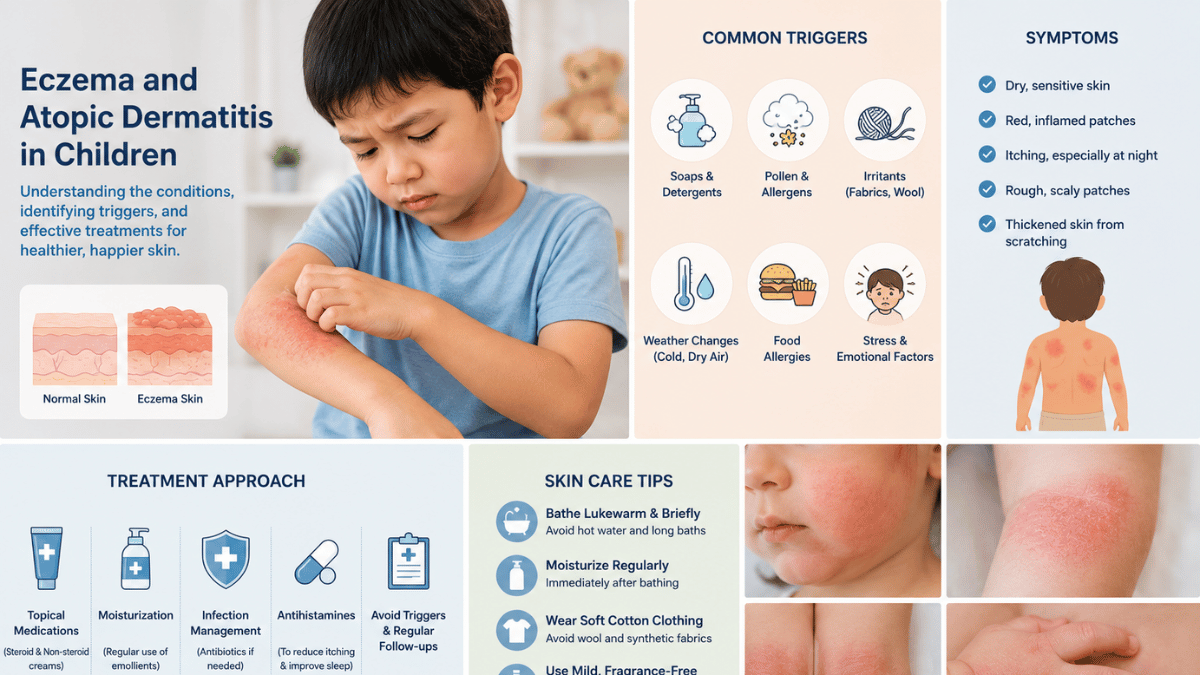
Eczema, also known as atopic dermatitis, is a common chronic skin condition seen in infants and children. It causes dry, itchy, inflamed skin that may flare up repeatedly if not managed properly. The condition can affect a child’s comfort, sleep, and daily activities, making early diagnosis and appropriate care extremely important. Effective eczema treatment children require focuses not only on reducing symptoms but also on preventing future flare-ups and protecting the skin barrier.
As a paediatrician and allergy specialist, I often meet parents who feel helpless watching their child constantly scratch, lose sleep, or struggle with repeated skin irritation. In my experience, eczema is not just a surface skin problem. Many children with eczema also have allergies, asthma, or sensitive skin conditions that can worsen symptoms over time. I have seen significant improvement in children when parents understand the triggers early and follow a consistent skincare routine. Timely medical care, proper moisturisation, and avoiding triggers can make a remarkable difference in a child’s quality of life.
What Causes Atopic Dermatitis in Children?
Atopic dermatitis develops due to a combination of genetic, environmental, and immune-related factors. Children with a family history of allergies, asthma, or eczema are more likely to develop the condition. The skin barrier becomes weak and loses moisture easily, allowing irritants and allergens to trigger inflammation.
Common Child Eczema Conditions
Some common child eczema conditions include:
- Dry and flaky skin
- Red or inflamed skin patches
- Severe itching, especially at night
- Thickened or cracked skin
- Skin sensitivity and irritation
- Recurrent skin infections due to scratching
These symptoms may appear on the cheeks, elbows, knees, neck, hands, or scalp depending on the child’s age and severity of eczema.
Common Triggers That Worsen Eczema
Identifying triggers is one of the most important steps in managing eczema effectively.
Environmental Allergens
Dust mites, pollen, pollution, pet dander, and weather changes can trigger eczema flare-ups in sensitive children.
Skin Irritants
Harsh soaps, detergents, fragrances, woollen clothing, and excessive sweating may irritate the skin and worsen symptoms.
Food Allergies
Certain foods such as milk, eggs, nuts, or seafood may aggravate eczema in some children with underlying allergies.
Stress and Sleep Disturbance
Emotional stress and poor sleep can increase itching and worsen inflammation in children with eczema.
Eczema Treatment for Children
Proper eczema treatment children need depends on the severity and frequency of symptoms.
Regular Moisturisation
Frequent use of moisturisers helps maintain the skin barrier and prevents dryness.
Medications and Prescription Creams
Anti-inflammatory creams, antihistamines, and other medications may be prescribed to reduce itching and inflammation.
Allergy Assessment
An atopic dermatitis paediatrician may recommend allergy evaluation if food or environmental allergies are suspected.
Lifestyle and Skincare Guidance
Parents are advised to use gentle skincare products, avoid overheating, keep the child’s nails trimmed, and dress children in soft cotton clothing.
Conclusion
Eczema and atopic dermatitis are manageable conditions when diagnosed and treated early. Understanding triggers, following proper skincare practices, and seeking timely medical care can significantly reduce flare-ups and discomfort. With the right support and consistent management, children with eczema can enjoy healthy, active, and comfortable childhoods.


Add a Comment