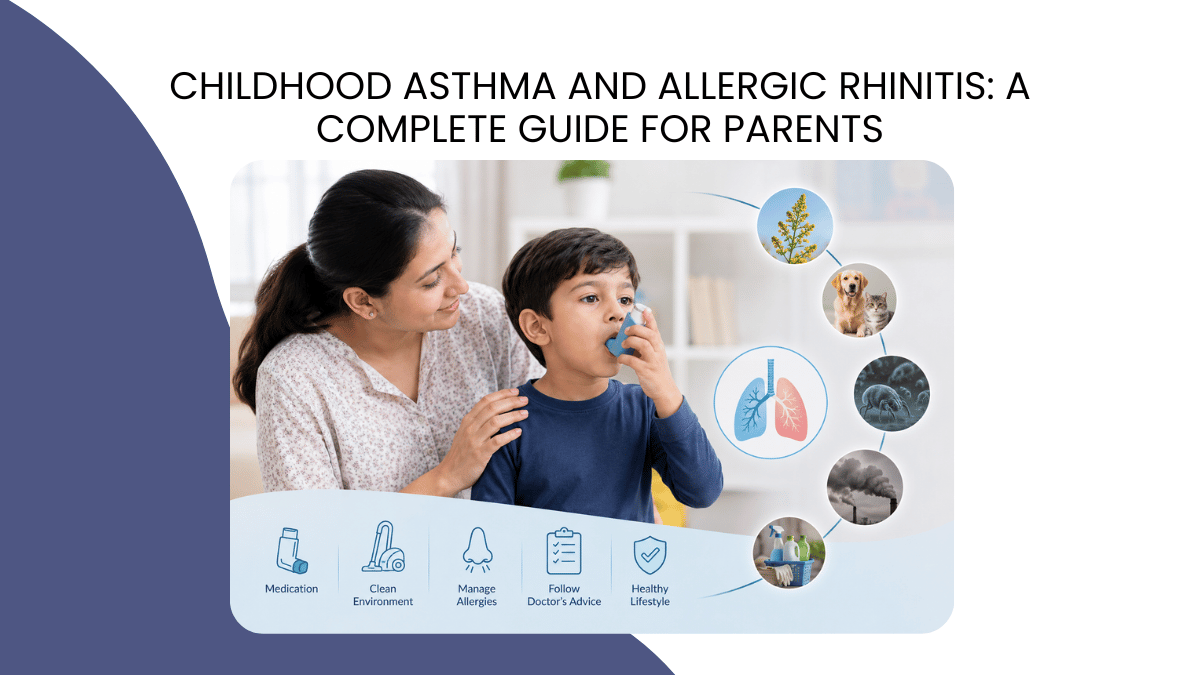
Asthma and allergic rhinitis are two of the most common chronic conditions I see in children at Kiran Speciality Hospital, Hassan. They are also two of the most frequently mismanaged — treated with repeated short courses of antihistamines and bronchodilators without ever identifying the underlying trigger or offering a long-term plan. In over 22 years of paediatric and allergy practice, the single most important message I want parents in Hassan to hear is this: childhood asthma and allergic rhinitis are diagnosable, treatable conditions with long-term solutions. Your child does not have to simply manage symptoms forever.
Childhood Asthma and Allergic Rhinitis: Quick Facts for Parents
- Allergic rhinitis is one of the most common causes of persistent nasal symptoms in children.
- Around 40 percent of children with allergic rhinitis may develop asthma if underlying airway inflammation is not identified and managed appropriately.
- Skin prick testing helps identify the specific allergens responsible for a child's symptoms.
- Asthma and allergic rhinitis are closely linked conditions and should be assessed together.
- Early diagnosis and treatment can improve sleep, school performance, and quality of life.
- Allergen immunotherapy is the only treatment that can modify the underlying allergic disease rather than simply suppress symptoms.
What is allergic rhinitis in children and why is it so commonly missed?
Allergic rhinitis is an immune-mediated inflammatory condition of the nasal lining triggered by exposure to airborne allergens. The immune system misidentifies a harmless substance — house dust mite proteins, pollen, mould spores, cockroach allergens, or pet dander — and mounts an inflammatory response. The nasal lining swells, producing the characteristic symptoms of nasal allergy.
In children, allergic rhinitis frequently goes unrecognised for years. Parents describe their child as having a permanent cold, a blocked nose that never fully clears, or recurrent chest infections that respond to antibiotics but return within weeks. Distinguishing allergy-related symptoms from genuine childhood infections is important because the management strategies are very different. Many of these children do not have infections. They have untreated nasal allergy.
Hassan's climate — humid, dusty, with significant exposure to agricultural allergens and construction dust — creates a challenging environment for allergy-prone children. House dust mites thrive in humid indoor spaces. Monsoon season brings a surge in fungal spores. Children who spend time in poorly ventilated classrooms are exposed to concentrated indoor allergens continuously. In my practice at Kiran Speciality Hospital, allergic rhinitis accounts for a significant and growing proportion of paediatric consultations every year.
At Kiran Speciality Hospital on Hosaline Road, Hassan, I regularly evaluate children not only from Hassan city but also from Belur, Channarayapatna, Arsikere, Sakleshpur, Alur, Holenarasipura, and surrounding regions who present with persistent allergy symptoms, recurrent wheezing, chronic cough, or repeated respiratory infections. Many have been treated symptomatically for years before the underlying allergic condition is properly identified.
What are the symptoms of allergic rhinitis in children?
The symptoms are well known but regularly misattributed. Parents and sometimes general practitioners attribute these symptoms to repeated viral infections, teething, or low immunity. Early identification changes the treatment trajectory significantly.
Allergic Rhinitis vs Childhood Asthma: Understanding the Difference
Allergic Rhinitis
- Repeated sneezing
- Persistent blocked nose
- Runny nose
- Itchy nose and eyes
- Mouth breathing
- Snoring due to nasal blockage
Childhood Asthma
- Wheezing
- Breathlessness
- Chest tightness
- Persistent cough
- Exercise-induced symptoms
- Night-time wheezing or cough
Although these conditions affect different parts of the airway, they frequently occur together. A child with untreated allergic rhinitis is more likely to experience asthma symptoms, which is why I assess both conditions during every allergy consultation.
Classic nasal symptoms
- Repeated sneezing, particularly in the morning or on waking
- Persistent nasal congestion — a blocked nose that does not resolve with saline rinses or decongestants
- Clear, watery nasal discharge
- Frequent nose rubbing — the allergic salute — causing a horizontal crease across the bridge of the nose
- Itching of the nose, palate, and throat
Associated symptoms that are often attributed to other causes
- Mouth breathing during sleep caused by chronic nasal obstruction
- Snoring and disturbed sleep leading to daytime fatigue, irritability, and poor school performance
- Allergic shiners — dark circles under the eyes from chronic venous congestion
- Chronic post-nasal drip causing a persistent night cough
- Watery, itchy, red eyes — allergic conjunctivitis accompanying allergic rhinitis
- Recurrent ear infections or glue ear caused by eustachian tube dysfunction
One of the most important but underappreciated consequences of untreated allergic rhinitis is its impact on a child's sleep and learning. A child with a chronically blocked nose is not sleeping well. A child who is not sleeping well is not concentrating, not retaining information, and not performing at their potential in school.
What is the connection between allergic rhinitis and asthma?
This is the most clinically important question in paediatric allergy. The nose and lungs are part of a single continuous airway. They share the same mucosal lining, the same immune mechanisms, and the same allergen exposure. What happens in the nose does not stay in the nose. Approximately 40 percent of children with allergic rhinitis develop asthma. This is not coincidence — it reflects shared pathophysiology.
Persistent nasal inflammation allows allergen-laden mucus to drain into the lower airway, contributing to bronchial inflammation. Nasal obstruction forces mouth breathing, bypassing the nose's filtering and humidifying function and delivering cold, dry, allergen-laden air directly to the bronchi. Uncontrolled allergic rhinitis is an independent risk factor for asthma development and for poor asthma control in children who already have both conditions.
The clinical implication is clear: treating allergic rhinitis effectively in a child with asthma improves asthma control. Treating allergic rhinitis in a child without asthma may reduce the risk of asthma developing. This is why I always assess both conditions together rather than managing them in isolation.
What is childhood asthma and how does it present?
Childhood asthma is a chronic inflammatory condition of the airways characterised by reversible bronchoconstriction — narrowing of the bronchi — that causes episodes of wheezing, cough, chest tightness, and breathlessness. In young children, the presentation can be subtle and atypical, making diagnosis challenging.
How asthma presents at different ages
In infants and toddlers, asthma often presents as recurrent wheezy bronchitis — repeated episodes of wheezing with viral respiratory infections that are more severe and more frequent than in non-atopic children. Many children in this age group are treated for bronchitis repeatedly without the underlying atopic predisposition being identified or addressed.
In school-age children, asthma more classically presents with nocturnal cough — a persistent cough that wakes the child at night — exercise-induced wheeze, and breathlessness following exposure to triggers. Common triggers in Hassan include house dust mite, cockroach allergens, cold air, wood smoke from cooking fires, vehicle emissions, and agricultural dust during harvest seasons.
In adolescents, asthma may be underdiagnosed because teenagers do not always report symptoms, may attribute breathlessness on exertion to being unfit, and may be reluctant to use an inhaler in front of peers.
How are childhood asthma and allergic rhinitis diagnosed?
Accurate diagnosis requires a combination of clinical history, physical examination, and targeted investigations. I do not rely on a single test — the full picture matters.
Clinical history
The history is the most important diagnostic tool. I ask specifically about the pattern of symptoms, their timing and triggers, the family history of allergy or asthma, the home environment including bedding, carpets, and pets, and the child's sleep quality and school performance. A detailed history often points directly to the allergen before any test is performed.
Skin prick test
The skin prick test is the gold standard for identifying specific allergen sensitisation. Small amounts of standardised allergen extracts — house dust mite, cockroach, cat, dog, Aspergillus, Alternaria, and locally relevant pollens — are introduced into the forearm skin. A positive wheal response within fifteen to twenty minutes confirms IgE-mediated sensitisation. I perform skin prick testing at Kiran Speciality Hospital for children as young as six months. Parents who would like to understand the procedure in greater detail can read my article on skin prick testing for allergy diagnosis in children and adults.
Spirometry and lung function testing
In children aged six and above who can cooperate with the manoeuvre, spirometry provides detailed information about lung function — including the FEV1/FVC ratio that is the hallmark of obstructive airway disease, and the reversibility of obstruction after bronchodilator administration. A positive bronchodilator response supports a diagnosis of asthma and helps determine the severity of airway obstruction before treatment begins.
What are the treatment options for childhood asthma and allergic rhinitis?
Treatment operates at three levels: allergen avoidance, pharmacological symptom control, and disease modification through immunotherapy. The most effective long-term outcomes come from combining all three.
Allergen avoidance
Identifying the specific allergens driving a child's symptoms allows targeted avoidance measures. For house dust mite sensitisation — the most common allergen in Hassan — this includes encasing mattresses and pillows in allergen-proof covers, washing bedding weekly at high temperatures, reducing soft furnishings, and controlling indoor humidity. For cockroach allergen, maintaining a clean kitchen and sealing cracks in walls reduces exposure significantly. For mould sensitisation, addressing damp areas and improving ventilation is essential.
Pharmacological treatment for allergic rhinitis
Intranasal corticosteroid sprays are the most effective class of medication for allergic rhinitis and are the first-line pharmacological treatment. Used regularly and correctly, they reduce nasal inflammation, congestion, and discharge. Second-generation antihistamines provide symptomatic relief for sneezing and itching. In children with coexisting allergic conjunctivitis, antihistamine eye drops are added. Antileukotriene medications are particularly useful in children with both allergic rhinitis and asthma, addressing both conditions through a shared inflammatory pathway.
Pharmacological treatment for asthma
The cornerstone of asthma treatment is inhaled corticosteroid therapy, which reduces airway inflammation and prevents exacerbations. Short-acting bronchodilators are used for symptom relief during an acute episode. The specific treatment step depends on the severity and frequency of symptoms, and I review and adjust the step at every follow-up consultation. Correct inhaler technique is as important as the medication itself — I spend time at every visit ensuring that parents and children are using their device correctly.
Allergen immunotherapy
Allergen immunotherapy is the only treatment that modifies the underlying allergic disease rather than suppressing symptoms. It works by gradually exposing the immune system to increasing doses of the specific allergen, inducing immune tolerance and reducing the allergic response over time. The clinical benefit is a reduction in symptoms, reduced medication requirement, prevention of new sensitisations, and in children with allergic rhinitis, a documented reduction in the risk of asthma developing.
I offer both subcutaneous immunotherapy — allergy injections given at the clinic — and sublingual immunotherapy, where allergen drops are placed under the tongue and administered at home. The full course typically lasts three to five years. The benefits persist long after treatment is completed. Parents interested in learning more about how immunotherapy works, who benefits most, and expected outcomes can also read my detailed guide to allergen immunotherapy for children and adults.
What should parents in Hassan watch for and when should they seek specialist evaluation?
I recommend a formal allergy and asthma evaluation if any of the following apply:
- Your child has a blocked or runny nose that lasts more than a few weeks and is not explained by a clear infection
- Symptoms recur at the same time each year or in the same environments
- Your child wakes at night with a cough or wheeze
- Breathing during exercise is visibly more difficult than in other children
- Over-the-counter antihistamines are no longer providing adequate relief
- Your child is mouth breathing, snoring, or showing signs of disturbed sleep
- A family history of allergy or asthma is present and the child is developing respiratory symptoms
- Your child has had repeated courses of antibiotics for what is described as chest infections or sinusitis
Early, accurate diagnosis and appropriate treatment significantly changes the long-term trajectory. Children who receive allergen identification, targeted avoidance guidance, correct pharmacological treatment, and where indicated a course of immunotherapy, have the best possible chance of sustained improvement and a reduced long-term medication burden.
Alongside allergy and asthma management, maintaining routine childhood vaccinations remains an important part of protecting respiratory health.
Questions parents ask me most often
Will my child outgrow asthma?
Some children do see a significant improvement in asthma symptoms during adolescence, particularly boys with mild childhood asthma. However, many children continue to have symptoms into adult life, and a proportion whose symptoms appear to resolve in adolescence experience recurrence in their twenties and thirties. Immunotherapy in childhood improves the long-term trajectory and reduces the risk of disease progression into adult asthma.
Is the skin prick test safe for young children?
Yes. The skin prick test introduces a tiny amount of allergen extract into the superficial skin using a small lancet — it is not an injection. Most children tolerate it well. It is safe from six months of age. Results are available within twenty minutes, which means diagnosis and initial treatment planning can often be addressed within the same visit.
My child has been on the same antihistamine for two years. Is that appropriate long-term management?
Antihistamines manage symptoms but do not treat the underlying allergy. A child who has been on antihistamines for two years without a formal allergen evaluation or consideration of immunotherapy has been managed symptomatically without a long-term plan. I would recommend a full allergy evaluation to identify the specific triggers, review whether current treatment is adequate, and discuss whether immunotherapy is appropriate.
Are inhalers safe for children?
Yes. Inhaled corticosteroids at the doses used in childhood asthma management have an excellent safety profile. They deliver medication directly to the airway, minimising systemic absorption. The risks of uncontrolled asthma — night waking, missed school, exercise limitation, acute severe episodes — significantly outweigh the risks of correctly prescribed inhaled therapy. Using an inhaler correctly with a spacer device is essential, and I demonstrate technique at every visit.
Can allergic rhinitis cause recurrent sinus infections in children?
Yes. Chronic inflammation inside the nose can interfere with normal sinus drainage, leading to repeated episodes of sinus congestion, facial pressure, and prolonged nasal symptoms. In many children, treating the underlying allergy significantly reduces the frequency of these episodes and improves overall nasal health.
Does every child with allergies need immunotherapy?
No. Immunotherapy is recommended selectively based on allergy test results, symptom severity, response to medication, and the impact of symptoms on the child's daily life. Some children achieve excellent control with allergen avoidance and medication alone, while others benefit greatly from a structured immunotherapy programme. A specialist evaluation helps determine the most appropriate approach.
Written by Dr H K Kiran Kumar, MBBS, DCH (JSSMC Mysore), Allergy Asthma Specialist Course (AASC), MedTrain, Senior Paediatrician and Allergy Asthma Specialist, Kiran Speciality Hospital, Hosaline Road, Hassan, Karnataka.
Related reading
linqmd.com/doctor/kiran-hk/blog/allergen-immunotherapy-children-adults-hassan
linqmd.com/doctor/kiran-hk/blog/skin-prick-test-allergy-diagnosis-hassan
Common Childhood Infections: Symptoms, Treatment, and Prevention
Importance of Vaccination in Children: A Pediatrician’s Perspective
👉 To book a consultation with Dr H K Kiran Kumar at Kiran Speciality Hospital, Hosaline Road, Hassan, call +91 81722 96348


Add a Comment