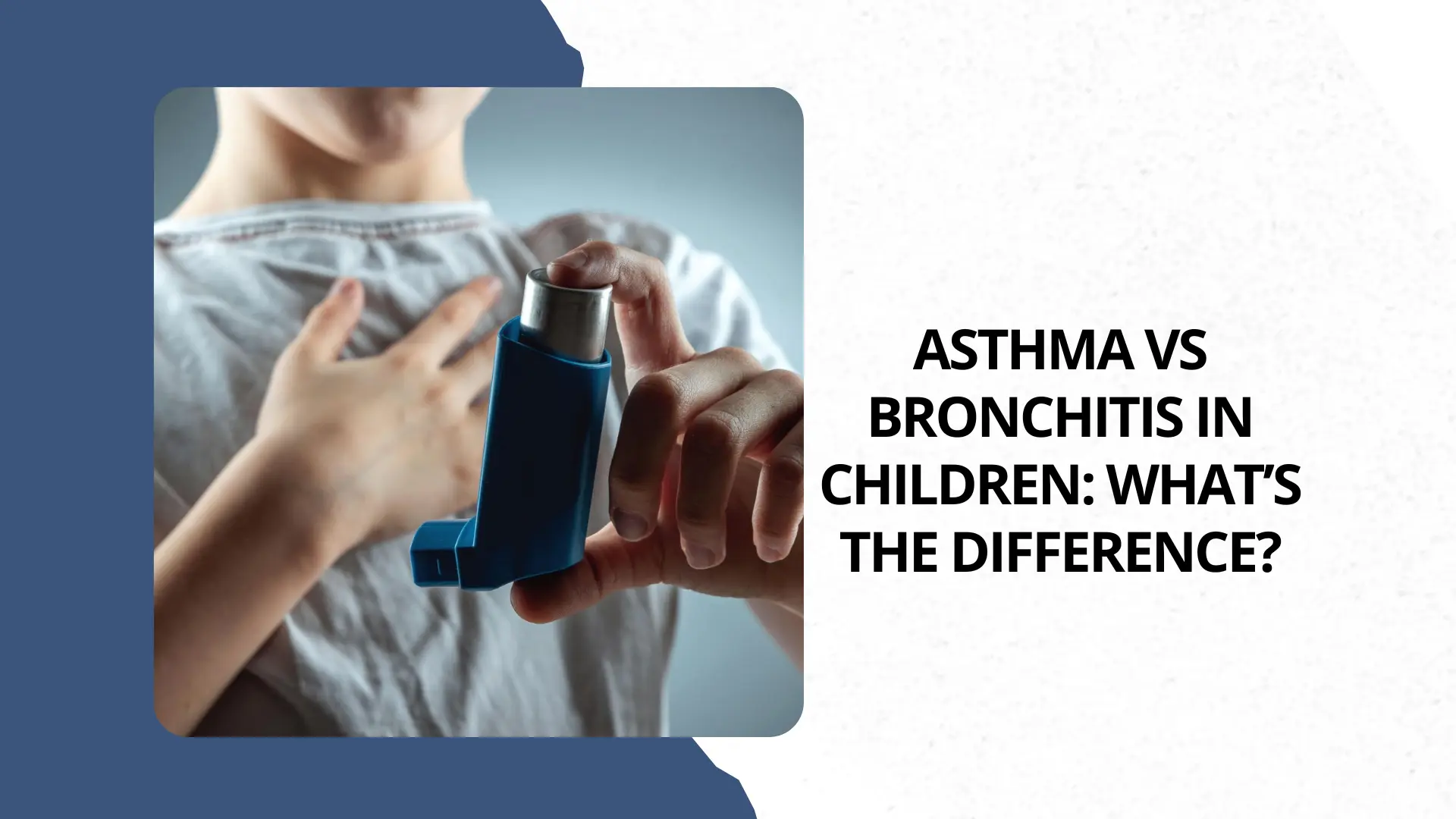
Cough and breathing problems are among the most common reasons parents bring their children to the doctor. Two conditions that are often confused are asthma and bronchitis. Although both can cause coughing, wheezing, and breathing difficulty, they are very different conditions and require different approaches to treatment. Understanding the difference between asthma vs bronchitis can help parents recognize warning signs early and seek appropriate care for their child.
In my pediatric and allergy practice, many parents come worried because their child has repeated coughing episodes, especially at night or during seasonal changes. One of the most common questions I hear is, “Is my child’s cough asthma or bronchitis?” Since symptoms can overlap, it is important to understand the pattern, triggers, and duration of symptoms before making a diagnosis. Early identification and treatment can significantly improve a child’s breathing and overall quality of life.
What Is Bronchitis?
Bronchitis occurs when the airways (bronchi) become inflamed, usually due to a viral infection. It is common in children after a cold or flu.
Common bronchitis in children symptoms include:
- Wet or productive cough
- Mild fever
- Chest congestion
- Fatigue
- Runny nose
- Temporary wheezing
👉 Acute bronchitis usually improves within one to three weeks with rest, hydration, and supportive care.
What Is Childhood Asthma?
Asthma is a chronic condition where the airways become sensitive, swollen, and narrow in response to triggers such as dust, cold weather, pollen, exercise, or infections.
- Common childhood asthma symptoms include:
- Recurrent wheezing
- Persistent dry cough
- Tightness in the chest
- Breathing difficulty
- Coughing at night in children
- Symptoms worsening during exercise or seasonal changes
👉 Unlike bronchitis, asthma tends to recur and may require long-term management.
Asthma vs Bronchitis in Toddlers:
Understanding asthma vs bronchitis in toddlers can be difficult because younger children may not clearly describe their symptoms.
- Signs More Suggestive of Bronchitis
- Symptoms start after a cold or viral infection
- Wet cough with mucus
- Fever may be present
👉 Symptoms gradually improve within days or weeks
Signs More Suggestive of Asthma:
- Recurrent episodes of cough or wheezing
- Night-time cough without fever
- Symptoms triggered by dust, smoke, pets, or weather changes
- Family history of allergies or asthma
👉 If coughing episodes happen repeatedly, especially at night, asthma evaluation may be necessary.
Is My Child’s Cough Asthma or Bronchitis?
Parents often ask, “Is my child’s cough asthma or bronchitis?” The answer depends on several factors including duration, triggers, and associated symptoms.
A cough caused by bronchitis is usually temporary and linked to infection. Asthma-related cough often:
- Occurs repeatedly
- Worsens at night
- Gets triggered by exercise or allergens
- Improves with inhalers or asthma medications
👉 Medical evaluation helps determine the exact cause and guides the right treatment.
When Should Parents Seek Medical Help?
Consult a pediatric specialist if your child has:
- Persistent wheezing
- Difficulty breathing
- Frequent coughing at night in children
- Recurrent chest infections
- Poor sleep due to cough
- Bluish lips or severe breathing distress
👉 Early diagnosis can prevent complications and improve long-term lung health.
Managing Asthma and Bronchitis:
Treatment depends on the diagnosis:
- Bronchitis usually improves with fluids, rest, and fever management
- Asthma may require inhalers, allergy management, and trigger avoidance
- Healthy nutrition and avoiding smoke exposure are important for both conditions
Conclusion:
Although asthma and bronchitis may appear similar, they are different conditions with different causes and treatments. Recognizing the symptoms early can help parents protect their child’s respiratory health and avoid complications. If your child has recurrent cough, wheezing, or breathing difficulty, consult Dr. Kirti Shrotriya, Pediatrician & Allergy, Asthma Specialist in Pune, for expert evaluation and personalized pediatric respiratory care.


Comments
Neeraj Namdev
Posted on: July 09,2026 Published
मेरी बच्ची को दिखना है
Add a Comment