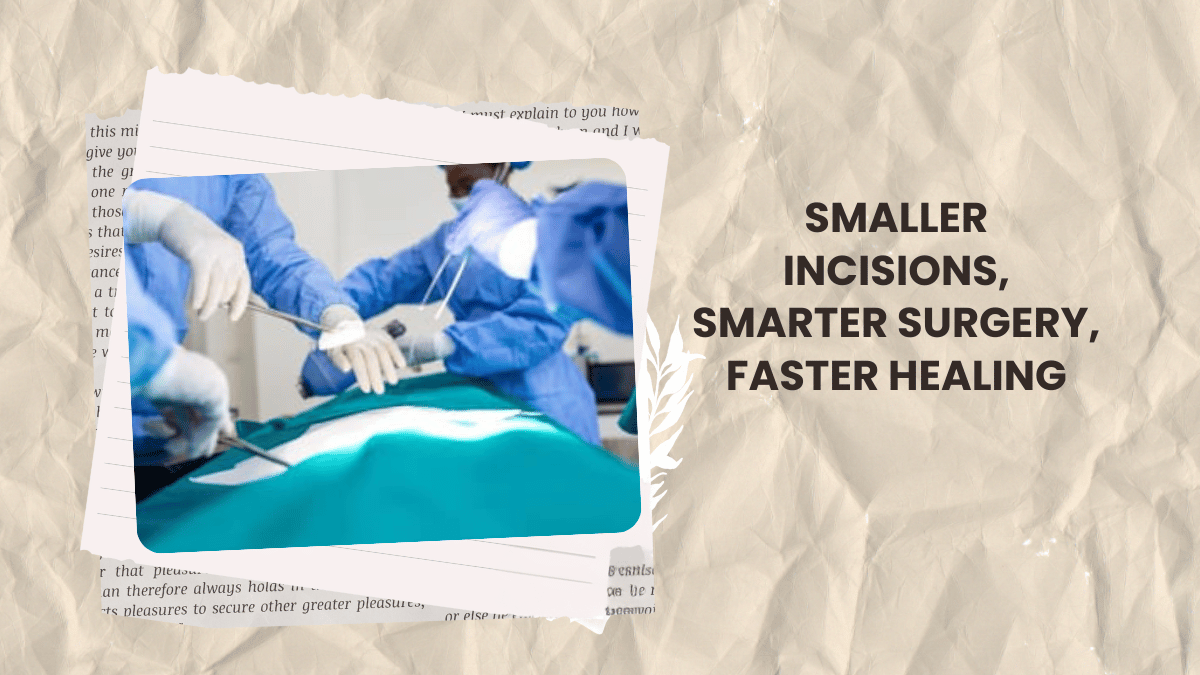
Not long ago, the word surgery itself was enough to create fear—large scars, prolonged hospital stays, and weeks of discomfort. Even today, many patients walk into my clinic expecting the same experience. What often surprises them is learning that many conditions can now be treated through minimally invasive surgery, using precision techniques that reduce pain, shorten recovery time, and allow a faster return to normal life. Seeing this shift transform patient confidence and outcomes has been one of the most rewarding parts of my practice.
Minimally invasive surgery, often performed using laparoscopic techniques, involves small incisions through which a camera and specialized instruments are inserted. This allows surgeons to operate with precision while causing minimal trauma to surrounding tissues. From my experience, patients who undergo laparoscopic surgery not only recover faster but also feel more confident returning to their normal lives sooner.
One of the biggest benefits of laparoscopic surgery is reduced pain after the procedure. Smaller incisions mean less tissue damage, which translates into lower pain levels and reduced dependence on pain medication. Patients also experience less blood loss during surgery and a significantly lower risk of infection. These advantages are especially important for individuals who wish to resume work and daily activities quickly.
Recovery time is another major advantage. In many cases, patients are discharged within a day or two and can return to light activities within a week. Compared to open surgery, which may require longer hospital stays and extended recovery periods, minimally invasive surgery offers a smoother and faster healing process. In my clinical experience, early mobility after surgery also reduces complications such as stiffness and blood clots.
A common question I am asked is, “Am I eligible for minimally invasive surgery?” The answer depends on several factors, including the type of condition, its severity, and the patient’s overall health. Many abdominal, gastrointestinal, hernia, gallbladder, and gynecological conditions can be effectively treated using laparoscopic methods. However, not every case is suitable. Complex conditions or advanced disease may still require open surgery, and choosing the right approach is critical for patient safety.
What is important to understand is that minimally invasive surgery is not about choosing the latest technology—it is about choosing the right surgery for the right patient. A thorough evaluation, detailed imaging, and open discussion with your surgeon help determine the best treatment plan. In my practice, patient education plays a key role in decision-making, ensuring realistic expectations and optimal outcomes.
In conclusion, minimally invasive surgery has transformed modern surgical care. With benefits such as faster recovery, reduced pain, minimal scarring, and shorter hospital stays, it has become the preferred option for many patients. When performed by an experienced surgeon and selected appropriately, it offers excellent results and a quicker return to a healthy, active life.



Add a Comment