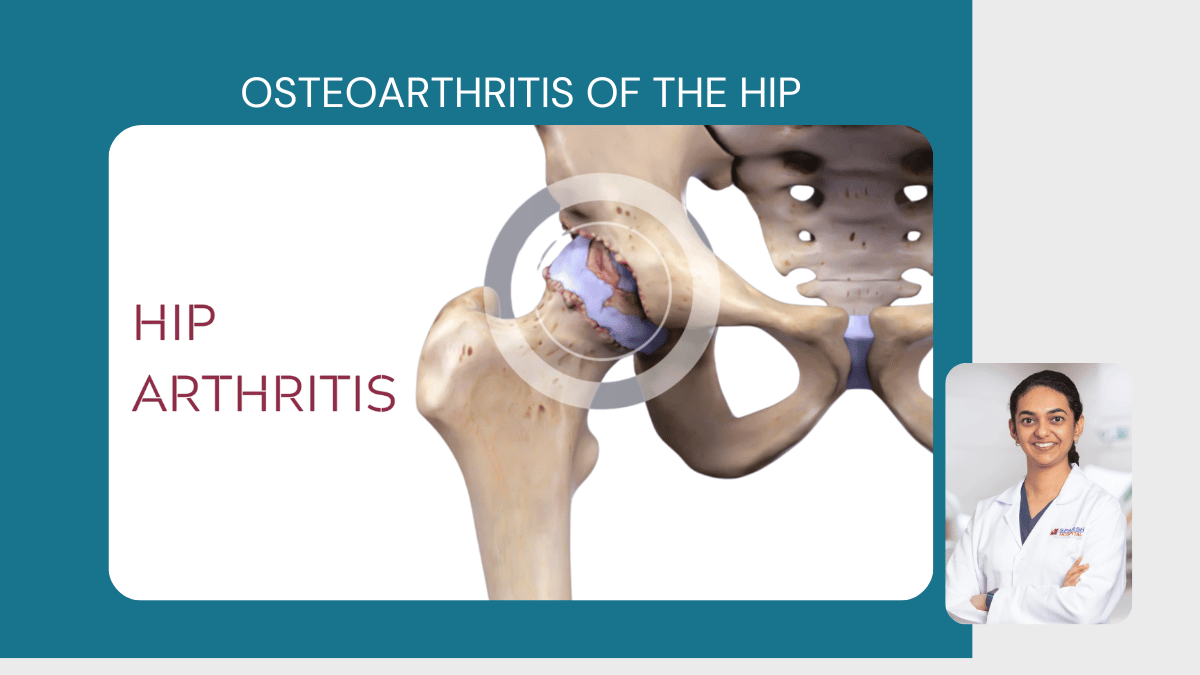
Osteoarthritis of the hip is a progressive, joint degenerative condition in which the cartilage covering the hip joint gradually wears away, leading to pain, stiffness, and progressive loss of mobility. It is a common cause of groin, and thigh pain. In advanced cases, one of the most frequent indications for total hip replacement surgery.
What is hip osteoarthritis?
The hip is a ball-and-socket joint. The femoral head — the ball — sits within the acetabulum — the socket — and both surfaces are lined with smooth articular cartilage. In hip osteoarthritis, this cartilage breaks down progressively. As the joint surface deteriorates, movement becomes painful and range of movement reduces.
Causes and risk factors
Hip osteoarthritis may be primary - developing without a clear preceding cause — or secondary, arising from prior conditions such as:
- Developmental hip dysplasia - abnormal hip joint formation from birth or childhood.
- Avascular necrosis of the femoral head - bone death due to disrupted blood supply.
- Previous hip fracture or dislocation.
- Rheumatoid or inflammatory arthritis affecting the hip.
- Excess body weight and the associated increase in joint load.
- Family tendency toward osteoarthritis.
Symptoms
Patients with hip osteoarthritis typically report pain in the groin or front of the thigh that worsens with walking, prolonged standing, or rising from a seated position. As the condition progresses, activities such as putting on footwear, climbing stairs, and sitting on low surfaces become difficult. A visible limp may develop. In advanced cases, pain may be present at rest or overnight, and daily independence may be significantly affected.
Treatment
Non-surgical management - physiotherapy, weight reduction, activity modification and medication — is the first line of treatment. When the joint is severely damaged and symptoms are no longer adequately controlled, total hip replacement is the most effective intervention. Robotic assistance is available for selected patients undergoing hip replacement and allows highly accurate implant positioning based on the patient's own anatomy.
Written by Dr Shrishti Patil, MS Ortho, Consultant Orthopaedic and Robotic Joint Replacement Surgeon, SPARSH Hospital, Hennur Road, Bengaluru.
To book a consultation with Dr Shrishti Patil at SPARSH Hospital, Hennur Road, Bengaluru, visit linqmd.com/doctors/dr-shrishti-patil-joint-replacement-surgeon-hennur-bengaluru