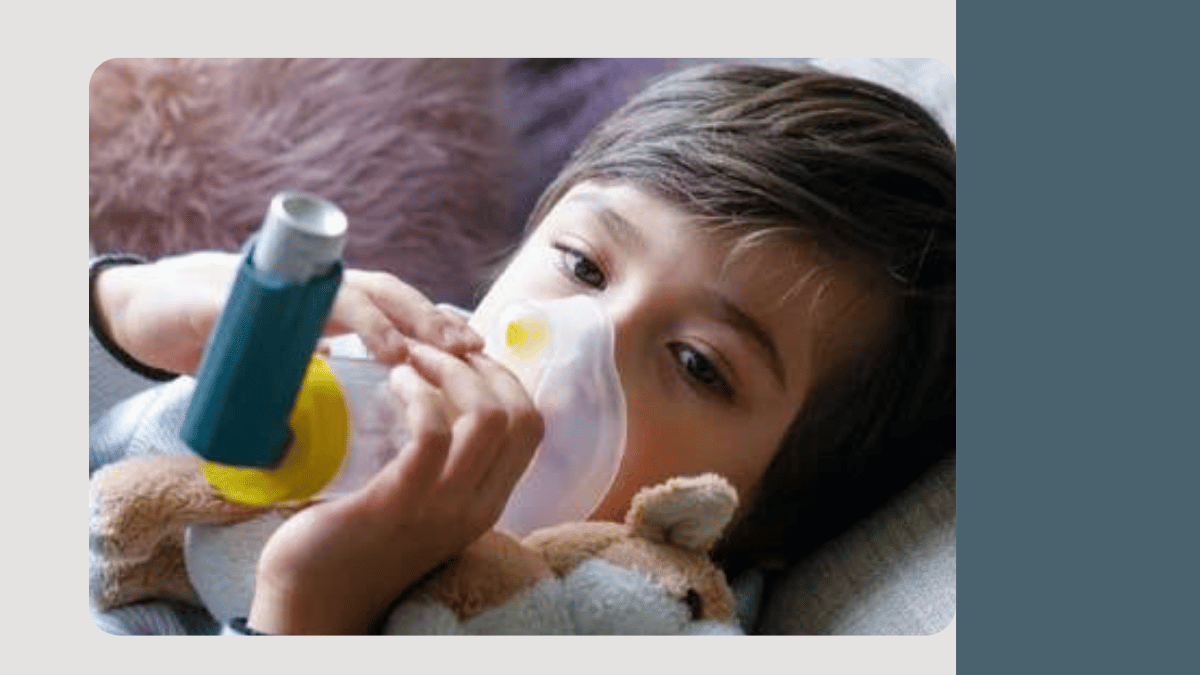
Every child with asthma in Chennai is different, and every child with asthma in Chennai is also, to some degree, a product of the same city. The allergen environment of Chennai, shaped by its coastal humidity, dense urban housing patterns, and the specific vegetation that has established itself across Tamil Nadu over the past few decades, creates a pattern of allergic sensitisation that is distinct from the profile a paediatric allergist would see in Delhi, Bengaluru, or Mumbai. Managing childhood asthma and allergy in Chennai well requires knowing this environment and building it into the diagnostic and management framework rather than applying a generic protocol that was designed for a different allergen landscape. As a Consultant Paediatrician at NIRA Child Clinic, Kolathur and Perambur, with AASC, the Advanced Allergy, Asthma and Clinical Immunology Specialist Course completed in 2026, my allergy practice at NIRA Child Clinic is specifically calibrated to the allergens that drive respiratory and allergic disease in north Chennai and across Tamil Nadu.
The Chennai Allergen Environment: House Dust Mite, Cockroach, and Prosopis Juliflora
House dust mite is the dominant perennial allergen in Chennai. The coastal humidity that makes Chennai's climate characteristically warm and humid also makes it ideal for house dust mite to thrive year-round in mattresses, pillows, carpets, and upholstered furniture. A child who wakes coughing or wheezing in the early hours, who is symptomatic in the bedroom but improves when away from home, and who has nasal symptoms that are worse on waking is giving a clear clinical signal of house dust mite sensitisation, even before allergy testing is performed. Cockroach allergen, produced by the droppings and shed body parts of cockroaches, is the second major perennial allergen in Chennai's dense urban housing and is particularly prevalent in the older housing stock of areas like Kolathur and Perambur. Testing and counselling for cockroach allergen avoidance is a standard part of my allergy assessment at NIRA Child Clinic. Prosopis juliflora, the invasive thorny shrub that has colonised roadsides, railway embankments, and vacant land across Tamil Nadu, produces pollen that is an important seasonal allergen specific to this region. Unlike house dust mite and cockroach, Prosopis pollen is not included in standard allergy panels that follow European or American templates, because it is not a significant allergen in the environments where those panels were developed. In my practice at NIRA Child Clinic, I test for Prosopis juliflora pollen as part of a Chennai-specific allergy panel, because missing it leaves a seasonal pattern of rhinitis and wheeze unexplained in children who have been sensitised to it.
What a Pattern-Based Approach Changes About Diagnosis and Management
A child who has had six episodes of cough and wheeze in the past year has almost certainly been prescribed a reliever bronchodilator at each episode. What the pattern-based assessment I undertake at NIRA Child Clinic looks for is what links those six episodes: whether they cluster in particular seasons corresponding to Prosopis flowering, whether they are worse at home than at school, whether they wake the child in the early hours suggesting nocturnal bronchoconstriction from allergen exposure in the sleeping environment, and whether there are associated features of allergic rhinitis, eczema, or food allergy that indicate an underlying atopic constitution driving the respiratory presentations. Allergy skin prick testing with a panel that includes house dust mite, cockroach, Prosopis and other local pollens, moulds, and food allergens confirms or identifies the sensitisation profile, and this profile then shapes a management plan that is genuinely personalised: correct spacer-based inhaler therapy reviewed at every visit, intranasal corticosteroid therapy for associated rhinitis which otherwise continues to drive airway inflammation despite good inhaler adherence, allergen avoidance measures specific to the identified triggers, and for selected children where the sensitisation is confirmed and the family has the commitment for a multi-year programme, sublingual immunotherapy to progressively reduce the allergic reactivity at its source. At NIRA Child Clinic, Kolathur and Perambur, the AASC-trained allergy assessment that I provide means a child with recurring asthma and wheezing in Chennai receives a diagnosis and a management plan built around the specific allergens driving their disease, not a generic protocol.
To book a paediatric or allergy consultation with Dr. R. Arvind Kumar at NIRA Child Clinic, Kolathur, Chennai (call +91 9361409090) or NIRA Child Clinic, Perambur, Chennai (call 8608686704).
Written by Dr. R. Arvind Kumar, MBBS, DNB (Paediatrics), AASC (Advanced Allergy, Asthma and Clinical Immunology Specialist Course, 2026), Consultant Pediatrician and Child Specialist, NIRA Child Clinic, 68, 80 Feet Road, Thanikachalam Nagar, Kolathur, Chennai 600110 (Monday to Saturday except Thursday, 5:00 PM to 7:45 PM; Sunday 10:00 AM to 12:00 PM, +91 9361409090) and NIRA Child Clinic (formerly Indiraa's Pediatric Clinic), No 46, Foxen Street, Amrithammal Colony, Perambur, Chennai 600011 (Monday to Saturday, 8:00 PM to 10:00 PM, 8608686704). 18+ years. 30,000+ patients.



Add a Comment