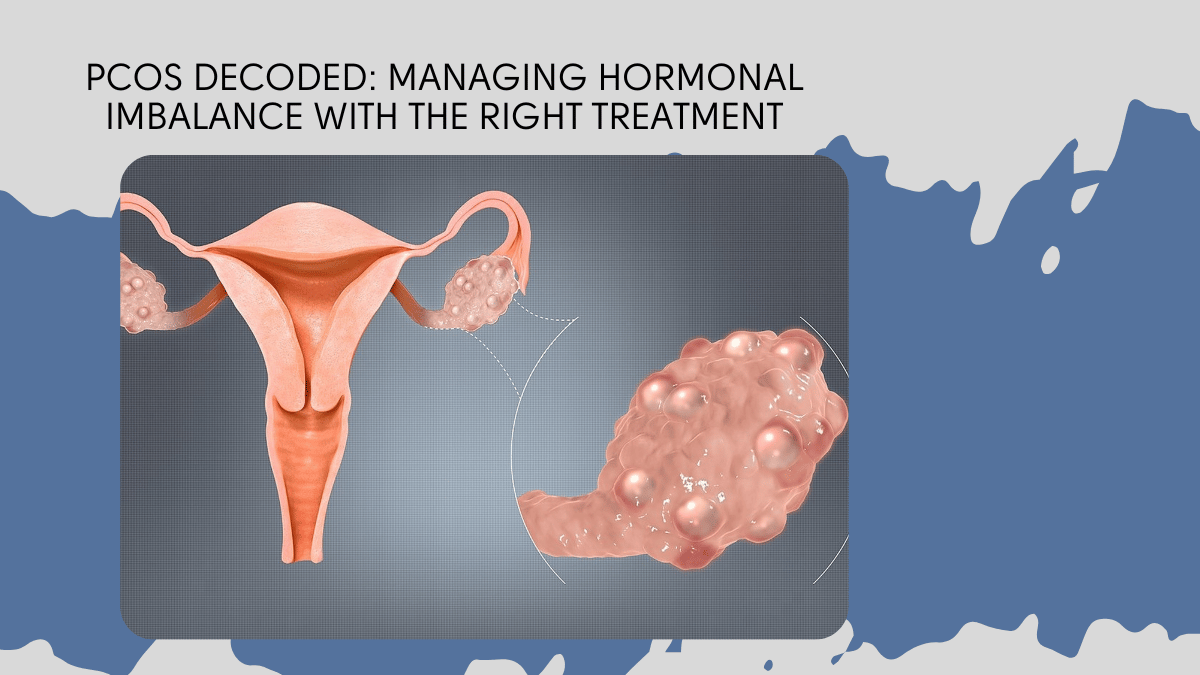
Understanding PCOS Beyond the Myths:
One of the most common concerns I see in my clinic today is Polycystic Ovary Syndrome (PCOS). Many women come in frightened — having read alarming things online or been told they’ll never conceive. I always reassure them: PCOS is manageable. With the right diagnosis, treatment, and lifestyle adjustments, you can lead a healthy, confident, and fulfilling life.
PCOS is a hormonal imbalance that affects how the ovaries function. It can cause irregular periods, acne, weight gain, hair growth on the face or body, and sometimes difficulty in conceiving. But it’s not a “disease” — it’s a condition that can be balanced with awareness and care.
What Causes PCOS?
The exact cause of PCOS is multifactorial — genetics, insulin resistance, and lifestyle all play a role. In simple terms, the body produces higher levels of certain hormones, like androgens (male hormones), which interfere with normal ovulation. This leads to irregular cycles, cysts on the ovaries, and hormonal symptoms.
When Megha, a 24-year-old student, came to me, she was struggling with weight gain, acne, and cycles that arrived once in three months. She had tried every diet she could find online, but nothing seemed to work. Through a structured plan involving medical treatment and small, sustainable changes in her daily routine, her cycles became regular within months — and she found her confidence returning too.
How We Diagnose PCOS:
Diagnosis isn’t just about finding cysts on the ovaries. I rely on a combination of clinical evaluation, ultrasound imaging, and blood hormone testing to understand each woman’s hormonal profile. Every patient’s presentation is different — some may have visible symptoms, while others might discover PCOS during fertility evaluations.
Accurate diagnosis is the first step toward effective management. It allows us to tailor treatment — not just to control symptoms, but to improve long-term metabolic and reproductive health.
Treatment: Medical and Lifestyle Go Hand-in-Hand:
Managing PCOS isn’t about quick fixes; it’s about creating balance. Treatment often includes hormonal therapy, ovulation induction for those trying to conceive, and insulin-sensitizing medications where needed.
Equally important is lifestyle modification — maintaining a balanced diet, regular physical activity, adequate sleep, and stress management. Even a 5–10% reduction in weight can significantly improve hormonal balance and menstrual regularity.
When Nisha, a 31-year-old software professional, came to me after years of irregular cycles and unsuccessful attempts at conception, we began with ovulation tracking and simple medication. Alongside, she adopted a healthy lifestyle plan. Three months later, she conceived naturally — a beautiful reminder that small, consistent steps can yield big results.
My Approach to PCOS Care:
As a doctor, my focus goes beyond treating lab reports. I strive to help women understand their bodies, regain control, and feel empowered. Every consultation is a chance to listen — to the physical, emotional, and mental toll PCOS can bring — and then create a plan that restores hormonal health and self-confidence.
PCOS may be a lifelong condition, but it doesn’t define you. With the right support, it’s entirely possible to achieve balance — in your hormones, your health, and your happiness.
Add a Comment