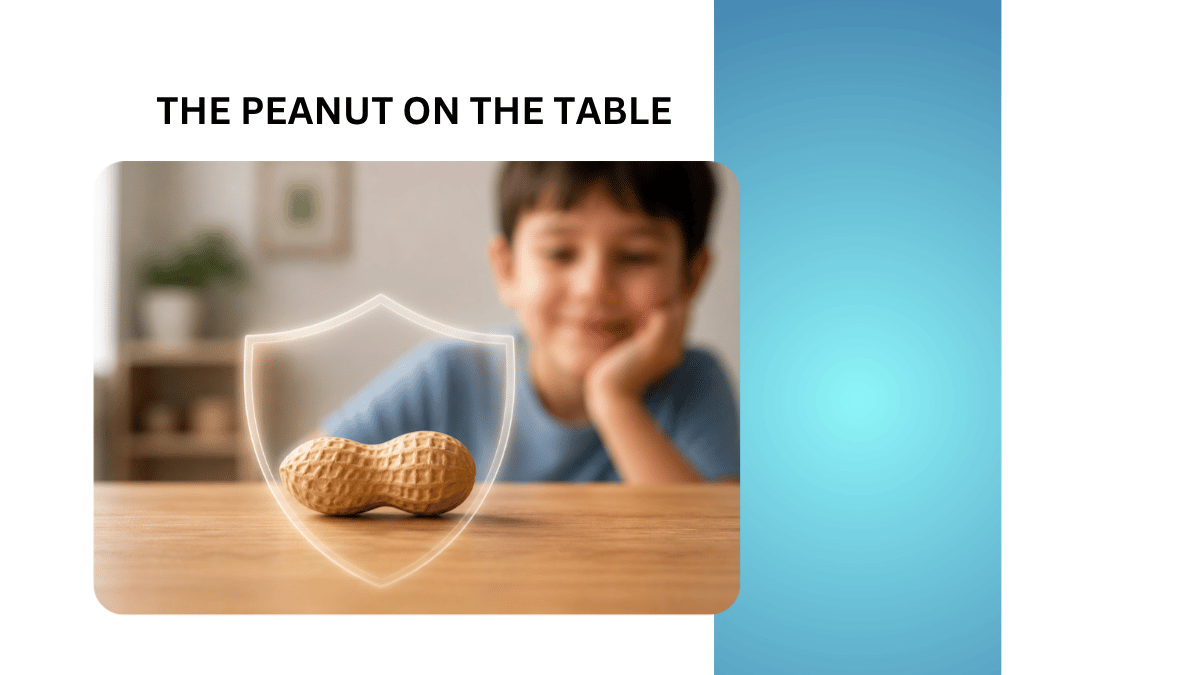
A few months ago, a mother sat across from me describing how her son's life had shrunk around a single word printed on food labels: peanut. No birthday parties with shared cake. No school trips without a separate lunchbox checked three times. This is the reality for many families managing a food allergy, and it is the reason Oral Immunotherapy is the treatment I want to talk about this World Allergy Week, rather than allergy awareness in general terms.
What Oral Immunotherapy actually involves
OIT is a structured medical treatment in which a child is given gradually increasing, carefully measured doses of the food they are allergic to, under close clinical supervision, with the goal of raising the threshold at which their body reacts. It is not a cure in the way a course of antibiotics cures an infection. It is a desensitisation process, built up over months, that changes how much exposure a child's immune system can tolerate before triggering a reaction. I am one of a small number of clinicians in India offering this treatment, and I have presented research on the Indian-specific immunological response to Oral Immunotherapy at international forums including the AAAAI/WAO Congress in San Diego.
Why this matters beyond the food itself
The value of OIT is not only measured in whether a child can eventually eat the food freely. For most families, the more immediate and meaningful change is the reduction in risk from accidental exposure. A child whose reaction threshold has been raised through treatment is significantly less likely to have a severe reaction from cross-contamination at a restaurant, a shared snack at school, or a labelling error. That shift, from constant vigilance to a meaningful safety margin, changes daily life for the whole family, not just the child.
Who is a candidate, and what the process requires
OIT is not appropriate for every child or every allergy, and the decision to pursue it requires a detailed evaluation, including the specific allergen, the severity of previous reactions, and the family's ability to manage a structured, supervised dosing schedule over an extended period. It is also not a quick fix. The process takes commitment from the family and close coordination with the treating allergist throughout. What I tell every family considering it is the same thing: this is a partnership, not a procedure, and the families who do best are the ones who understand that from the outset. For families managing a confirmed food allergy who have not yet had this conversation, it is worth having.
If your child has a diagnosed food allergy and you would like to discuss whether Oral Immunotherapy is appropriate, I am happy to walk through what that evaluation involves. To book a consultation with Dr Sowmya Arudi Nagarajan at her Paediatrics and Allergy Clinic, Malleshwaram, Bengaluru, call 9008304562.
Written by Dr Sowmya Arudi Nagarajan, MBBS, DCH, Diploma in Allergy and Asthma (CMC Vellore), Fellowship in Pediatric Allergy and Immunology (National University Hospital, Singapore), Pediatrician and Allergy Specialist, Malleshwaram, Bengaluru.



Add a Comment