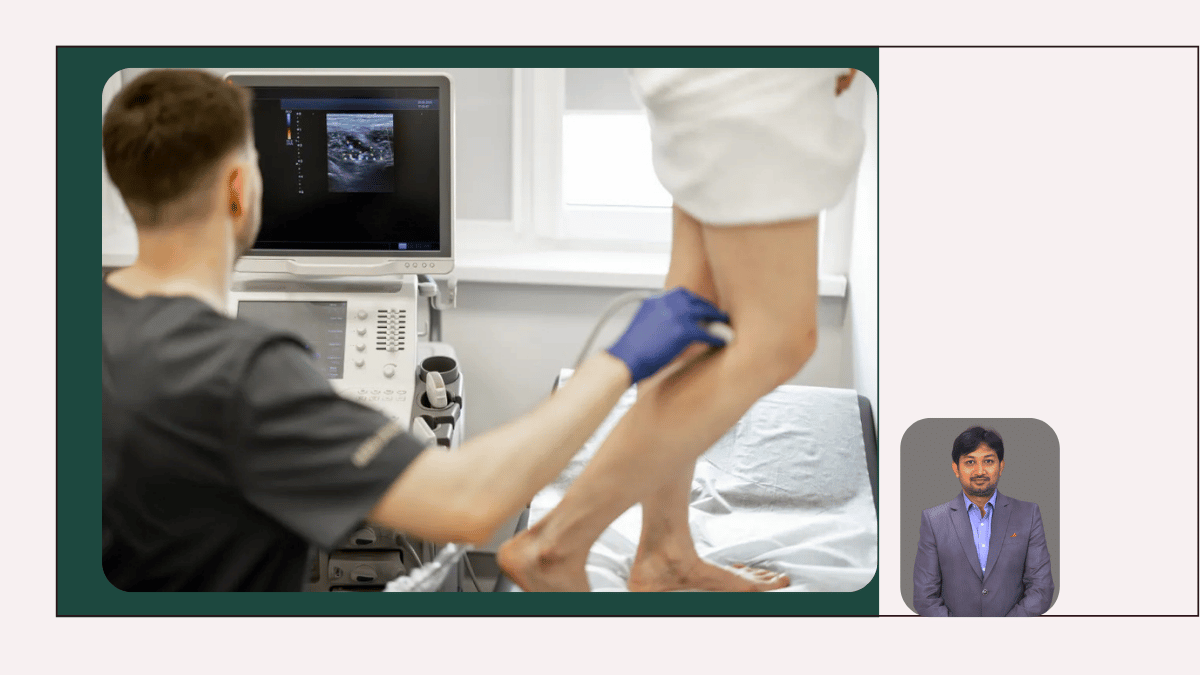
Peripheral arterial disease is caused by atherosclerosis of the arteries supplying the legs, progressively narrowing the lumen and reducing blood flow to the limb musculature and tissues. The cardinal presenting symptom is intermittent claudication: cramping pain or heaviness in the calf, thigh, or buttock that comes on during walking at a predictable distance and resolves within minutes of rest. This pattern reflects the supply-demand mismatch of the diseased artery: at rest, the reduced flow meets the metabolic demand of muscle; during exertion, demand increases and the supply cannot keep pace. PAD is also a systemic disease marker: patients with blocked leg arteries very frequently have concurrent atherosclerosis in the coronary and carotid circulations, and their cardiovascular risk requires active management alongside the peripheral disease. Dr. Abhilash V, DrNB Vascular and Endovascular Surgery, Consultant Vascular and Endovascular Surgeon at Sparsh Hospital, Hennur, Bengaluru, evaluates PAD using the Ankle Brachial Pressure Index (ABPI), a non-invasive measurement comparing ankle and arm blood pressure that objectively quantifies the degree of arterial obstruction. An ABPI below 0.9 confirms PAD; below 0.5 indicates severe PAD with risk of critical limb ischaemia. Critical limb ischaemia (CLI) is the advanced stage of PAD where blood flow is insufficient to maintain tissue viability at rest, presenting as rest pain in the foot (often at night, relieved by hanging the leg down), tissue loss, or gangrene. CLI is a vascular emergency requiring urgent revascularisation to prevent major amputation. Treatment options including angioplasty and stenting for shorter focal lesions, endarterectomy for selected segment disease, and bypass surgery to route blood around longer occlusions are selected based on the anatomy and extent of disease established by duplex ultrasound and CT or catheter angiography.
Written by Dr. Abhilash V, MBBS (Vijayanagar Institute of Medical Sciences (VIMS), Bellary), MS General Surgery (Bangalore Medical College and Research Institute, Bengaluru), DrNB Vascular and Endovascular Surgery (National Board of Examinations, New Delhi), Consultant Vascular and Endovascular Surgeon, Sparsh Hospital Hennur (DivyaSree Avance, Hennur Bagalur Main Road, HBR Layout, Bengaluru 560043, Monday to Saturday, 9:00 AM to 4:00 PM), Chinmaya Mission Hospital (Indiranagar, Bengaluru, Tuesday and Friday, 5:00 PM onwards), and Sparsh Hospital Yelahanka (Wednesday and Saturday, 10:00 AM to 4:00 PM). 16+ years. 10,000+ patients. Phone: +91 76766 84611 / +91 88842 70333.