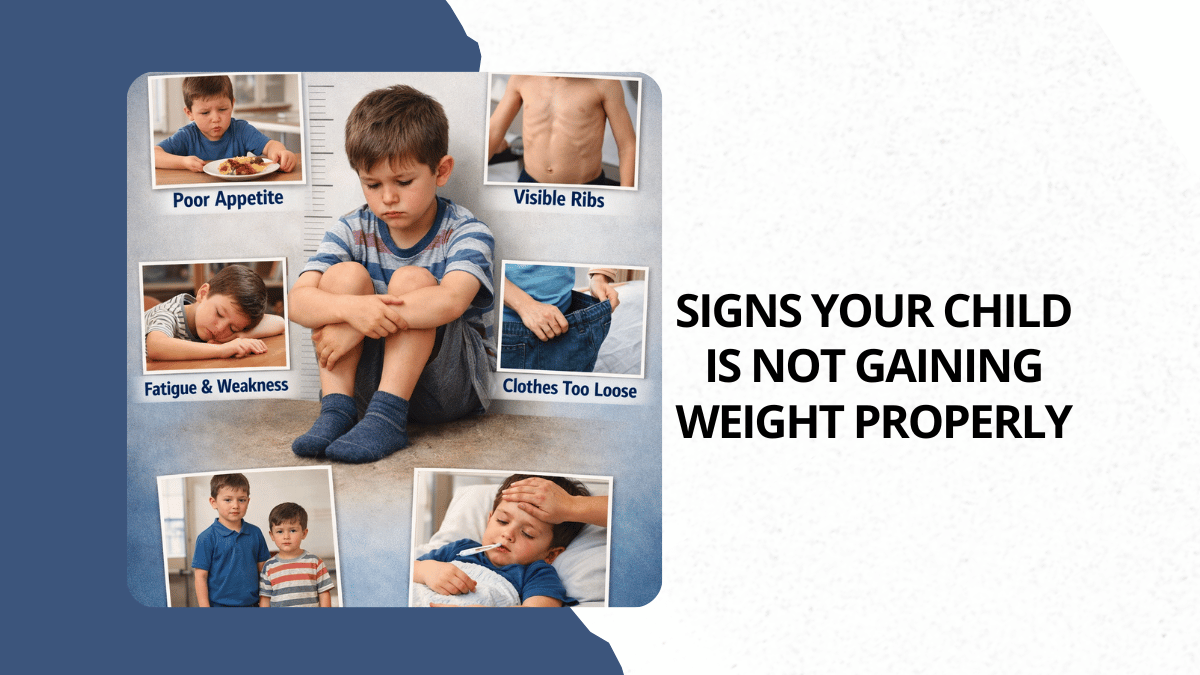
As a pediatrician, one of the most common concerns I hear from parents is, “Doctor, my child is not gaining weight properly.” Every child grows at their own pace, and not all children are meant to be chubby. However, steady and healthy weight gain is an important sign that a child is receiving adequate nutrition and is growing well. When weight gain is consistently slow or stagnant, it deserves attention - not panic, but careful evaluation.
Let me help you understand the warning signs that may suggest your child is not gaining weight as expected.
1. Clothes and Shoes Don’t Seem to Change in Size
If your child has been wearing the same size clothes or shoes for many months without outgrowing them, this can be an early sign of poor growth. Children usually outgrow their clothes every few months, especially in the first few years of life.
2. Visible Thinness or Prominent Bones
While slim children can be perfectly healthy, noticeable ribs, very thin arms and legs, or a sunken appearance of cheeks may suggest inadequate weight gain. A child who looks weaker compared to other children of the same age should be evaluated rather than dismissed as “just thin.”
3. Poor Appetite or Skipping Meals Often
Children can be picky eaters, but a child who regularly refuses food, eats very small quantities, or gets full after just a few bites may not be getting enough calories for growth. Persistent poor appetite is one of the most common reasons for poor weight gain.
4. Falling Behind on the Growth Chart
During regular health checkups, we plot a child’s height and weight on a growth chart. If your child’s weight curve is flattening or dropping percentiles over time, it is an important medical sign — even if the child appears active and playful.
5. Frequent Illnesses or Infections
Children who do not gain weight well may have lower immunity. If your child gets sick often, takes longer to recover, or has repeated coughs, colds, or diarrhea, nutrition and weight gain should be assessed.
6. Delayed Developmental Milestones
Poor weight gain can sometimes affect overall development. Delays in sitting, walking, talking, or poor concentration in school-aged children can be associated with inadequate nutrition and energy intake.
7. Tiredness and Low Energy Levels
A child who is constantly tired, unwilling to play, or lacking in stamina compared to peers may not be receiving enough nutrients to support growth and activity.
Why Some Children Do Not Gain Weight Well
There are many possible reasons:
- Inadequate calorie intake
- Feeding difficulties
- Recurrent infections
- Food allergies or intolerances
- Digestive problems
- Chronic illnesses such as asthma or anemia
- Emotional stress or feeding pressure
It is important to remember that not every thin child is unhealthy, but every child who is not growing well should be properly evaluated.
What Parents Should Do
If you notice any of these signs, avoid force-feeding or relying only on supplements without medical advice. A proper evaluation includes:
- Detailed dietary history
- Growth monitoring
- Physical examination
- Screening for anemia, infections, or allergies if needed
Often, small changes in diet, feeding routine, and treating underlying medical issues can significantly improve growth.
Growth is not just about numbers on a scale - it reflects your child’s overall health. Early identification of poor weight gain helps prevent long-term problems related to immunity, learning, and development. If you are worried about your child’s growth, trust your instincts and seek professional guidance. With the right approach, most children can achieve healthy and steady weight gain. Your child’s growth journey is unique, and as pediatricians, our goal is to walk that journey with you — ensuring not just weight gain, but healthy growth and well-being.

Add a Comment