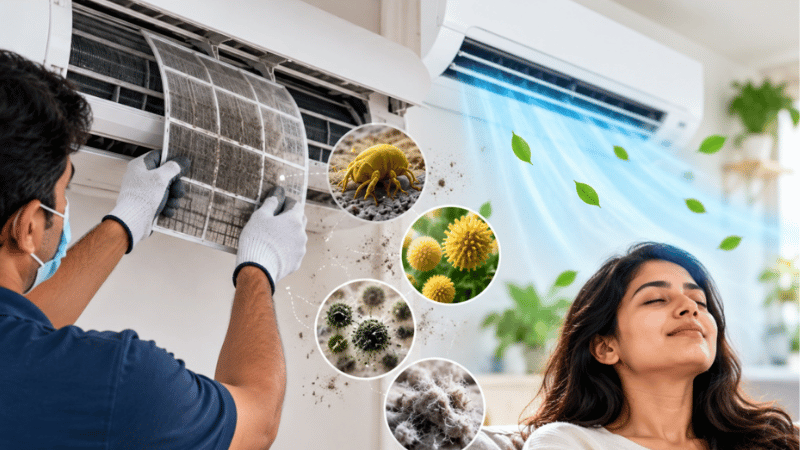
Does your sneezing, nasal congestion or coughing seem worse when you switch on the air conditioner? Dust, pollen and other airborne particles may contribute to allergy symptoms. A poorly maintained AC system can also allow dust and moisture-related problems to build up.
Regular air-conditioner maintenance can help improve indoor air quality, especially for people with allergic rhinitis or asthma.
Why Is AC Maintenance Important for Allergy Patients?
Air conditioners can help reduce exposure to outdoor pollen when windows are kept closed. However, dirty filters, accumulated dust and excess moisture can affect indoor air quality.
According to Mayo Clinic and Cleveland Clinic, regularly maintaining air filters and reducing indoor allergens are useful steps in managing environmental allergies.
How Often Should You Clean Your AC Filter?
• Washable AC filters: Check and clean them according to the manufacturer's instructions, often every few weeks during frequent use.
• Replaceable filters: Replace them at the interval recommended by the manufacturer. Some central HVAC filters may need replacement every 1–3 months, depending on the filter and usage.
• AC coils and drainage trays: Arrange periodic professional servicing, particularly if you notice dirt buildup, water leakage or a musty smell.
In dusty environments or homes where the AC runs for many hours daily, filters may need attention more frequently. Always follow the instructions for your specific unit.
5 AC Maintenance Tips for Allergy Patients
1. Clean filters regularly. Turn off the AC before removing the filter. Wash reusable filters as directed and let them dry completely before reinstalling.
2. Watch for musty smells. A persistent damp smell may indicate moisture or mould that needs investigation.
3. Keep indoor humidity under control. Aim for relative humidity below 50% where practical to discourage dust mites and mould.
4. Arrange professional servicing. Filters alone cannot remove every allergen. Coils, drainage lines and other components may also need cleaning.
5. Keep your bedroom clean. Wash bedding regularly, damp-dust surfaces and reduce dust-collecting clutter alongside AC maintenance.
Frequently Asked Questions
1. Can a dirty AC filter trigger allergies?
It may contribute to poor indoor air quality by allowing dust and particles to accumulate or circulate.
2. Should allergy patients use a HEPA filter?
A correctly sized HEPA air purifier may help reduce airborne particles. Check AC compatibility before using any high-efficiency filter in the unit.
3. Can AC cause coughing or wheezing?
Poor indoor air quality, mould or airborne irritants may worsen symptoms. Persistent wheezing or breathing difficulty needs medical assessment.
4. Does cleaning the AC cure allergies?
No. It can help reduce some exposures but does not treat the underlying allergic condition.
5. When should I seek medical advice?
Consult a healthcare professional if sneezing, congestion, coughing or wheezing persists despite reducing indoor triggers. Seek urgent care for severe breathing difficulty.
Final Thoughts
Regular AC filter cleaning, moisture control and timely servicing can support a healthier indoor environment. Combine these steps with appropriate allergy evaluation and treatment rather than relying on cleaning alone.
Visit Allergy Central, Indiranagar, Bengaluru, for professional evaluation of allergies, asthma and persistent respiratory symptoms.



Add a Comment