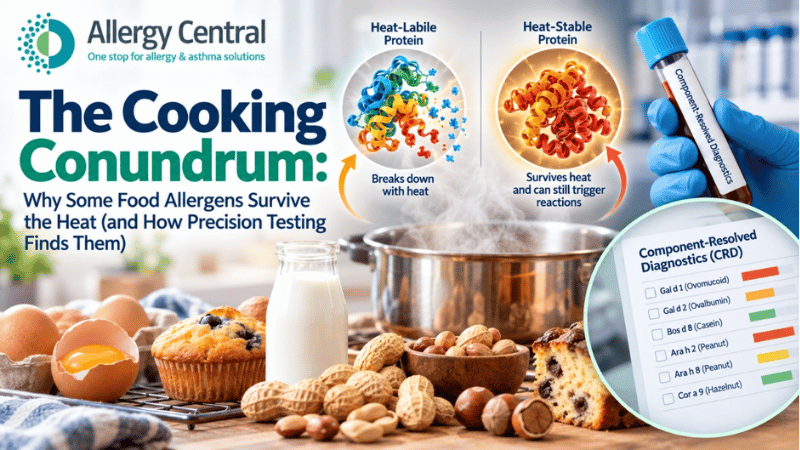
Cooking can change the proteins in food, but it does not always eliminate their ability to trigger an allergic reaction. Understanding this difference can help people with food allergies make safer, more informed decisions.
At Allergy Central, Component-Resolved Diagnostics (CRD) can help doctors investigate which specific food proteins may be involved in an allergic reaction.
Heat-Stable vs. Heat-Labile Proteins
Food contains different proteins, and they do not all respond to heat in the same way.
• Heat-labile proteins: These may lose some of their allergenic properties when heated. Some pollen-related food allergies, for example, cause symptoms mainly with raw foods.
• Heat-stable proteins: These can retain their ability to trigger allergic reactions even after cooking or processing.
However, cooking does not make every heat-labile allergen harmless, and some food-processing methods can increase allergenicity. Never assume a food is safe simply because it has been cooked.
How Does Component-Resolved Diagnostics Help?
Traditional skin prick tests and specific IgE blood tests assess sensitisation to whole-food extracts. CRD measures IgE antibodies against selected individual allergen components, offering additional information about possible reaction patterns.
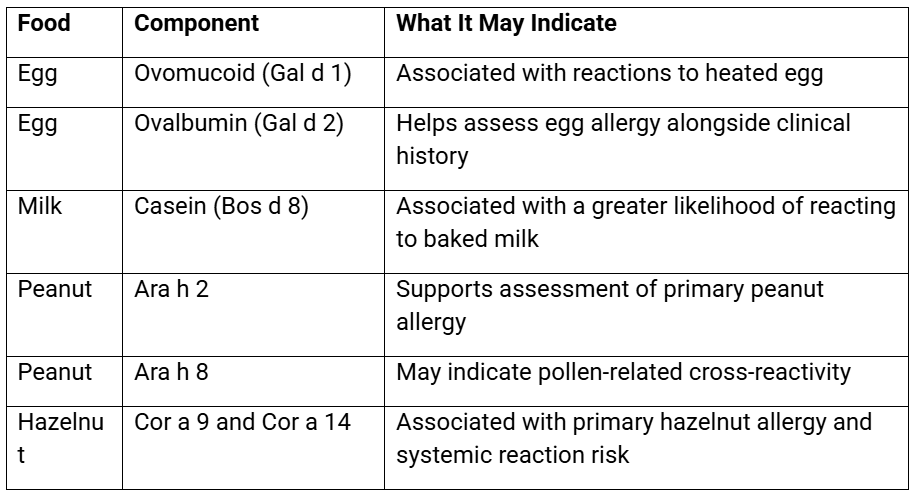
These results help guide clinical decisions, but they cannot predict the severity of every future reaction or confirm food tolerance on their own.
Why Does Precision Testing Matter?
CRD may help an allergist:
• Assess whether a sensitisation pattern is more consistent with primary food allergy or pollen-related cross-reactivity.
• Evaluate whether a patient may be suitable for a medically supervised baked-egg or baked-milk food challenge.
• Avoid unnecessary dietary restrictions when the diagnosis is unclear.
• Develop an individualised allergy management plan.
Important: Never try a previously avoided food at home based only on a component test result. An oral food challenge, when indicated, should be conducted under appropriate medical supervision.
Frequently Asked Questions
1. Does cooking destroy all food allergens?
No. Some proteins are more resistant to heat than others, and cooking does not guarantee safety.
2. Can someone with milk allergy eat baked cakes?
Some people tolerate extensively baked milk, while others react. Assessment by an allergist is essential before attempting reintroduction.
3. Does a positive CRD result confirm a food allergy?
Not by itself. Results must be interpreted alongside symptoms, medical history and other relevant tests.
4. Can CRD predict anaphylaxis?
Certain components are associated with a higher likelihood of systemic reactions, but no single result can reliably predict the severity of every reaction.
5. Is CRD useful for peanut allergy?
Yes. Components such as Ara h 2 can improve diagnostic assessment in appropriate clinical situations.
Final Thoughts
Heat changes food proteins, but it does not always remove their allergenic potential. Component-Resolved Diagnostics can provide valuable additional information to help doctors assess food allergies and guide safer, more personalised care.
Visit Allergy Central, Indiranagar, Bengaluru, for professional allergy evaluation and guidance on appropriate allergy testing.


Add a Comment