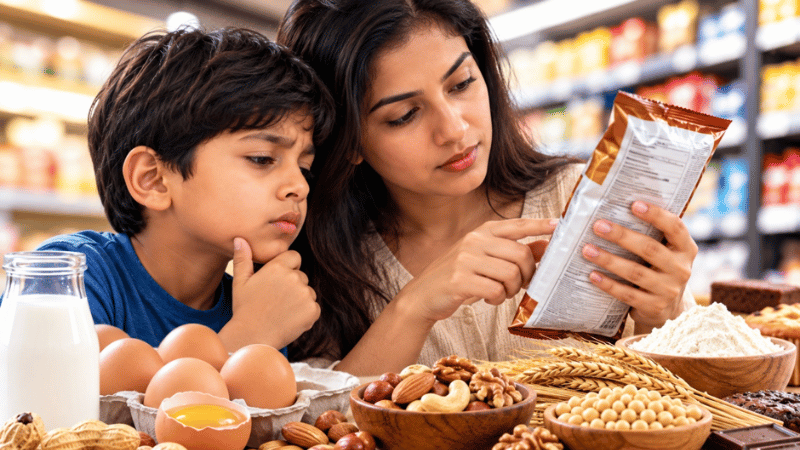
A simple guide to safer food choices for children and adults
A packaged snack, chocolate bar or bakery product may contain an ingredient you would never expect. For people with food allergies, reading food labels carefully is an important step towards preventing accidental reactions.
1. Start With the Ingredient List
Always read the complete ingredient list before buying or eating a packaged food. Look for your specific allergen, including less familiar names.
For example:
• Milk: Casein, whey, milk solids
• Egg: Albumin, egg powder
• Peanut and nuts: Peanut flour, almond paste, nut oils
• Soy: Soy protein, soy flour
• Wheat: Wheat flour, semolina
These examples are not exhaustive. If an ingredient is unfamiliar, check with the manufacturer or your allergist.
2. Understand “Contains” and “May Contain”
These statements have different meanings:
• “Contains milk” means milk is an ingredient in the product.
• “May contain peanuts” warns of possible accidental allergen presence during manufacturing.
• “Made in a facility that also processes nuts” indicates a possible cross-contact risk.
If a warning mentions your allergen, do not assume the product is safe because the amount may be small. The absence of a warning does not guarantee that cross-contact is impossible.
3. Never Rely on the Front of the Packet
Words such as “healthy,” “natural” or “high protein” do not mean a product is allergen-free. Even products you have eaten safely before can change their ingredients or manufacturing processes.
Read the label every time, including when buying a familiar brand.
4. Be Careful With Bakery Foods and Shared Spaces
Cakes, biscuits, chocolates, restaurant meals and unpackaged foods may contain hidden ingredients or be exposed to allergens through shared utensils and equipment.
Ask about ingredients and preparation practices. Avoid food when its allergen safety cannot be established.
5. Teach Children to Check Labels
Children with food allergies should learn to ask an adult before accepting food, sharing snacks or eating food brought by friends. Never encourage a child to taste a food to check whether it causes a reaction.
Frequently Asked Questions
1. Is “may contain” the same as “contains”?
No. “Contains” identifies an ingredient; “may contain” indicates possible accidental presence.
2. Can I trust a product I have eaten before?
Check its label every time because ingredients and manufacturing processes can change.
3. Are foods labelled “natural” safe for allergy patients?
Not necessarily. Always check the ingredients and allergen warnings.
4. Can cooking make an allergen safe?
Not reliably. Some food allergens remain capable of triggering reactions after cooking.
5. What should I do if I am unsure about an ingredient?
Avoid the product until you can clarify its ingredients and potential cross-contact risk.
Final Thoughts
Reading food labels is a practical habit that can help reduce accidental exposure to food allergens. Check the full ingredient list, understand warning statements and seek professional guidance when uncertain.
Visit Allergy Central, Indiranagar, Bengaluru, for professional evaluation and guidance on food allergies and appropriate allergy testing.


Add a Comment