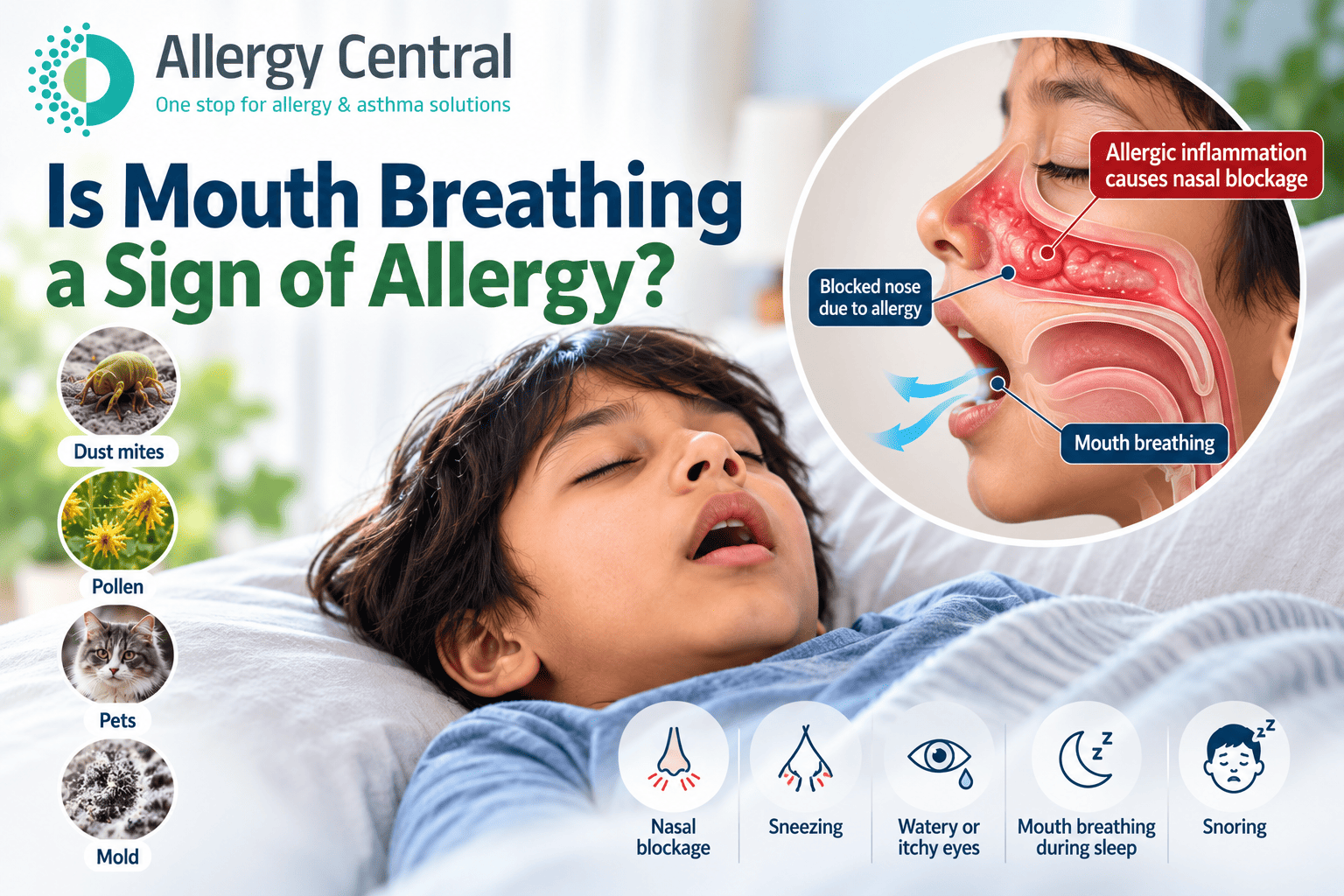
Do you or your child often sleep with your mouth open or breathe through the mouth during the day? Mouth breathing can sometimes be linked to allergies, but it is not always caused by an allergy.
When the nose is persistently blocked, breathing through the mouth can become a habit or a way to get enough airflow.
How Can Allergies Cause Mouth Breathing?
In allergic rhinitis, allergens can cause inflammation and swelling inside the nose. This may lead to a blocked or stuffy nose, making nasal breathing difficult. Children with chronic nasal allergy symptoms may therefore start breathing through their mouth.
Common allergy symptoms include:
- Sneezing
- Itchy nose or eyes
- Clear, watery nasal discharge
- Persistent nasal blockage
- Throat clearing or postnasal drip
If these symptoms repeatedly occur around triggers such as dust mites, pollen, pets or mold, allergy may be contributing.
But Mouth Breathing Is Not Always Allergy
Other causes of persistent mouth breathing include enlarged adenoids or tonsils, nasal congestion from infections, a deviated nasal septum and other conditions that obstruct nasal airflow. Enlarged adenoids in particular can cause children to breathe through their mouth, snore and sound congested when speaking.
This is why persistent mouth breathing should not simply be assumed to be an allergy.
When Should You See a Specialist?
Consider an evaluation if you or your child:
- Mouth-breathes regularly
- Has persistent nasal blockage
- Snores frequently
- Sleeps with the mouth open
- Has recurrent sneezing or itchy eyes
- Has disturbed or restless sleep
- Has difficulty breathing through the nose
An allergy specialist can assess whether allergic rhinitis is involved and decide whether allergy testing is appropriate. Other causes of nasal obstruction may require examination by an ENT specialist.
FAQs
1. Can allergies make a child breathe through the mouth? Yes. Allergic inflammation can cause persistent nasal blockage, which may lead to mouth breathing.
2. Is mouth breathing always caused by allergy? No. Enlarged adenoids, infections and structural nasal problems can also cause it.
3. Is mouth breathing while sleeping normal? Occasional mouth breathing can occur during nasal congestion. Regular mouth breathing or snoring should be evaluated.
4. Can enlarged adenoids cause mouth breathing? Yes. Enlarged adenoids can obstruct the nasal airway and are a common cause of mouth breathing and snoring in children.
5. Should I get an allergy test for mouth breathing? If there are additional symptoms such as sneezing, nasal itching, watery eyes or trigger-related congestion, an allergy evaluation may be useful.
Final Thoughts
Mouth breathing is a symptom, not a diagnosis. If it happens regularly, finding out why the nose is blocked is more important than simply treating the mouth breathing itself.
Visit Allergy Central, Indiranagar, Bangalore, for professional evaluation of allergies,


Add a Comment