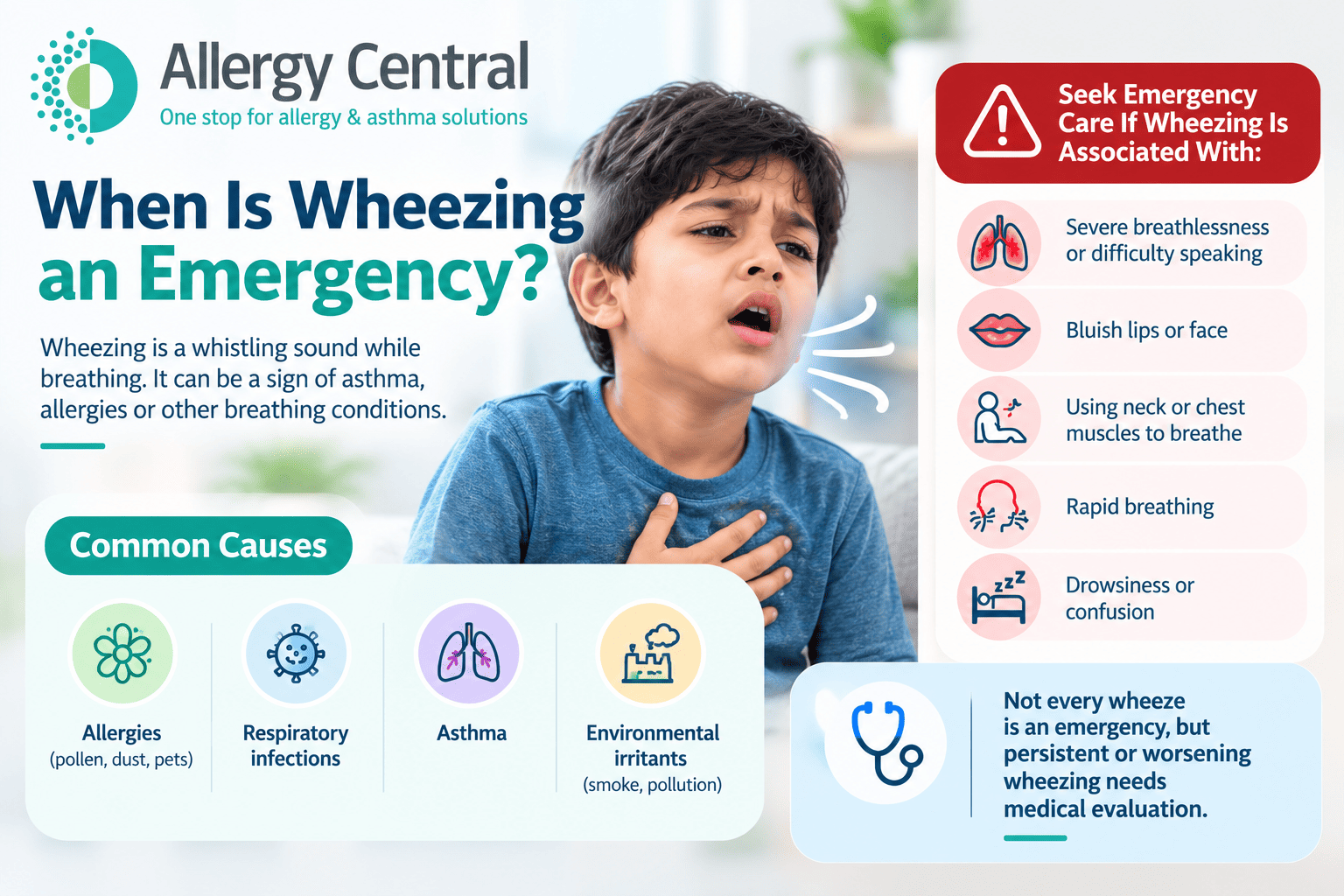
Wheezing is a high-pitched whistling sound while breathing. It can occur with asthma, allergies, respiratory infections and exposure to irritants. While occasional mild wheezing may not always be an emergency, severe or rapidly worsening wheezing can indicate significant airway narrowing and needs urgent medical attention.
What Are the Warning Signs?
Seek emergency medical care immediately if wheezing is accompanied by:
- Severe difficulty breathing or rapidly worsening breathlessness
- Difficulty speaking because of shortness of breath
- Blue or grey lips, face or skin
- Very rapid or laboured breathing
- Visible pulling-in of the chest or area below the ribs while breathing
- Severe chest tightness
- Extreme tiredness, dizziness, confusion or difficulty staying alert
- Wheezing that does not improve with the person's prescribed quick-relief medication
In children, nostril flaring, using the stomach muscles to breathe, or being unable to speak normally because of breathlessness are particularly concerning signs.
When Can Wheezing Be Allergy-Related?
Allergic asthma may cause wheezing after exposure to triggers such as dust mites, pollen, pets or mold. Smoke, air pollution and respiratory infections can also worsen wheezing.
Wheezing that suddenly begins after eating a suspected allergen, taking a medication or being stung by an insect can be part of a severe allergic reaction (anaphylaxis) and requires emergency treatment.
What Should You Do During an Asthma Emergency?
If the person has a prescribed asthma action plan, follow it immediately. Use the prescribed reliever medication as directed. If symptoms are severe, rapidly worsening or not improving, seek emergency medical help rather than waiting for the symptoms to settle.
Even if the episode improves, recurrent or unexplained wheezing deserves medical evaluation to identify whether asthma, allergy or another respiratory condition is responsible.
FAQs
1. Is every episode of wheezing an emergency?
No. Mild, short-lived wheezing may not be an emergency, but new, recurrent or worsening wheezing should be evaluated.
2. Can allergies cause wheezing?
Yes. Allergies can trigger asthma symptoms, including wheezing and breathing difficulty.
3. When should I take my child to the emergency room for wheezing?
If your child is struggling to breathe, cannot speak normally, develops blue/grey lips or skin, has chest retractions or is not improving with prescribed medication, seek emergency care immediately.
4. Can wheezing happen without asthma?
Yes. Respiratory infections, allergies, irritants and other airway conditions can also cause wheezing.
5. Should recurrent wheezing be investigated?
Yes. Repeated or unexplained wheezing should be assessed by a healthcare professional to determine the underlying cause.
Final Thoughts
Wheezing should never be ignored when breathing becomes difficult. Recognising severe symptoms early can make an important difference, especially during an asthma or allergic emergency.
Visit Allergy Central, Indiranagar, Bangalore, for professional evaluation of wheezing, allergies, asthma and related respiratory symptoms.


Add a Comment