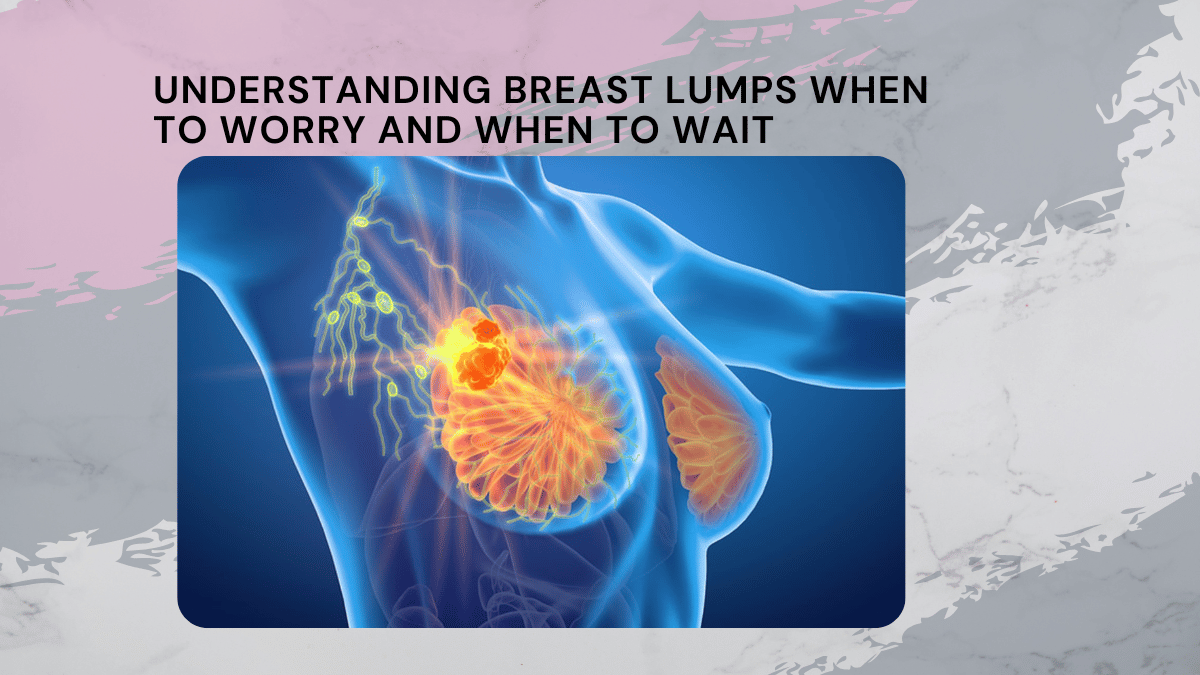
As a breast surgeon with years of experience, I’ve seen countless women walk into my clinic overwhelmed with fear after discovering a lump in their breast. That initial shock—whether it’s a tiny, barely noticeable lump or something more pronounced—can be upsetting. But not all lumps are cause for panic. Some are benign, and others require timely medical attention. My goal is to help women understand how to distinguish between what to worry about and what to observe, guiding them with compassion and clarity.
A Common Concern: The Surprise Lump:
Ms. Rhea, 22-years-old, first noticed a small, hard lump in her breast during a routine shower. Her initial instinct was panic—she immediately thought of the worst. But after a thorough examination, I reassured her that many breast lumps are benign, such as cysts or fibroadenomas, especially in women her age. She was advised to undergo an ultrasound and a fine-needle aspiration, which confirmed her lump was benign. Swelling, pain, or changes in size can be common, but they don’t always mean danger. It's crucial to get a professional assessment.
When Should You Worry? Signs to Watch For:
While many lumps are harmless, certain features warrant prompt medical attention. If a lump:
- Feels hard, irregular, or fixed to the skin or chest wall
- Is growing rapidly
- Is accompanied by skin changes, redness, or dimpling
- Causes persistent pain or tenderness
- Is associated with nipple changes or nipple discharge, especially if blood-stained
- Occurs alongside unexplained weight loss or fatigue
these signs might indicate a more serious condition such as breast cancer. For example, Ms. Reddy, a 52-year-old woman, ignored a small lump that grew steadily over a few months. When she finally visited me, the lump was large and irregular, and further tests confirmed her diagnosis of early breast cancer. Her story taught me that timely evaluation can make a significant difference.
The Role of Diagnostic Tests:
The good news is that with modern imaging techniques like mammography and ultrasound, plus the precision of biopsies, we can accurately assess most breast lumps. I often tell my patients that “not every lump is a crisis,” but any new or changing lump must be checked. These tests help distinguish benign from malignant conditions, ensuring that necessary treatments are started early—leading to better outcomes.
The Importance of Regular Screening and Self-Examination:
I always emphasize to women the importance of regular self-examinations and routine screenings. Early detection can save lives, and being familiar with your own body helps you notice changes sooner. I encourage women to perform monthly self-checks and get mammograms as recommended by their healthcare provider, especially if they have a family history of breast cancer.
A Message of Reassurance and Vigilance:
Discovering a lump in your breast can be frightening, but remember, most are benign. However, until it is properly examined and ruled out by a doctor or expert, it is always safer not to ignore it. The key is never to overlook changes. If you find a lump, consult a healthcare professional promptly. Early diagnosis and treatment can significantly improve outcomes and peace of mind.
Sharing my experiences over the years, I’ve learned that compassionate care, combined with modern diagnostics, helps women navigate this journey with confidence. Be proactive, stay informed, and always prioritize your health. Your breasts are an important part of your wellbeing—understand them, respect them, and seek help when needed.
In conclusion, aim for awareness and early detection. When it comes to breast lumps, knowledge truly is power—and timely action can be life-saving.

Add a Comment