Hello! I am Dr. Balachandra.
Many patients come to my clinic saying,
"Doctor, these itchy rashes disappear within a few hours, but new ones keep appearing somewhere else. Why does this keep happening?"
If your hives keep coming and going for more than six weeks, you may have Chronic Urticaria, sometimes accompanied by Angioedema.
The good news is that although it can be frustrating, it is usually treatable and manageable.
What Happens Inside the Skin?
Our skin contains special immune cells called mast cells.
In people with Chronic Urticaria, these mast cells become over-sensitive and release chemicals such as histamine too easily.
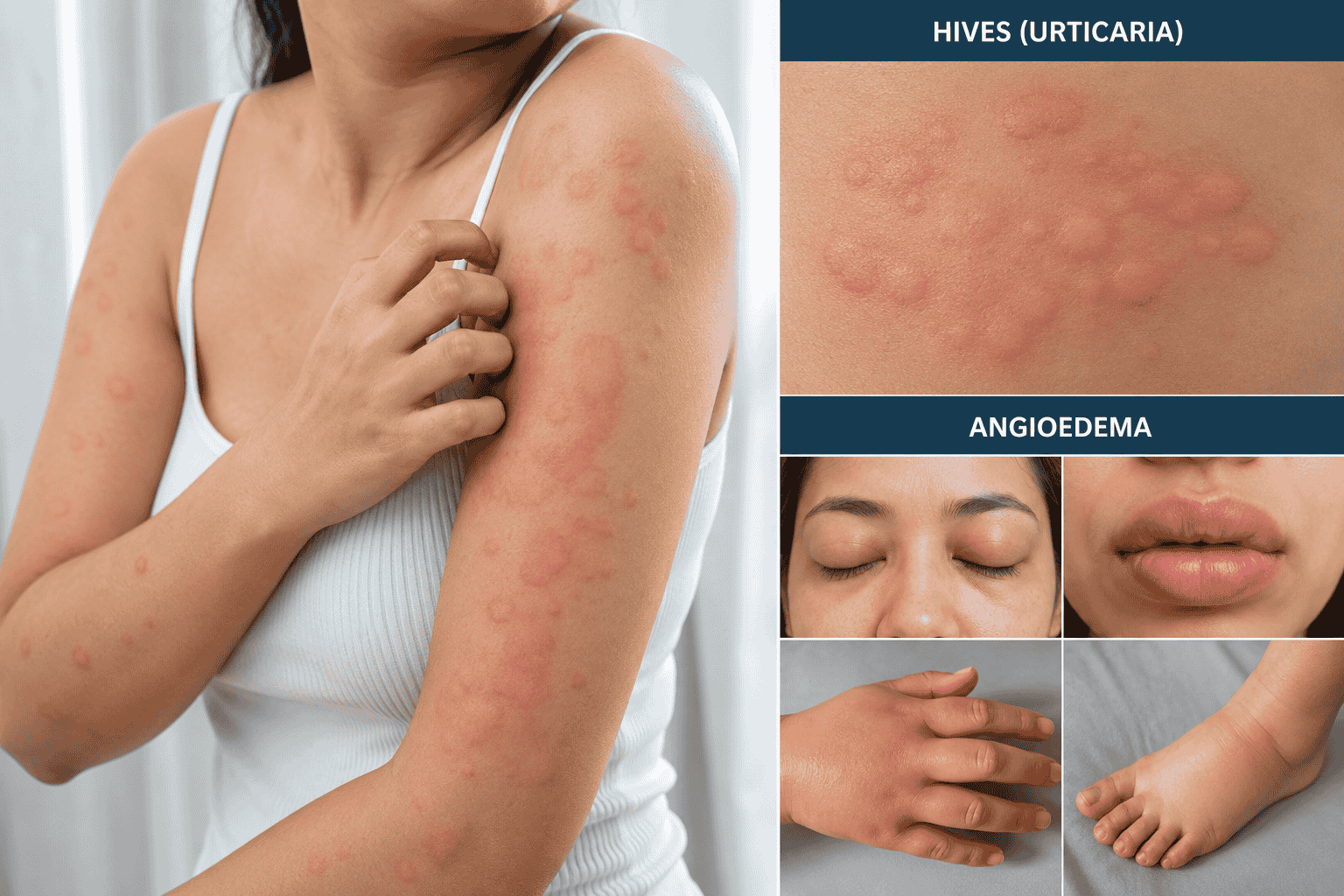
Histamine causes tiny blood vessels in the skin to leak fluid, resulting in raised, itchy swellings called hives (urticaria).
Each individual hive usually disappears within 24 hours without leaving a scar, but new ones may continue to appear, making the condition seem constant.
What Is Angioedema?
Sometimes the same mast cells release histamine deeper within the skin.
Instead of raised itchy hives, this causes Angioedema—a deeper swelling that commonly affects the:
- Eyelids
- Lips
- Hands
- Feet
- Face
Unlike hives, angioedema often feels tight, painful, or burning rather than itchy and may take longer to settle.
Some people experience hives alone, while others develop both hives and angioedema together.
Why Does It Keep Happening?
In most people, Chronic Urticaria is not caused by a food allergy.
Instead, the mast cells are naturally more sensitive, often because of a genetic tendency.
Common triggers include:
- Emotional stress
- Poor sleep
- Viral infections
- Heat or cold
- Tight clothing or pressure on the skin
- Food preservatives and certain chemicals
Some people notice flare-ups after eating protein-rich foods or animal products, even though they are not truly allergic to those foods.
Is Chronic Urticaria Dangerous?
Fortunately, Chronic Urticaria itself is usually not dangerous.
However, if swelling affects the tongue, throat, or breathing, it becomes a medical emergency and requires immediate medical attention.
Frequently Asked Questions (FAQs)
What is Chronic Urticaria?
Chronic Urticaria is a condition in which itchy hives continue to appear on and off for more than six weeks.
What is the difference between hives and angioedema?
Hives are raised, itchy skin welts, while angioedema is deeper swelling beneath the skin, commonly affecting the lips, eyelids, hands, or feet.
Is Chronic Urticaria caused by food allergy?
Usually not. Most cases result from over-sensitive mast cells rather than a true food allergy.
What can trigger Chronic Urticaria?
Stress, infections, poor sleep, temperature changes, pressure on the skin, preservatives, and certain chemicals may trigger flare-ups.
When should I seek emergency medical care?
Seek immediate medical attention if swelling affects your tongue, throat, or causes difficulty breathing.
Final Thoughts
Chronic Urticaria and Angioedema may seem unpredictable, but understanding the condition is the first step toward controlling it.
Rather than searching endlessly for a single food allergy, the focus is on calming the over-sensitive mast cells, identifying personal triggers, and following the right treatment plan. With proper care, most people can lead a normal, active life.
Contact Chirayu Multispeciality Clinic
Dr. Balachandra B V
Consultant Pediatrician & Allergy Specialist
Kasturi Nagar, Bangalore
If you have recurrent hives, unexplained swelling of the lips or eyelids, or chronic itching lasting more than six weeks, consult Dr. Balachandra B V for a comprehensive evaluation and a personalized treatment plan to help you control symptoms and improve your quality of life.



Add a Comment