Hello! I am Dr. Balachandra.
One of the most common questions I hear in my clinic is:
"Doctor, every time I eat a certain food, I feel uncomfortable. Is it a Food Allergy or Food Intolerance?"
Many people use these terms interchangeably, but they are actually very different conditions. Understanding the difference can help you avoid unnecessary food restrictions and, more importantly, identify potentially dangerous allergic reactions.
What is a Food Allergy?
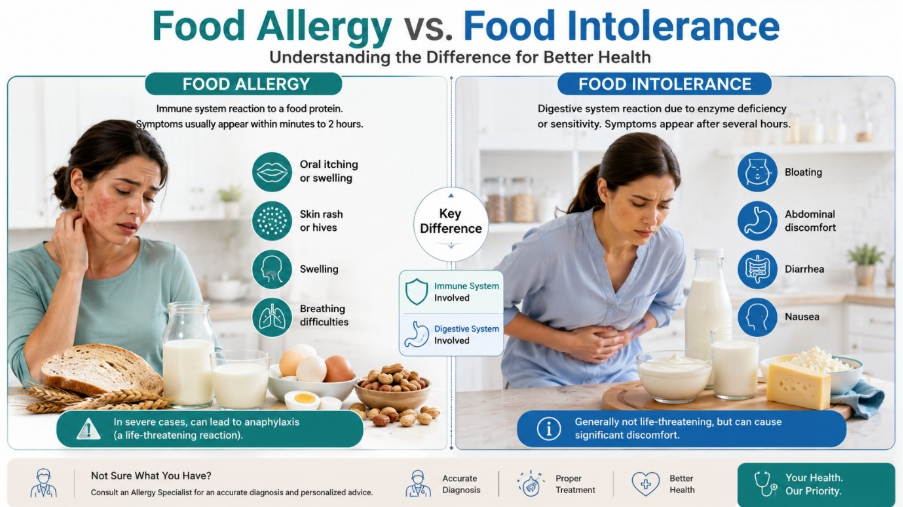
A Food Allergy occurs when the immune system mistakenly identifies a food as harmful and launches an attack against it.
Even a very small amount of the food can trigger symptoms, usually within a few minutes to 2–4 hours after eating.
Common Symptoms of Food Allergy
- Oral itching or tingling in the mouth
- Swelling of lips, tongue, or throat
- Skin rashes or hives
- Vomiting
- Abdominal pain
- Breathing difficulty
- Wheezing
- Dizziness
- Low blood pressure
In severe cases, a food allergy can cause anaphylaxis, a life-threatening emergency that requires immediate medical treatment.
Common food allergy triggers include:
- Milk
- Egg
- Peanut
- Tree nuts
- Shellfish
- Fish
- Wheat
What is Food Intolerance?
Food Intolerance is very different because the immune system is not involved.
Instead, the body has difficulty digesting certain foods, often due to enzyme deficiencies or sensitivity to food components.
Common Symptoms of Food Intolerance
- Bloating
- Gas
- Stomach discomfort
- Abdominal cramps
- Loose stools
- Nausea
Symptoms usually appear several hours after eating and are generally limited to the digestive system.
Unlike food allergies, food intolerance does not cause:
- Oral itching
- Breathing difficulty
- Hives
- Anaphylaxis
A Common Example: Lactose Intolerance
One of the most common food intolerances is Lactose Intolerance.
People with lactose intolerance do not produce enough lactase enzyme to digest the sugar found in milk.
After consuming dairy products, they may experience:
- Bloating
- Gas
- Stomach pain
- Diarrhea
This can be uncomfortable but is usually not dangerous.
What About Celiac Disease?
Many people think celiac disease is a wheat allergy, but it is actually an autoimmune condition.
In celiac disease, eating gluten damages the lining of the small intestine.
Symptoms may include:
- Chronic diarrhea
- Weight loss
- Nutritional deficiencies
- Poor growth in children
It requires lifelong avoidance of gluten-containing foods.
How Do We Diagnose Them?
Food Allergy
- Detailed allergy history
- Skin Prick Test
- Specific IgE Blood Test
Food Intolerance
There is no single reliable test.
Diagnosis is usually made through:
- Food diary tracking
- Elimination diets
- Symptom monitoring
Why Correct Diagnosis Matters
A child with a true food allergy may be at risk of anaphylaxis, while someone with food intolerance may only need dietary adjustments.
Getting the correct diagnosis helps:
✔ Avoid unnecessary food restrictions
✔ Prevent severe allergic reactions
✔ Improve nutrition and quality of life
If you suspect a food-related reaction, consult an allergy specialist rather than relying on internet advice or self-diagnosis.
FAQs
1. What is the difference between Food Allergy and Food Intolerance?
Food allergy involves the immune system, while food intolerance involves difficulty digesting certain foods.
2. Can Food Intolerance cause anaphylaxis?
No. Anaphylaxis occurs with food allergy, not food intolerance.
3. Is Lactose Intolerance a food allergy?
No. Lactose intolerance is caused by a deficiency of the lactase enzyme and is a digestive condition.
4. What is the first symptom of a food allergy?
Many patients experience oral itching, lip swelling, or hives soon after eating the trigger food.
5. Is celiac disease the same as wheat allergy?
No. Celiac disease is an autoimmune condition caused by gluten, while wheat allergy is an immune-mediated allergic reaction to wheat proteins.
When Should You See an Allergy Specialist?
Please consult an allergy specialist if you or your child experiences:
- Repeated reactions after eating specific foods
- Oral itching, lip swelling, or hives after meals
- Unexplained stomach pain, bloating, or diarrhea
- Suspected milk, egg, peanut, or wheat allergy
- Previous episodes of breathing difficulty or anaphylaxis
Early diagnosis can help identify the exact trigger, prevent severe allergic reactions, and improve quality of life.
Visit Chirayu Multispeciality Clinic, Kasturi Nagar, Bangalore for comprehensive allergy evaluation, Skin Prick Testing, Food Allergy Testing, and personalized treatment plans.
Book an Appointment Today
Consult Dr. Balachandra B V, Allergy & Asthma Specialist
at Chirayu Multispeciality Clinic, Kasturi Nagar, Bangalore.
Final Thoughts
Not every reaction to food is a food allergy, and not every digestive problem is food intolerance.
Understanding the difference between Food Allergy, Food Intolerance, Lactose Intolerance, and Celiac Disease can help you make informed decisions about your health and your child's nutrition.
If you notice symptoms such as oral itching, recurrent stomach problems, skin rashes, or breathing difficulties after eating certain foods, don't ignore them. Proper diagnosis is the key to preventing complications, including anaphylaxis, and ensuring a safe, healthy diet.
For expert Food Allergy and Food Intolerance evaluation, visit Chirayu Multispeciality Clinic, Kasturi Nagar, Bangalore.
Dr. Balachandra B V
Allergy & Asthma Specialist
Chirayu Multispeciality Clinic, Kasturi Nagar, Bangalore



Add a Comment