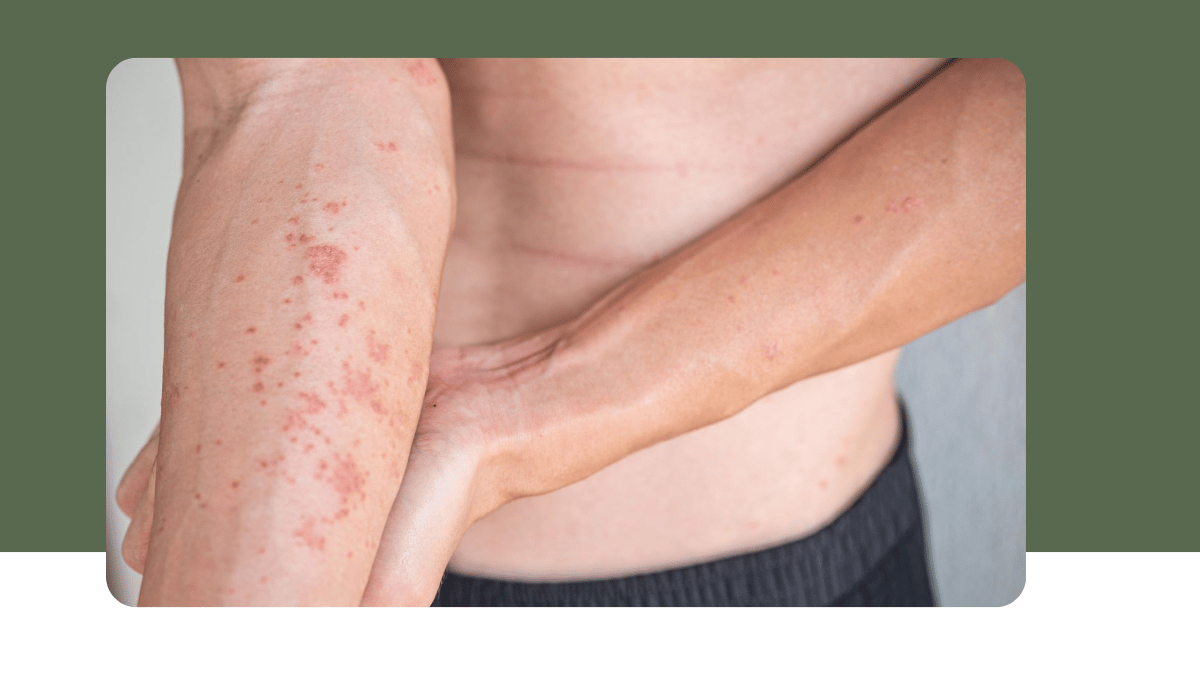
Atopic dermatitis , eczema , is not primarily a skin disease. It is an allergic immune condition that expresses itself in the skin. The skin is the organ where the disease is visible and where the most immediate treatment need exists, and topical management of the skin inflammation is both correct and important. But treating eczema exclusively as a skin condition, without evaluating the allergic immune mechanism and the specific allergens or triggers that are driving the skin inflammation, produces the outcome that the majority of patients with recurrent eczema have already experienced before they reach my clinic: the flare improves with topical steroid cream, resolves, returns within weeks, and the cycle continues indefinitely without any reduction in the underlying frequency or severity of flares. My Fellowship in Allergy, Asthma and Immunotherapy, combined with my MS ENT, DNB ENT, and Fellowship in Rhinology, places atopic dermatitis within the full allergic disease framework of the allergic march, where eczema in infancy or childhood is the first expression of the same immune dysregulation that, in the nasal mucosa, produces allergic rhinitis and, in the bronchial airway, produces asthma. At my Chennai clinics at Sri Hospitals, Tondiarpet, and Royal Pearl ENT Clinic and Hospital, Thiruvanmiyur, atopic dermatitis is evaluated as a systemic allergic condition in which the skin is one expression, not as a dermatological problem with an incidental allergy history.
Chennai's HDM Connection and Why Persistent Eczema Here Is Frequently Environmentally Driven
In Chennai's coastal tropical climate, where humidity levels support year-round house dust mite populations at intensities among the highest in India, persistent atopic dermatitis that does not adequately respond to topical treatment alone is frequently being maintained by continuous environmental allergen exposure that the topical treatment cannot address. The mechanism is well established: house dust mite allergen, present in high concentrations in Chennai's mattresses, pillows, upholstered furniture, and soft furnishings year-round without any seasonal reduction, is absorbed through the compromised skin barrier of an eczema patient whose skin permeability is already increased by the inflammatory skin disease. This trans-dermal allergen absorption drives further allergen sensitisation and amplifies the skin's inflammatory response. A child or adult whose eczema is concentrated on the limbs and body, who has a positive house dust mite-specific IgE on allergy testing, and whose skin inflammation correlates with time spent in the bedroom, is almost certainly in a continuous loop of exposure, sensitisation, and inflammation from the domestic mite population in their sleeping environment. The management of this pattern requires both the topical anti-inflammatory and skin barrier restoration components that are standard in eczema care, and a specific allergen avoidance programme targeting the bedroom environment: allergen-barrier mattress and pillow covers, frequent hot washing of bedding, reduction of soft furnishings, and where indicated air filtration. For patients in Chennai, where compliance with HDM avoidance measures is particularly important because the allergen is present at such high intensity year-round, the avoidance guidance I provide at the consultation is specific to the Thiruvanmiyur and Tondiarpet residential environments rather than generic.
Contact Allergy, the Food-Eczema Connection in Adults, and What the Full Allergy Evaluation Reveals
Contact allergy is a clinically important and systematically under-evaluated cause of persistent eczema in Chennai's population, and it is particularly relevant in a city where skincare product use, aesthetic awareness, and the cosmetics market have expanded substantially over the past decade. Contact allergy is a type IV delayed hypersensitivity reaction to a specific chemical in a topical product: a preservative, a fragrance component, an emulsifier, or an active ingredient in a skincare preparation, haircare product, or household item. Unlike IgE-mediated food and inhalant allergy, which produces symptoms within minutes of exposure, contact allergy produces a reaction that typically appears 24 to 72 hours after the allergen contact, making the connection between the product and the skin reaction difficult for patients to identify without guidance. Patch testing, performed by applying standardised allergen panels to the skin of the upper back under occlusion for 48 hours and reading at 72 and 96 hours, identifies the specific contact allergens driving the reaction. In a patient with eczema who is applying multiple topical products including prescribed topical steroids, emollients, and over-the-counter skincare, the identification of a contact allergen in one of those products is the finding that changes the management from further treatment escalation to allergen elimination. The food allergy-eczema connection in adults is less widely recognised than in children, but it is clinically significant. Adults with recurrent eczema in whom food allergy evaluation has not been performed may have contributing sensitisations to shellfish, tree nuts, wheat, or other foods whose influence on their skin inflammation has not been identified because the reaction is delayed rather than immediate. The combined allergy evaluation at my Chennai clinics, including skin prick testing for inhalant and food allergens and patch testing for contact allergens where indicated, provides the complete picture of what is driving each patient's eczema, and this is the evaluation that turns recurrent eczema from a chronic frustration into a manageable condition with specific, actionable interventions.
To book a consultation with Dr. Janani Marianne A at Sri Hospitals, Tondiarpet, Chennai (+91 9626482592, Monday to Saturday 8:00 AM to 10:00 AM) or Royal Pearl ENT Clinic and Hospital, Thiruvanmiyur, Chennai (Monday and Saturday 6:30 PM to 9:00 PM), call +91 9626482592.
Written by Dr. Janani Marianne A, MS ENT, DNB ENT, Fellowship in Allergy, Asthma and Immunotherapy, Fellowship in Rhinology, Consultant ENT Surgeon and Allergy Disorders Specialist, Sri Hospitals, 32, Varadaraja Perumal Koil Street, Sanjeevarayanpet, Tondiarpet, Chennai 600081 (Monday to Saturday, 8:00 AM to 10:00 AM) and Royal Pearl ENT Clinic and Hospital, 4/11, Jeevanandam Road, Lakshmipuram, Radhakrishnan Nagar, Thiruvanmiyur, Chennai 600041 (Monday and Saturday, 6:30 PM to 9:00 PM). 10+ years. 1,000+ patients. Phone: +91 9626482592. Fluent in English, Telugu, Tamil, and German.
Related reading
Meet Dr. Janani Marianne A: ENT Surgery, Allergy Fellowship, and Aesthetic Practice in Chennai



Add a Comment