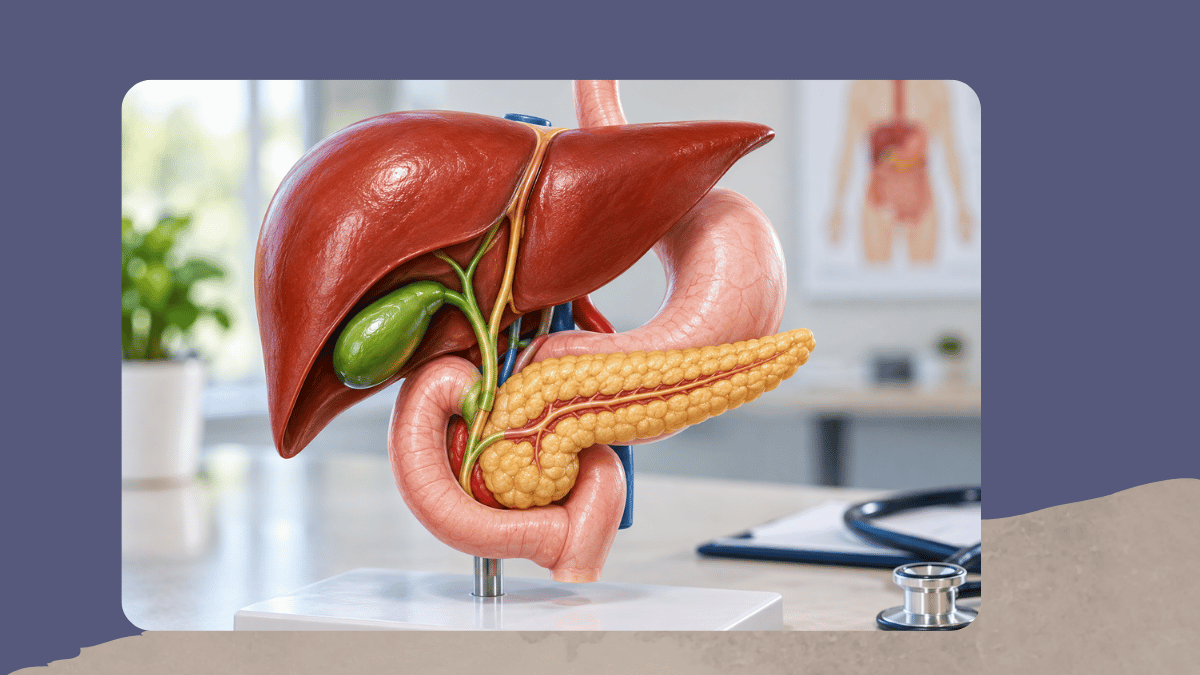
In my complete guide to advanced laparoscopic GI surgery, I briefly described hepatobiliary surgery as part of the spectrum of complex gastrointestinal procedures I perform in Mysuru. I want to expand that section here, because the gallbladder, liver, and pancreas are three organs that most people understand in general terms but rarely fully appreciate in clinical terms, until a problem arises in one of them. These three organs are closely related anatomically and functionally, and problems in one frequently have consequences for the others. A gallstone that migrates from the gallbladder into the common bile duct, for example, can obstruct bile flow, cause jaundice, and if the obstruction becomes infected, produce cholangitis, a condition that can be life-threatening without prompt treatment. Understanding when a hepatobiliary problem requires specialist surgical assessment rather than medical management alone is the starting point for protecting the best possible outcome.
Gallbladder Problems Beyond Straightforward Gallstones
Laparoscopic cholecystectomy for symptomatic gallstone disease is, as I described in the pillar guide, one of the most common operations in my practice, and the large majority of these are straightforward. But gallstone disease has a spectrum of severity, and the more complex presentations are where dedicated hepatobiliary surgical expertise makes the most difference. Bile duct stones, where stones have passed from the gallbladder into the common bile duct, produce obstruction of bile flow and require a combination of endoscopic removal of the bile duct stone (usually by ERCP) and laparoscopic removal of the gallbladder, often in the same admission. Mirizzi syndrome, where a gallstone impacted in the cystic duct compresses the common bile duct, creates an anatomy that requires careful and experienced operative planning. Acute cholecystitis that has progressed to gangrenous gallbladder or perforation requires urgent surgery in an inflamed and distorted anatomical field. These complex gallstone presentations require a surgeon with specific experience in difficult biliary surgery, not just high-volume routine cholecystectomy, and my Fellowship in Pancreato-Biliary Surgery from SGPGIMS Lucknow is the foundation of that specific expertise.
Liver Surgery: When a Lesion Needs More Than a Scan and a Wait
Liver lesions are increasingly identified incidentally on ultrasound or CT performed for unrelated reasons, and the most common question patients bring to my clinic after an incidental finding is whether they need surgery or whether they can simply be monitored. The answer depends entirely on the nature of the lesion. Simple liver cysts, which are fluid-filled spaces with characteristic imaging features, generally require no treatment. Haemangiomas, the most common benign liver tumour, are almost always managed conservatively. But focal nodular hyperplasia, hepatocellular adenoma, and hepatocellular carcinoma represent a spectrum of findings where the management decision is far more nuanced and where specialist hepatobiliary input is essential. Hepatocellular carcinoma requires multidisciplinary assessment and, in selected patients, laparoscopic or open liver resection as a potentially curative intervention. Colorectal liver metastases, where bowel cancer has spread to the liver, can in some patients be resected with curative intent, making hepatobiliary surgical assessment a critically important part of comprehensive colorectal cancer care.
Pancreatic Surgery: The Organ That Demands Specialist Attention
The pancreas sits deep in the abdomen, behind the stomach, and its location makes it one of the most technically challenging organs to operate on. Pancreatic surgery encompasses a spectrum from minimally invasive management of uncomplicated acute pancreatitis to major resections for pancreatic cancer, and the entire spectrum requires specific expertise. Acute pancreatitis, inflammation of the pancreas most commonly caused by gallstones or alcohol, ranges from mild self-limiting illness to severe necrotising pancreatitis requiring intensive care and, in selected cases, minimally invasive necrosectomy. Chronic pancreatitis produces recurrent pain, digestive impairment, and in some cases biliary or duodenal obstruction requiring surgical drainage or bypass. Pancreatic cysts detected incidentally on imaging require careful characterisation and specialist assessment to determine which are benign and can be monitored, which require further investigation, and which require resection. Pancreatic cancer requires prompt specialist evaluation because surgical resection, where feasible, offers the only potential for cure, and the window in which resection is technically possible is directly related to the stage at which the diagnosis is made.
When to Seek a Hepatobiliary Surgical Consultation in Mysuru
A hepatobiliary surgical assessment is appropriate for any of the following situations. Jaundice, particularly when associated with pale stools, dark urine, and abdominal discomfort, suggests bile duct obstruction requiring prompt evaluation. Recurrent attacks of right upper abdominal pain after a previous cholecystectomy, which may indicate retained bile duct stones. An incidental liver or pancreatic lesion identified on imaging that has not yet been formally characterised and assessed for management. A history of gallstone pancreatitis, where specialist evaluation of the biliary system and timing of cholecystectomy are important for preventing recurrence. A diagnosis of gastrointestinal cancer where liver or pancreatic involvement needs surgical assessment for resectability. And any presentation where a general surgical opinion has been sought but the complexity of the biliary or pancreatic anatomy suggests that subspecialty input would be appropriate. At Narayana Multispeciality Hospital and RK Speciality Clinic, Mysuru, I provide dedicated hepatobiliary surgical assessment and treatment across this full clinical spectrum, bringing 23 years of surgical gastroenterology experience and dedicated subspecialty training in pancreato-biliary surgery to patients across Mysuru and the wider Karnataka region.
To book a consultation with Dr. Lokesh H M at RK Speciality Clinic, Vijayanagar 2nd Stage, Mysuru (Monday to Saturday, 7:00 PM to 8:30 PM) or Narayana Multispeciality Hospital, Mysuru (Monday to Saturday, 9:30 AM to 4:30 PM), call +91 89719 08095.
Written by Dr. Lokesh H M, MBBS, MS General Surgery, MCh Surgical Gastroenterology, Fellowship in Pancreato-Biliary Surgery, FMAS (Fellowship in Minimal Access Surgery), Senior Consultant Surgical Gastroenterologist, Narayana Multispeciality Hospital, Mysuru and RK Speciality Clinic, Vijayanagar, Mysuru. 23+ years. 10,000+ patients. Phone: +91 89719 08095.
Related reading
Advanced Laparoscopic Gastrointestinal Surgery: A Complete Guide to Minimally Invasive GI Surgery
Building Trust Before Surgery: How Dr. Lokesh H. M. Helps Patients Feel Informed and Confident

Add a Comment