
kavya-chikkam

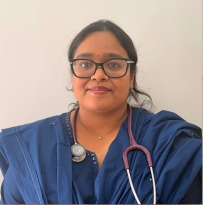
Dr. Kavya Chikkam (Little Lung Children’s Clinic)

Consultant General Pediatrics, Pediatric Pulmonology, Allergy & Asthma

MBBS, MD (Pediatrics), Fellowship in Pediatric Respiratory Medicine (UK), Diplomate in Pediatric Respiratory Medicine (ERS), Diploma in Pediatric Sleep Medicine

10+ Years of Excellence

12,000+ Patients Treated

10+ Years of Excellence

12,000+ Patients Treated

LinQ Card

About Dr. Kavya Chikkam (Little Lung Children’s Clinic)

Dr. Kavya is a warm and experienced pediatrician offering care as both a General Pediatrician and a Pediatric Pulmonologist. She gives families the comfort of one trusted doctor for all of their child's needs - from routine check-ups, vaccinations, and growth milestones to specialized breathing and lung concerns. With an MD in Pediatrics and fellowship training in Pediatric Pulmonology, she has a special gift for children's respiratory health- helping little ones with asthma, chronic cough, recurrent wheeze, and allergies find real relief. Loved by children for her gentle, patient manner and trusted by parents for her calm, thorough approach, Dr. Kavya has a way of putting even the most anxious little patients at ease at Little Lungs Children's Clinic.


Dr. Kavya Chikkam specialises in Pediatric Pulmonology, with a special focus on childhood asthma, allergies, sleep-related breathing disorders, and complex respiratory diseases. She has expertise in diagnosing and treating conditions such as bronchiectasis, cystic fibrosis, primary ciliary dyskinesia, chronic cough, recurrent respiratory infections, and genetic lung disorders. Her clinical interests also include pediatric airway evaluation, flexible bronchoscopy, long-term ventilation, tracheostomy care, and multidisciplinary management of children with chronic respiratory illnesses. Alongside her specialist respiratory practice, Dr. Kavya provides comprehensive general pediatric care, including routine vaccinations and monitoring of growth and development. She also specialises in the evaluation and management of pediatric allergy and sleep disorders, providing personalised, evidence-based care for children with respiratory, allergic, and sleep-related concerns. With advanced international training and a strong academic background, she delivers holistic care that promotes healthy development, healthy lung function, and long-term respiratory wellness.


Dr. Kavya Chikkam (Little Lung Children’s Clinic)'s Areas of expertise

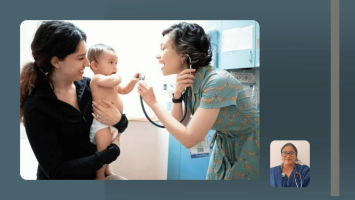
  • General Pediatrics – Comprehensive healthcare for infants, children, and adolescents, including preventive care, routine check-ups, vaccinations, and management of common childhood illnesses.
  • Vaccinations – Age-appropriate pediatric immunisation and preventive vaccination care.
  • Growth & Development – Monitoring physical growth, developmental milestones, and overall wellbeing.
  • Pediatric Pulmonology – Diagnosis and management of asthma, chronic cough, recurrent respiratory infections, bronchiectasis, cystic fibrosis, and complex respiratory disorders.
  • Pediatric Asthma Management – Comprehensive diagnosis, personalised treatment, and long-term control of childhood asthma.
  • Pediatric Allergy Care – Evaluation and management of allergies and allergic airway diseases in children.
  • Allergy & Sleep Disorders – Assessment and management of pediatric allergies, allergic airway conditions, and sleep-related breathing disorders.
  • Flexible Bronchoscopy – Advanced airway evaluation and minimally invasive diagnostic procedures for complex respiratory conditions.
  • Chronic Respiratory Disorders – Management of recurrent lung infections, chronic cough, persistent breathing difficulties, and long-term respiratory conditions.
  • Cystic Fibrosis & Bronchiectasis – Specialised management of chronic suppurative lung diseases.
  • Primary Ciliary Dyskinesia & Genetic Lung Disorders – Diagnosis and multidisciplinary management of rare and inherited respiratory conditions.
  • Pediatric Sleep Medicine – Evaluation and management of obstructive and non-obstructive sleep-related breathing disorders.
  • Long-Term Ventilation & NIV – Respiratory support and follow-up for children requiring long-term ventilation.
  • Tracheostomy Care – Ongoing management and multidisciplinary care for children with tracheostomies.
  • PICU & NICU Respiratory Care – Advanced respiratory assessment and support for critically ill newborns, infants, and children.
  • Voice Disorders – Diagnosis and management of hoarseness, vocal cord disorders, and other voice problems.
  • Phoniatrics – Specialised evaluation and management of voice, speech, swallowing, and communication disorders.
  • MBBS - Krishna Institute of Medical Sciences
  • MD (Pediatrics) - NKP Salve Institute of Medical Sciences
  • Fellowship in Pediatric Respiratory Medicine – Birmingham Children's Hospital, United Kingdom
  • Diplomate in Pediatric Respiratory Medicine – European Respiratory Society (ERS)
  • Diploma in Pediatric Sleep Medicine
  • Certified in Allergy & Asthma (MedTrain)
  • Certified in Flexible Bronchoscopy
  • Long-Term Ventilation Course – Great Ormond Street Hospital, United Kingdom 

Conditions and Treatments

General Pediatrics
General Pediatrics

Children's health needs span the full continuum from newborn care through infancy, toddlerhood, school age, and adolescence, and each stage brings its own pattern of developmental milestones, vaccination requirements, nutritional needs, and health concerns that benefit from consistent expert paediatric review. General paediatric care encompasses routine health checks, physical and developmental milestone monitoring, immunisation according to current schedules, nutritional assessment and guidance, management of acute childhood illnesses including fever, cough, respiratory infections, and gastrointestinal conditions, and early identification of developmental or behavioural concerns requiring specialist input. Dr. Kavya Chikkam combines a comprehensive foundation in general paediatrics, drawn from her MD Paediatrics and her 15+ years of clinical practice across India and the NHS, United Kingdom, with the specialist depth of a Paediatric Pulmonologist, Allergy Specialist, and Sleep Medicine expert, making Little Lung Children's Clinic, kokapet, hyderabad, a single point of care for families whose child needs both routine paediatric support and specialist respiratory, allergy, or sleep assessment.

 Paediatric Cough, Asthma, Allergy, and Chronic Lung Conditions
Paediatric Cough, Asthma, Allergy, and Chronic Lung Conditions

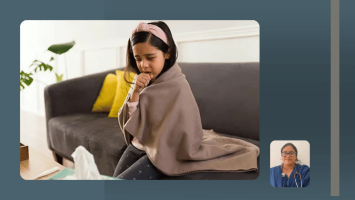
Childhood asthma, allergic airway disease, and chronic lung conditions require a specialist approach that goes beyond symptom-by-symptom treatment to identify the underlying diagnosis and build a long-term management strategy. Acute and chronic cough in children, recurrent wheezing, allergic rhinitis, food allergy, bronchiectasis, cystic fibrosis, non-cystic fibrosis bronchiectasis, primary ciliary dyskinesia, and interstitial lung disease all require accurate diagnosis through spirometry, allergy testing, chest imaging, microbiological evaluation, or flexible bronchoscopy, and a management plan tailored to the specific condition and the child's stage of development. Dr. Kavya Chikkam, with Fellowship training in Paediatric Respiratory Medicine from Birmingham Children's Hospital, UK, Diplomate status from the European Respiratory Society, and certifications in Flexible Bronchoscopy, Allergy and Asthma, and Long-Term Ventilation from Great Ormond Street Hospital, UK, provides specialist management of this full clinical spectrum at Little Lung Children's Clinic, kokapet, hyderabad, including non-invasive ventilation, long-term home ventilation, and tracheostomy care for children with complex or technology-dependent respiratory needs.

Paediatric Sleep Disorders and Sleep-Disordered Breathing

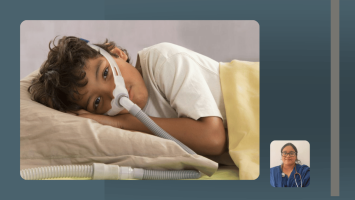
Sleep disorders are among the most underdiagnosed conditions in paediatric practice, presenting as snoring, laboured sleep breathing, pauses in breathing, restless nights, excessive daytime sleepiness, attention difficulties, and declining school performance that are attributed to other causes when the root is an untreated sleep disorder. Obstructive sleep apnoea in children, where the upper airway collapses during sleep producing oxygen desaturation and fragmented sleep, is the most common sleep breathing disorder and most frequently caused by adenotonsillar hypertrophy; central sleep apnoea, where the brain's breathing drive is impaired, occurs in children with neuromuscular disease or brainstem conditions. Dr. Kavya Chikkam's Diploma in Paediatric Sleep Medicine and Fellowship in Paediatric Respiratory Medicine from Birmingham Children's Hospital, UK, place her uniquely to evaluate and manage the full spectrum of paediatric sleep disorders in kokapet, hyderabad, including polysomnography, CPAP and BiPAP initiation, and overnight monitoring and ventilator titration for children on home ventilation, addressing the growth, neurocognitive, and behavioural consequences of untreated sleep disorders before they become irreversible.

Dr. Kavya Chikkam (Little Lung Children’s Clinic)'s Expert Tips & Health Insights

Latest

Articles by Dr. Kavya Chikkam (Little Lung Children’s Clinic)

https://d2vvc091k8tmib.cloudfront.net/s3fs-public/2026-08/Meet%20Dr.%20Kavya%20Chikkam%20International%20Training%2C%20Specialist%20Depth%2C%20and%2015%20Years%20of%20Paediatric%20Lung%20and%20Sleep%20Care%20in%20Bengaluru.png
https://d2vvc091k8tmib.cloudfront.net/s3fs-public/2026-07/9au0TAOlafyK2njT57LDZj33SaKFq2q0uOtpIans.jpg
By: Dr. Kavya Chikkam (Little Lung Children’s Clinic)
07 August 2026

Meet Dr. Kavya Chikkam: International Training, Specialist Depth, and 15+ Years of Paediatric Lung and Sleep Care in Kokapet Hyderabad

Dr. Kavya Chikkam - Consultant Paediatric Pulmonologist, Birmingham Fellowship, ERS Diplomate, Diploma in Paediatric Sleep Medicine, Kokapet Hyderabad - 15+ years and 12,000 patients in specialist paediatric lung, allergy, and sleep care.
Read More

Dr. Kavya Chikkam (Little Lung Children’s Clinic)'s Patient Testimonial Reviews

Leave a Review

Patient Reviews

Dr. Kavya Chikkam (Little Lung Children’s Clinic)

Leave a Review

Frequently Asked Questions

Frequently Asked Questions

View all

Can a child with asthma do sports and physical activity normally?

Yes  -  and the answer to this question matters enormously for a child's physical health, social participation, and self-confidence. Asthma, when well controlled, should not prevent a child from participating in sports and physical activity at the same level as their peers. Many elite athletes have asthma and manage it successfully. The condition that concerns families about sport is exercise-induced bronchoconstriction  -  EIB  -  where physical activity triggers airway narrowing, producing cough, wheeze, chest tightness, or breathlessness during or after exercise. EIB is common in children with asthma but it is manageable: a short-acting bronchodilator inhaler taken 10 to 15 minutes before exercise prevents EIB in most children, and a warm-up period of 10 to 15 minutes of moderate exercise before more intense activity also reduces the bronchoconstriction response. Swimming is often said to be the best exercise for children with asthma because the warm humid air at pool level is less provocative for the airways than cold dry outdoor air. In children whose asthma is poorly controlled, exercise limitation may reflect undertreated background disease rather than inevitable exercise intolerance  -  better daily controller therapy often resolves EIB by reducing the underlying airway inflammation. If your child is avoiding sport because of asthma, that is a signal that their asthma is not yet as well controlled as it should be, not a reason to accept limitation.

Written by Dr. Kavya Chikkam, MBBS, MD Pediatrics, Fellowship in Pediatric Respiratory Medicine (Birmingham Children's Hospital, United Kingdom), Diplomate in Pediatric Respiratory Medicine (European Respiratory Society, ERS), Diploma in Pediatric Sleep Medicine, Certified in Allergy and Asthma (MedTrain), Certified in Flexible Bronchoscopy, Long-Term Ventilation Course (Great Ormond Street Hospital, United Kingdom), Consultant Pediatric Pulmonologist, Allergy and Sleep Specialist, 15+ years, 12,000+ patients, Kokapet, Hyderabad. Phone: 9970573381.

What is primary ciliary dyskinesia and how is it different from cystic fibrosis?

Primary ciliary dyskinesia and cystic fibrosis are both genetic chronic lung conditions that produce recurrent respiratory infections and bronchiectasis, but they have different underlying mechanisms, different diagnostic pathways, and different treatments  -  and distinguishing between them matters because the management of each is specific. Cystic fibrosis is caused by mutations in the CFTR gene that produce abnormally thick, sticky mucus in the lungs, pancreas, and other organs. It is diagnosed by a sweat chloride test (elevated chloride concentration in sweat is characteristic) and confirmed with CFTR genetic testing. Modern CFTR modulator therapies have transformed outcomes for patients with certain mutations. Primary ciliary dyskinesia is caused by mutations in genes responsible for the structure and function of cilia  -  the tiny hair-like projections that line the airways and move the mucus layer that traps inhaled particles and pathogens. When cilia are dysfunctional, mucus accumulates and infection recurs, damaging the airways and producing bronchiectasis over time. Unlike cystic fibrosis, PCD does not produce abnormally thick mucus  -  it produces normal mucus that is not cleared because the machinery for clearing it is broken. PCD is diagnosed by nasal nitric oxide measurement (characteristically very low in PCD), followed by ciliary biopsy and electron microscopy and genetic testing. Situs inversus  -  the mirror-image arrangement of the organs  -  occurs in approximately half of PCD patients and is part of Kartagener syndrome. Treatment for both conditions centres on optimising airway clearance, treating infections early, and monitoring lung function longitudinally.

Written by Dr. Kavya Chikkam, MBBS, MD Pediatrics, Fellowship in Pediatric Respiratory Medicine (Birmingham Children's Hospital, United Kingdom), Diplomate in Pediatric Respiratory Medicine (European Respiratory Society, ERS), Diploma in Pediatric Sleep Medicine, Certified in Allergy and Asthma (MedTrain), Certified in Flexible Bronchoscopy, Long-Term Ventilation Course (Great Ormond Street Hospital, United Kingdom), Consultant Pediatric Pulmonologist, Allergy and Sleep Specialist, 15+ years, 12,000+ patients, Kokapet, Hyderabad. Phone: 9970573381.

My child snores every night and sometimes seems to stop breathing during sleep - what should I do?

Snoring in a child that is associated with observed pauses in breathing, gasping, or very laboured respiratory effort during sleep is the classic presentation of obstructive sleep apnoea  -  a condition where the upper airway collapses during sleep, interrupting breathing and fragmenting sleep quality. This is not a normal finding and should not be attributed to a cold or tolerated as a phase the child will grow through without evaluation. The immediate step is a specialist consultation where the clinical features  -  the frequency and pattern of snoring, observed apnoea events, mouth breathing, restless sleep, night sweating, and daytime symptoms including morning headache, excessive daytime sleepiness, and behavioural or attention difficulties  -  are assessed systematically. A formal sleep study, polysomnography, is the gold standard investigation, measuring oxygen levels, airflow, chest and abdominal movement, heart rate, and arousal events throughout the night to confirm the diagnosis and quantify its severity. In children without comorbidities, enlarged tonsils and adenoids are the most common anatomical cause, and adenotonsillectomy typically produces significant or complete resolution. In obese children, weight management is an important component alongside surgical assessment. For children with persistent or residual OSA after surgery, or those who are not surgical candidates, CPAP therapy delivered through a mask during sleep is effective and well-tolerated with appropriate support. The consequences of untreated OSA in children  -  impaired growth, neurocognitive deficit, and cardiovascular risk  -  are avoidable with early diagnosis and treatment.

Written by Dr. Kavya Chikkam, MBBS, MD Pediatrics, Fellowship in Pediatric Respiratory Medicine (Birmingham Children's Hospital, United Kingdom), Diplomate in Pediatric Respiratory Medicine (European Respiratory Society, ERS), Diploma in Pediatric Sleep Medicine, Certified in Allergy and Asthma (MedTrain), Certified in Flexible Bronchoscopy, Long-Term Ventilation Course (Great Ormond Street Hospital, United Kingdom), Consultant Pediatric Pulmonologist, Allergy and Sleep Specialist, 15+ years, 12,000+ patients, Kokapet, Hyderabad. Phone: 9970573381.

When should a child's chronic cough be investigated by a Paediatric Pulmonologist rather than a general paediatrician?

A child's cough warrants Paediatric Pulmonologist evaluation when it is chronic  -  defined as lasting longer than 8 weeks  -  when it recurs repeatedly after antibiotic treatment without a full resolution period, when it is associated with wheeze, shortness of breath, chest tightness, or exercise limitation, or when it has not responded as expected to standard management for the most likely diagnosis. The clinical situations I encounter most frequently where pulmonologist input changes the outcome are: chronic wet cough that produces mucus and may indicate underlying bronchiectasis or an impaired airway clearance mechanism; dry persistent cough that may represent cough-variant asthma not yet confirmed with spirometry; cough in a child with recurrent pneumonias who may have an immune deficiency, structural abnormality, or primary ciliary dyskinesia as the underlying cause; and cough in a child who has had prolonged antibiotic courses for diagnoses of pneumonia where the diagnosis itself may not have been correct. A general paediatrician provides excellent care for acute respiratory illness, but a cough that is chronic, recurrent, or unresponsive to standard treatment is precisely the pattern where a Paediatric Pulmonologist's diagnostic tools  -  spirometry, lung function testing, allergy evaluation, bronchoalveolar lavage via flexible bronchoscopy  -  add diagnostic precision that changes the treatment plan.

Written by Dr. Kavya Chikkam, MBBS, MD Pediatrics, Fellowship in Pediatric Respiratory Medicine (Birmingham Children's Hospital, United Kingdom), Diplomate in Pediatric Respiratory Medicine (European Respiratory Society, ERS), Diploma in Pediatric Sleep Medicine, Certified in Allergy and Asthma (MedTrain), Certified in Flexible Bronchoscopy, Long-Term Ventilation Course (Great Ormond Street Hospital, United Kingdom), Consultant Pediatric Pulmonologist, Allergy and Sleep Specialist, 15+ years, 12,000+ patients, Kokapet, Hyderabad. Phone: 9970573381.

Link copied to clipboard!

Reach Dr. Kavya Chikkam (Little Lung Children’s Clinic)

Little Lung Children’s Clinic

B wing, Above HDFC bank, Essen Presidential Building, Kokapet, Hyderabad - 500089