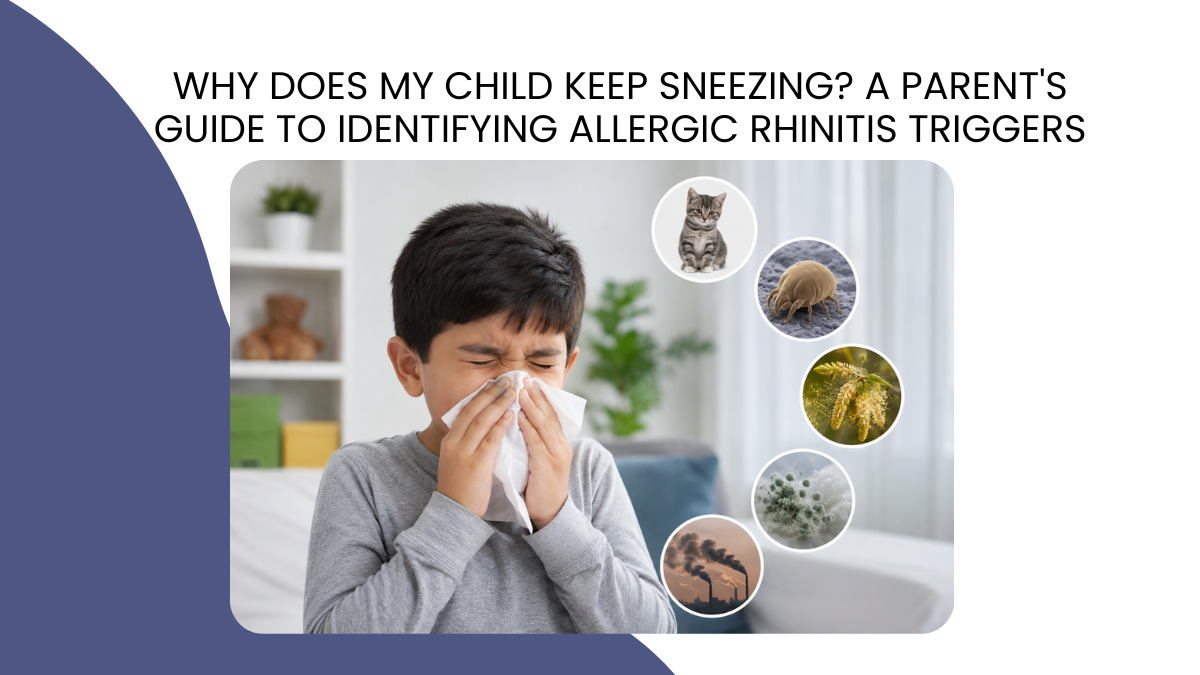
If your child sneezes repeatedly every morning, has a constantly runny or blocked nose, rubs their eyes frequently, or seems to always have a cold that never quite goes away, the most likely explanation is not an infection. It is allergic rhinitis. And the single most useful thing you can do for a child with allergic rhinitis is identify what is triggering it.
Why identifying the trigger matters
Most parents focus on treating the symptoms: antihistamines for the sneezing, nasal sprays for the congestion. These medications work, but they work only while they are being taken. The underlying allergic process continues uninterrupted. Identifying and reducing exposure to the specific trigger is what changes the trajectory. A child whose sneezing is driven by house dust mite allergy needs a different management approach from one whose symptoms are driven by pollen or pet dander, and generic avoidance advice is far less effective than targeted measures based on a confirmed allergy diagnosis.
The most common triggers in children in Hassan
House dust mites are the most prevalent trigger in this region. They live in bedding, mattresses, soft furnishings, and carpets, and are present year-round. Children sensitised to dust mites typically have symptoms that are worse in the morning and overnight rather than outdoors, and worse during or after time spent in bedrooms. Encasing mattresses and pillows in allergen-proof covers and washing bedding weekly at high temperature substantially reduces exposure.
Cockroach allergen is a significant but frequently overlooked trigger in urban homes across Karnataka. Fungal spores from damp walls or stored items are another cause of year-round symptoms in poorly ventilated homes. Pollen from grasses and trees produces seasonal symptoms, typically worsening during specific months and improving at other times. Pet dander from cats or dogs affects sensitised children immediately upon exposure. The pattern of symptoms across the day, week, and year provides the most important clues to which trigger is responsible, and I use this history alongside skin prick testing for children at Kiran Speciality Hospital, Hassan, to identify the specific allergen accurately before any treatment decision is made.
Identifying the trigger does not always mean eliminating it entirely. Dust mites cannot be completely removed from a home environment, and pet removal is not always realistic or necessary. But targeted reduction measures, combined with appropriate medication and where indicated, allergen immunotherapy, consistently produce better outcomes than treating symptoms without knowing what is causing them.
If your child has persistent sneezing, nasal congestion, or itchy eyes that have not responded to standard treatment, allergy testing identifies the trigger and allows a treatment plan that addresses the cause rather than only the symptoms. To book a consultation with Dr H K Kiran Kumar at Kiran Speciality Hospital, Hosaline Road, Hassan, call +91 81722 96348.
Written by Dr H K Kiran Kumar, MBBS, DCH (JSS Medical College, Mysore), Allergy Asthma Specialist Course (MedTrain), Senior Paediatrician and Allergy Asthma Specialist, Kiran Speciality Hospital, Hassan, Karnataka.
Related reading
Childhood Asthma and Allergic Rhinitis: A Complete Guide for Parents in Hassan



Add a Comment