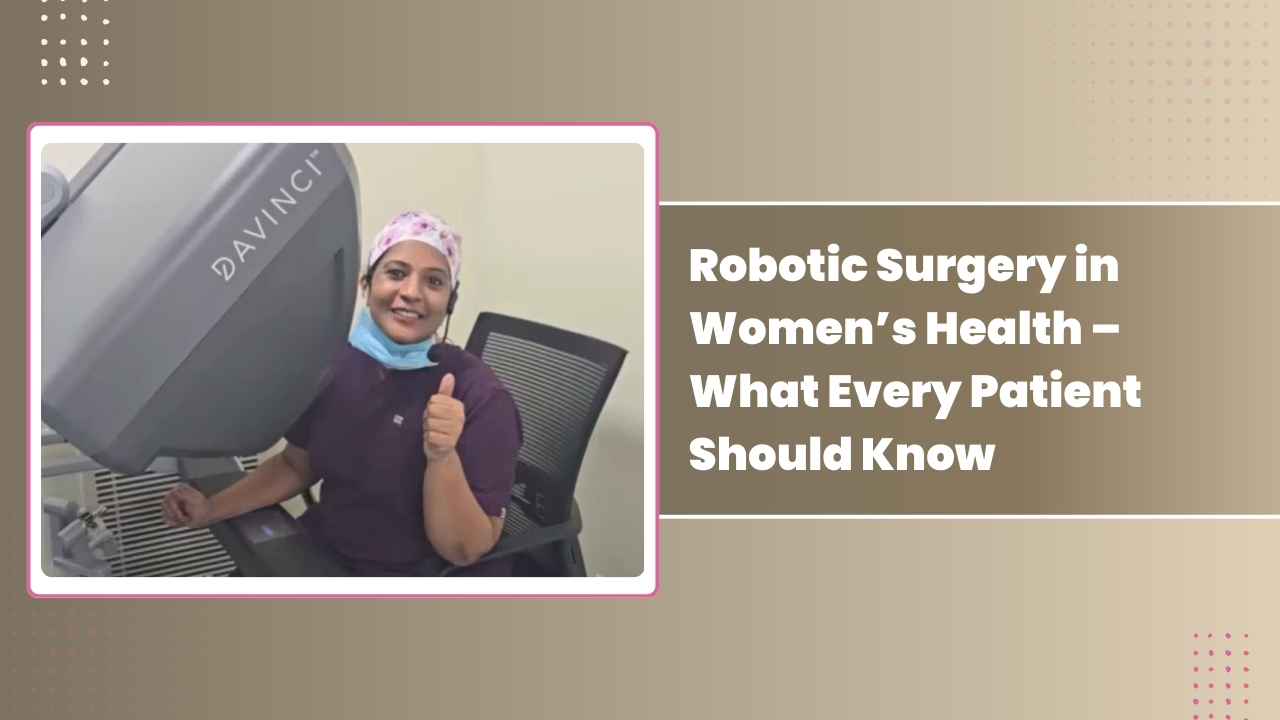
The word “robot” can sound scary to some people. Especially when it comes to surgery, many patients and their families worry: Will the robot do everything? Is it safe? Will there be mistakes?
As someone who performs robotic surgeries regularly, I want to clear the confusion. Robotic surgery is not science fiction—it’s the future of safe, precise, and faster recovery surgeries.
Let’s break it down simply.
What is robotic surgery?
In robotic-assisted surgery, a specially trained surgeon (like myself) uses a machine called the Da Vinci robotic system. It doesn’t work on its own. It doesn’t think or move without us. I sit at a console and control robotic arms, which move with much greater precision than human hands. This allows us to do complex surgeries through very tiny cuts—less pain, less blood loss, faster healing.
Why women benefit most from robotic surgery:
As a gynaecologist and robotic surgeon, I use this technique for many procedures like:
- Hysterectomy (removal of uterus)
- Fibroid removal
- Endometriosis treatment
- Ovarian cysts
- Fertility-related surgeries
These are sensitive areas in a woman’s body. And robotic surgery allows us to operate with extreme accuracy, causing minimal disturbance to nearby organs.
Common fears—and the truth:
Myth 1: “Will the robot operate on its own?”
👉 Fact: No. The robot is a tool, not a doctor. The surgeon controls every movement.
Myth 2: “What if something goes wrong?”
👉 Fact: Robotic systems are highly advanced and used in top hospitals worldwide. The success rate is excellent when performed by trained professionals.
Myth 3: “Is it expensive and unnecessary?”
👉 Fact: While robotic surgery may cost slightly more than regular laparoscopy, the benefits—shorter hospital stay, quicker return to work, and fewer complications—make it cost-effective in the long run.
My journey into robotics:
When I was first introduced to robotic surgery, I was hesitant. I had been a laparoscopic surgeon for over a decade and was very comfortable with it.
But one day, my senior challenged me. He said, “Get on the console. You’re ready.” I spent hours training on simulators and successfully performed my first robotic case. Within just 9 days, I had done 11 surgeries—a national record.
Now, many of my patients choose robotic surgery because they want a gentle, precise, and quick recovery.
Is robotic surgery right for you?
It depends on your condition, age, medical history, and goals. Robotic surgery is excellent for many women, especially those:
- Planning to return to work soon
- Worried about scars or long recovery
- Needing fertility-preserving procedures
- Having complex fibroids or endometriosis
Final Thoughts:
Medicine is changing. So is surgery. What once needed big cuts and long hospital stays can now be done with tiny incisions, better results, and less pain—thanks to technology.
If your doctor recommends robotic surgery, don’t panic. Ask questions. Get informed. And trust in science.
As always, I’m here to help you make the best decision for your body and your health—with care, compassion, and the latest technology.



Add a Comment