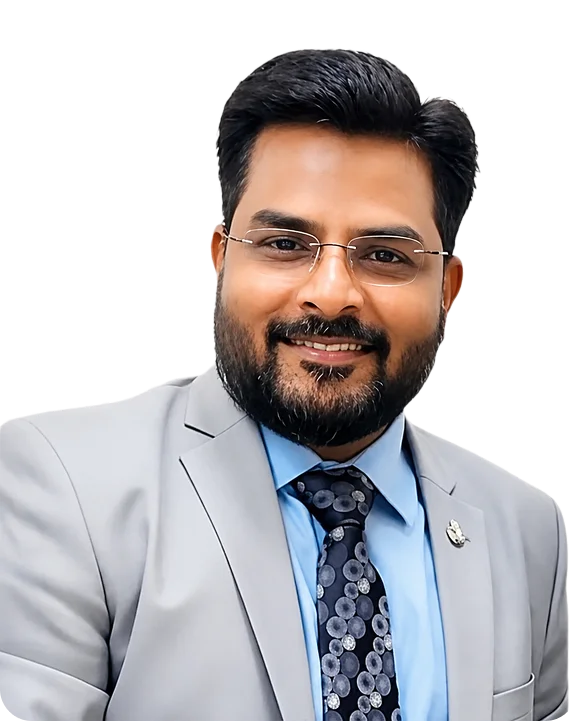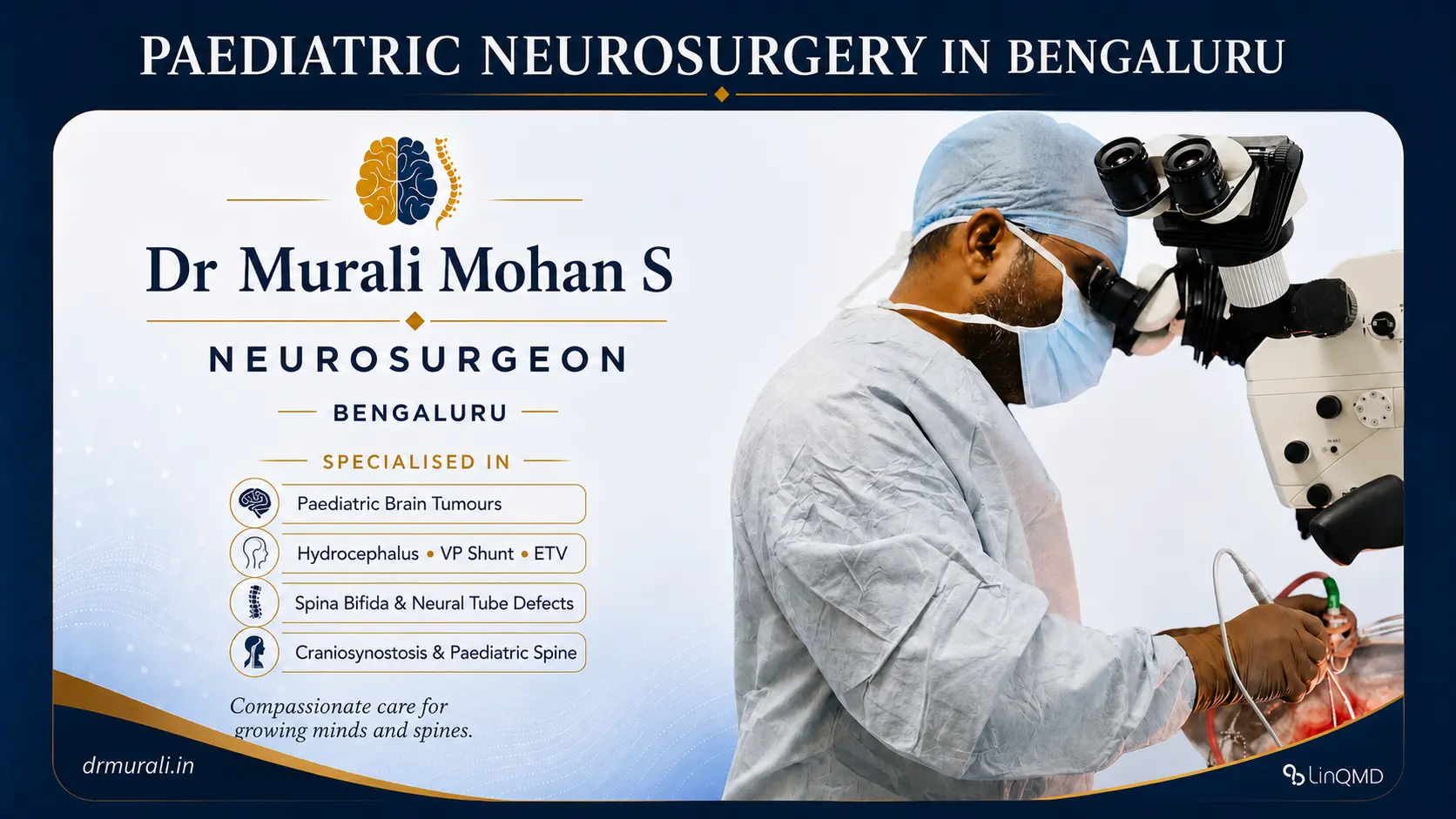
Dr. Murali Mohan S provides paediatric neurosurgical care in Bengaluru for brain, spine, and congenital neurological conditions in children. This includes evaluation, surgical decision-making where needed, counselling for parents, and long-term follow-up when the condition requires monitoring as the child grows.
Paediatric neurosurgery deals with conditions of the brain, spine, spinal cord, and nerves in infants, children, and adolescents. These conditions need a different approach from adult neurosurgery because the child’s nervous system is still developing, the skull and spine are still growing, and the family needs clear guidance at every stage of care.
What paediatric neurosurgery covers
Children are not small adults. Their anatomy, symptoms, recovery, and long-term needs are different. A neurological condition in childhood may affect growth, movement, learning, development, breathing, posture, or daily function. For this reason, paediatric neurosurgery looks not only at the immediate medical problem, but also at the child’s future development and quality of life.
Care usually begins with understanding the child’s symptoms, reviewing scans and reports, examining neurological function, and explaining the condition to the family in clear language. In some children, surgery may be needed. In others, observation, medicines, rehabilitation, or follow-up may be appropriate.
Brain conditions in children
Paediatric brain conditions include brain tumours, hydrocephalus, congenital brain conditions, head injuries, cysts, infections, and selected conditions affecting development or neurological function.
Hydrocephalus is a condition where excess cerebrospinal fluid builds up inside the brain. Depending on the child’s age, cause, scan findings, and clinical condition, treatment may involve a ventriculoperitoneal shunt, commonly called a VP shunt, or an endoscopic third ventriculostomy, also called ETV, in selected cases. The aim is to relieve pressure and restore a safer pathway for fluid circulation.
Paediatric brain tumours need careful evaluation because tumour type, location, age, symptoms, and pathology all influence treatment. Some children may need surgery, while others may require a combination of surgery, oncology care, radiation, chemotherapy, rehabilitation, and follow-up.
Spine and congenital conditions
Paediatric spine and congenital neurosurgical conditions include spina bifida, neural tube defects, tethered cord, split cord malformations, paediatric scoliosis with spinal cord abnormalities, craniosynostosis, and other developmental conditions affecting the brain, skull, spine, or spinal cord.
Craniosynostosis occurs when one or more skull sutures fuse earlier than expected. This can affect skull shape and, in some cases, brain growth or pressure. Evaluation and timing of treatment depend on the type of craniosynostosis, the child’s age, and associated findings.
Neural tube defects and spinal cord malformations often need a long-term view. The surgery may address one part of the condition, but the child may continue to need follow-up for growth, movement, bladder and bowel function, spine alignment, or rehabilitation.
Family-centred care and recovery
In paediatric neurosurgery, the family is part of the care pathway. Parents need to understand the diagnosis, the reason for any proposed treatment, the risks, the expected recovery, and the follow-up plan. Clear explanation is especially important because many paediatric neurosurgical conditions are complex and may need monitoring over months or years.
Recovery depends on the child’s condition, the type of surgery, age, neurological function, and associated medical needs. Some children recover quickly. Some need rehabilitation, physiotherapy, speech therapy, occupational therapy, neurodevelopmental support, or repeated follow-up.
The aim of paediatric neurosurgical care is not only to treat a scan finding or a structural abnormality. It is to support the child’s growth, function, comfort, development, and family confidence through a clear and carefully planned pathway.
This page is for awareness and education. It is not a substitute for medical advice. Children with symptoms such as persistent headache, vomiting, seizures, weakness, abnormal head growth, developmental concerns, spinal swelling, walking difficulty, or progressive deformity should undergo in-person medical evaluation.