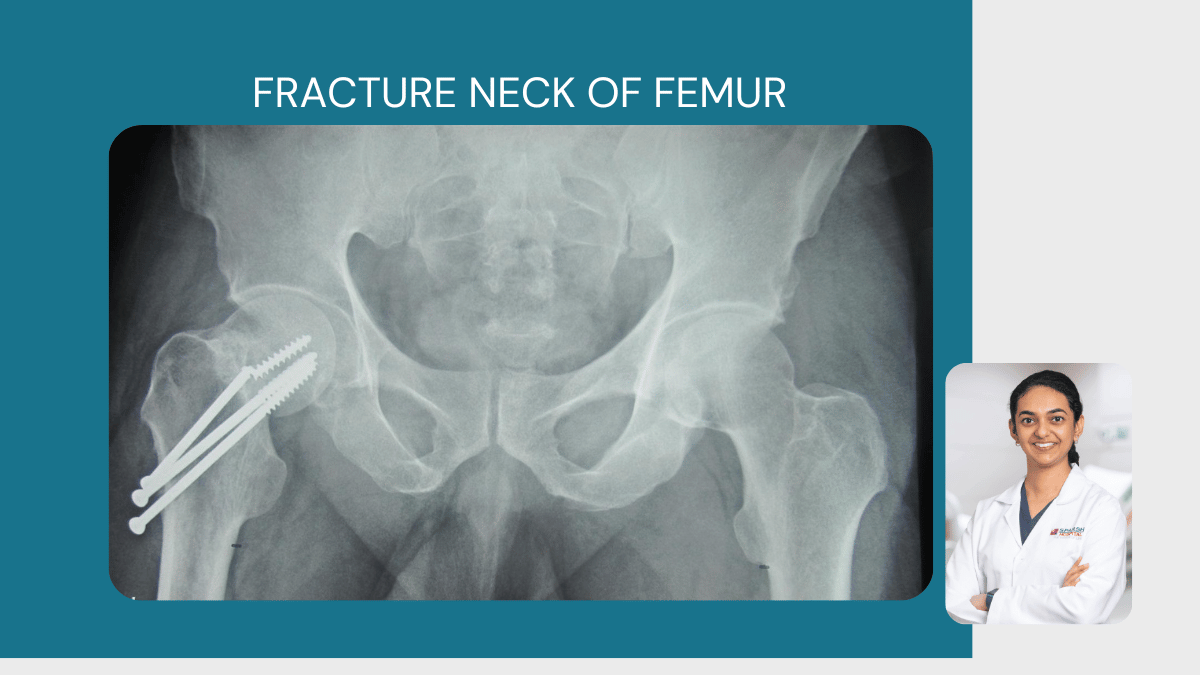
A fracture neck of femur is a break in the upper part of the thigh bone, at or near the femoral neck — the region just below the ball of the hip joint. It is one of the most serious fractures in orthopaedic practice, occurring most commonly in older adults. It typically requires urgent surgical treatment to restore mobility and reduce the risk of life-threatening complications.
What is the femoral neck fracture?
The femoral neck is the narrow section of bone connecting the femoral head — the ball of the hip joint — to the shaft of the femur (thigh bone). It is a structurally important region that transmits the body's weight from the pelvis to the leg. A fracture here disrupts this load pathway making it impossible to walk.
Who is affected?
Fracture neck of femur is most common in older women with osteoporosis, in whom even a low-energy fall from standing height can produce a significant fracture. It is less common but can also occur in younger patients following high-energy trauma such as a road traffic accident or a fall from height. Osteoporosis — a condition of reduced bone density — significantly increases the risk of this fracture and should be evaluated and managed alongside the fracture itself.
Symptoms and diagnosis
Following a fall, the patient typically cannot bear weight on the affected leg. The limb may appear shortened and rotated outward. There is pain in the groin and hip. In some undisplaced fractures, the patient may still be able to walk, which can delay diagnosis. X-rays of the hip confirm the fracture in most cases; MRI may be needed where X-rays are inconclusive.
Surgical treatment
Surgery is almost always required and is ideally performed within 24 to 48 hours of the injury. The choice of procedure depends on the fracture type, the patient's age, bone quality, and pre-injury function:
- Internal fixation - screws or a sliding hip screw to hold the fracture fragments together. Used in selected undisplaced fractures.
- Hemiarthroplasty - replacement of the femoral head only, with the socket left intact. Used in displaced fractures in older, less ambulant patients.
- Total hip replacement - replacement of both the femoral head and the socket. Considered in active, well patients with pre-existing hip arthritis or specific fracture patterns.
Early surgery, early mobilisation, and coordinated post-operative rehabilitation — including physiotherapy and medical optimisation - are critical to achieving a good outcome and preventing the systemic complications associated with prolonged immobility in older patients.
Written by Dr Shrishti Patil, MS Ortho, Consultant Orthopaedic and Robotic Joint Replacement Surgeon, SPARSH Hospital, Hennur Road, Bengaluru.
To book a consultation with Dr Shrishti Patil at SPARSH Hospital, Hennur Road, Bengaluru, visit linqmd.com/doctors/dr-shrishti-patil-joint-replacement-surgeon-hennur-bengaluru