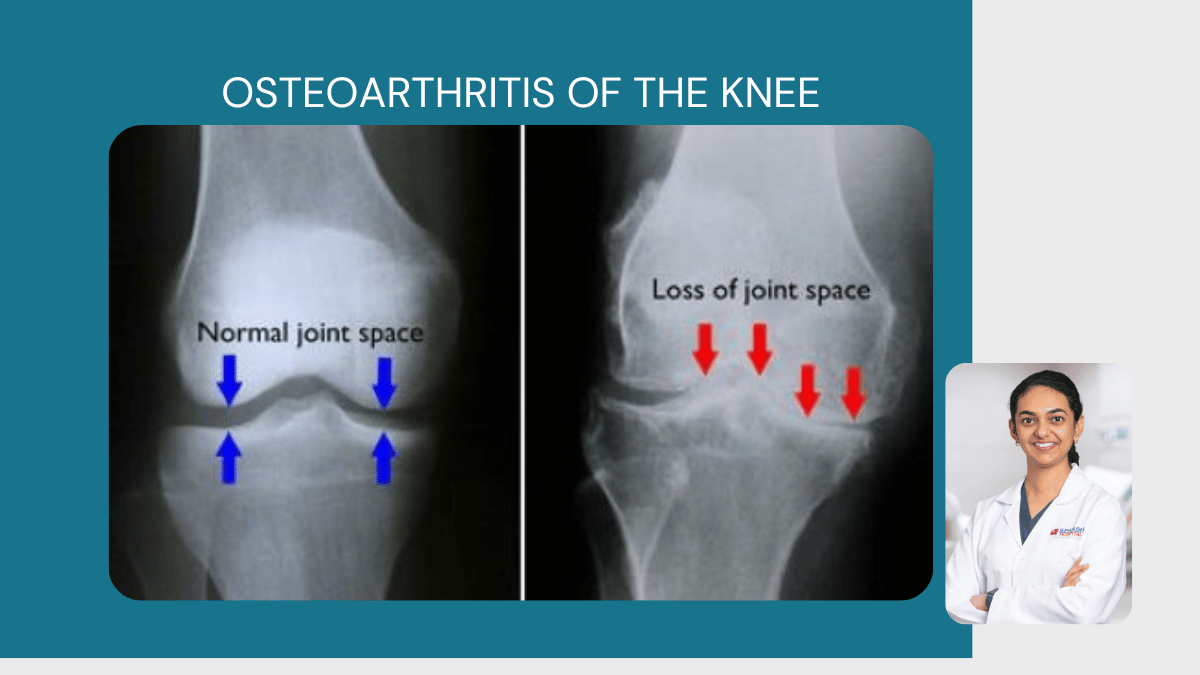
Osteoarthritis of the knee is a progressive condition in which the cartilage around the knee joint gradually wears out, causing pain, stiffness, swelling, and reduced mobility. It is one of the most common causes of chronic knee pain in adults and one of the leading reasons for knee replacement surgery.
What is knee osteoarthritis?
A normal knee joint has smooth articular surfaces which glide across one another with no friction. In an arthritic knee, the smooth cartilaginous surface is worn out. This results in pain, stiffness, deformity or instability which interfere with lifestyle. As the cartilage thins and wears out, the bones begin to rub against each other causing pain.
For advanced cases, medication and physiotherapy may not be sufficient and a total knee replacement maybe advised as the treatment of choice.
Who is at risk?
Risk factors for knee osteoarthritis include:
Previous knee injury - ligament tears, meniscus damage, or fractures around the joint.
Excess body weight - which increases the compressive load on the knee with every step.
Long-standing deformity - bow-leg or knock-knee alignment that concentrates load unevenly.
Repetitive occupational stress on the knee joint.
Family history of osteoarthritis.
Inflammatory joint diseases such as rheumatoid arthritis.
What are the symptoms?
Symptoms typically develop gradually. In the early stages, pain is brought on by activity and relieved by rest. In more advanced osteoarthritis, pain may be present at rest or overnight. Common symptoms include pain on walking, climbing, or prolonged standing, progressive difficulty with daily activities such as rising from a chair or managing stairs.
How is it treated?
Treatment depends on the stage of arthritis and the impact on the patient's daily life. Early and moderate osteoarthritis is managed with physiotherapy, weight reduction, activity modification and medication. When arthritis is advanced and symptoms persist despite these measures, total knee replacement is considered. Robotic-assisted knee replacement offers an additional level of planning and precision for selected patients.
Written by Dr Shrishti Patil, MS Ortho, Consultant Orthopaedic and Robotic Joint Replacement Surgeon, SPARSH Hospital, Hennur Road, Bengaluru.
To book a consultation with Dr Shrishti Patil at SPARSH Hospital, Hennur Road, Bengaluru, visit linqmd.com/doctors/dr-shrishti-patil-joint-replacement-surgeon-hennur-bengaluru