Parents often come to me after years of managing their child's allergy with daily medication, asking whether there is something that actually treats the condition rather than just controlling symptoms. Allergen immunotherapy is that option, and it is one of the most underused treatments in paediatric allergy care.
One of the most common misconceptions I encounter is that immunotherapy is simply another medication. In reality, it is a long-term treatment strategy designed to change how the immune system responds to a specific allergen.
What is allergen immunotherapy and how does it work?
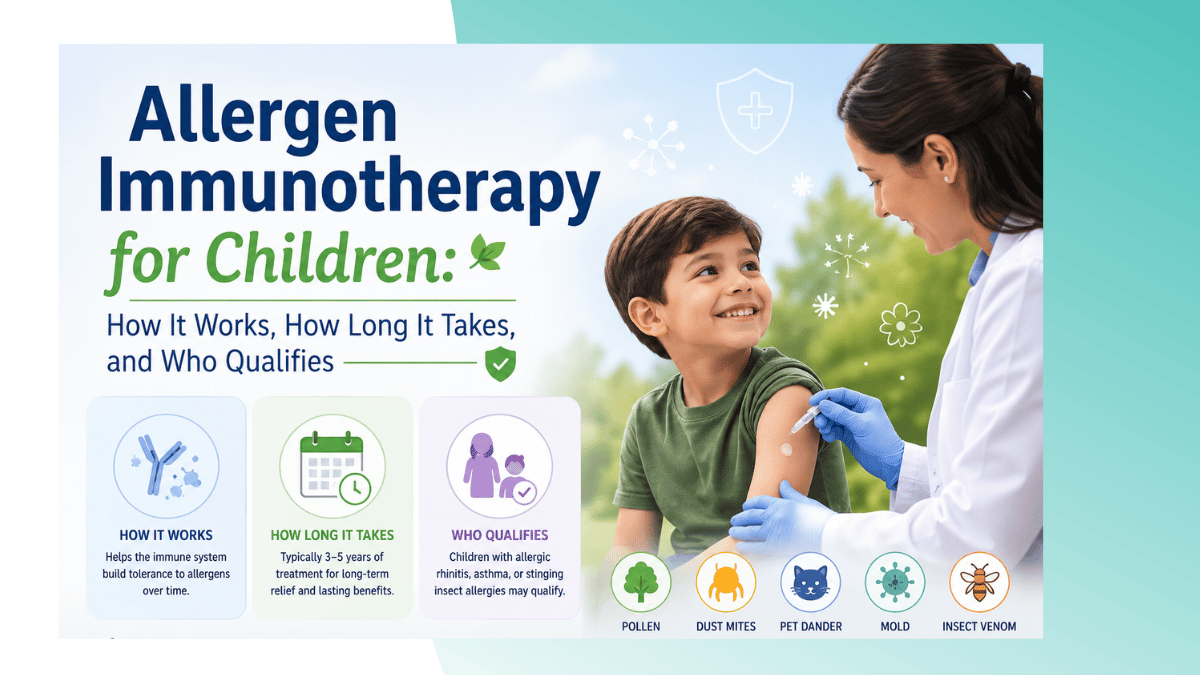
Allergen immunotherapy works by gradually exposing the immune system to increasing doses of a specific allergen, shifting the body's response from an allergic reaction toward tolerance. Over time, this reduces the severity of symptoms on natural exposure, lowers medication requirement, and in children with allergic rhinitis, reduces the risk of asthma developing later.
This is the only allergy treatment that changes the underlying disease process. Medications like antihistamines and nasal sprays manage symptoms while they are taken. Immunotherapy aims to retrain the immune response itself.
What forms of immunotherapy are available for children?
Subcutaneous immunotherapy, given as injections at the clinic, follows a build-up phase of increasing doses over weeks to months, followed by a maintenance phase of regular injections. Sublingual immunotherapy uses drops placed under the tongue, taken at home after the first dose is given under observation in clinic. Sublingual treatment is often preferred for younger children or those with needle anxiety, while injections have the longer-established evidence base.
How long does treatment take and when do parents see results?
A full course of immunotherapy typically runs three to five years. Most children notice a gradual reduction in symptoms over the first six to twelve months, with the most significant and lasting benefit building over the full course. Stopping early reduces the long-term benefit, which is why I discuss the time commitment honestly before starting.
Who qualifies for allergen immunotherapy?
Immunotherapy is not for every child with an allergy. It is most suitable for children with confirmed allergen sensitisation on skin prick testing, symptoms that are not adequately controlled with avoidance and medication alone, or symptoms severe enough to significantly affect daily life or sleep. House dust mite and pollen allergies have the strongest evidence base for paediatric immunotherapy. Subcutaneous immunotherapy is generally recommended from age five, though sublingual options may be considered earlier depending on the clinical picture.
Not every allergic child needs this level of treatment. Some children do very well with allergen avoidance and medication alone. A specialist evaluation determines whether immunotherapy is the right next step for your child specifically.
What should parents expect from the evaluation process?
The decision to start immunotherapy follows a full allergy workup, including skin prick testing to confirm the specific allergens involved. I discuss the realistic timeline, what the injections or drops involve, and what improvement looks like at each stage, so families know exactly what they are committing to before beginning.
The decision to start immunotherapy is never based on a test result alone. It is based on how much the allergy affects your child's daily life, sleep, school attendance, and overall wellbeing. For the right child, immunotherapy can offer benefits that extend well beyond symptom control.
Written by Dr Sravanthi P V N, MBBS, MD Paediatrics, Consultant Paediatrician and Allergy Asthma Specialist, Chirayu Multi-Specialty Clinic, Kasturi Nagar, Bengaluru.
To book a consultation with Dr Sravanthi P V N at Chirayu Multi-Specialty Clinic, Kasturi Nagar, Bengaluru, call +91 9663358193.


Add a Comment