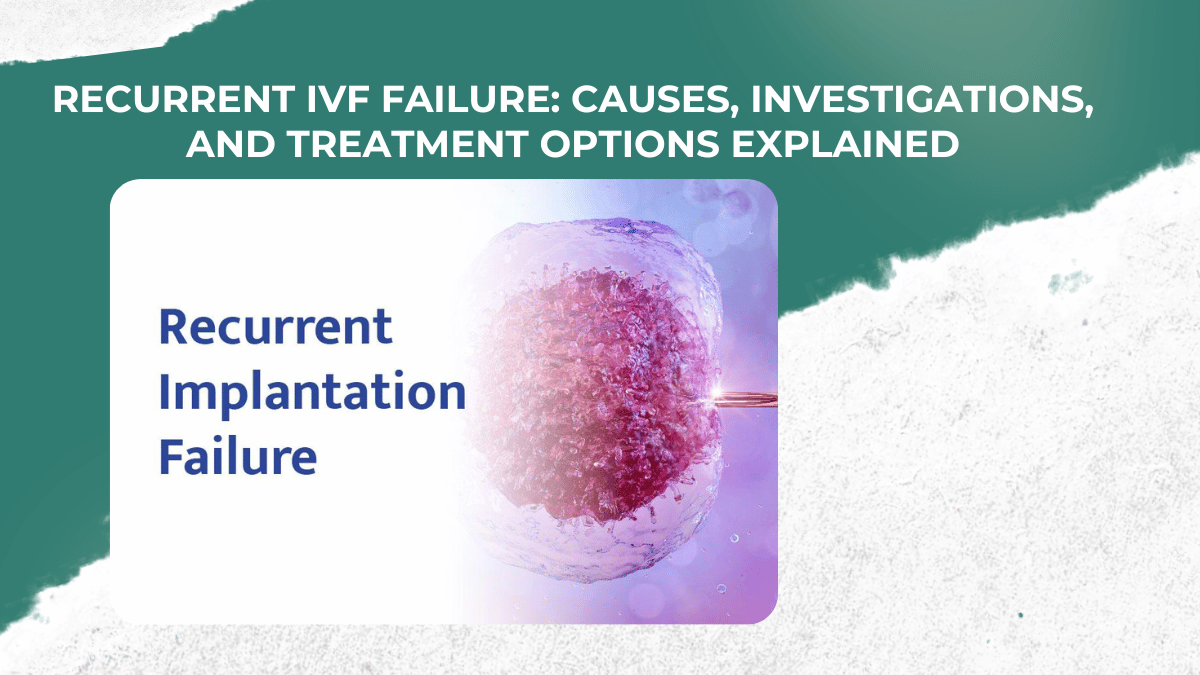
Repeated unsuccessful IVF cycles can leave couples emotionally exhausted, confused, and uncertain about what to do next. In my practice, I have met many patients who arrive after multiple failed IVF attempts feeling that they have run out of options. I have never approached a patient with recurrent IVF failure as a closed case because careful reassessment often helps uncover factors that may not have been identified earlier.
At Birthright Fertility, Hyder Nagar, Hyderabad, my focus is always on understanding implantation failure systematically through evidence-based fertility evaluation, individualized treatment planning, and honest communication throughout the journey.
What Is Recurrent IVF Failure?
Recurrent IVF failure refers to repeated IVF cycles that do not result in implantation or pregnancy despite embryo transfer.
The definition may vary depending on:
- Maternal age
- Embryo quality
- Number of transfers
- Previous reproductive history
There is no single universal definition, but repeated implantation concerns after multiple well-planned embryo transfers usually require deeper fertility evaluation.
How Is Recurrent IVF Failure Different From Recurrent Pregnancy Loss?
Recurrent IVF failure and recurrent pregnancy loss are not the same condition.
In recurrent IVF failure:
- Implantation may not occur at all
- Pregnancy may not begin
In recurrent pregnancy loss:
- Pregnancy occurs but ends in miscarriage later
The investigations and treatment approaches may differ significantly between these two conditions.
Why Does IVF Fail Repeatedly?
Successful implantation depends on embryo quality, uterine receptivity, hormonal synchronisation, and several biological factors working together. Recurrent IVF failure usually involves multiple contributing factors rather than a single isolated cause.
Embryo-Related Factors
Embryo quality plays an important role in implantation and pregnancy development.
Factors affecting embryo development may include:
- Maternal age
- Egg quality
- Sperm quality
- Genetic abnormalities
- Laboratory development patterns
Previous IVF cycles often provide valuable clinical information about embryo development, fertilization patterns, and implantation behaviour.
Uterine Factors
The uterus and endometrial environment must support successful implantation.
Potential uterine factors may include:
- Polyps
- Fibroids
- Adhesions
- Chronic endometrial inflammation
- Thin endometrium
- Congenital uterine abnormalities
In my practice, hysteroscopy is often one of the first investigations I recommend because subtle uterine abnormalities may sometimes be missed on ultrasound alone.
Immunological and Implantation Factors
Some patients may experience implantation concerns related to immune or endometrial receptivity factors.
Potential considerations may include:
- Endometrial receptivity timing
- Autoimmune conditions
- Chronic inflammation
- Implantation synchronisation concerns
These situations require individualized assessment rather than routine generalized treatment.
Endometrial Receptivity and Implantation Timing
Successful implantation depends not only on embryo quality but also on whether the uterine lining is receptive at the correct time.
Some patients may have displacement of the implantation window, meaning the embryo transfer timing may not align optimally with endometrial receptivity.
Endometrial receptivity assessment may help guide individualized embryo transfer timing in selected patients with repeated implantation concerns.
What Investigations Do I Recommend for Recurrent IVF Failure?
Repeated IVF failure should always be evaluated systematically rather than empirically repeating the same treatment approach.
Detailed Review of Previous IVF Cycles
The first step involves reviewing:
- Ovarian response
- Medication protocols
- Fertilization patterns
- Embryo development
- Transfer timing
- Implantation history
A previous cycle often provides important clues that may guide future treatment planning.
Hysteroscopy Evaluation
Hysteroscopy allows direct visual assessment of the uterine cavity.
This procedure may help identify:
- Polyps
- Adhesions
- Inflammation
- Small fibroids
- Endometrial abnormalities
At Birthright Fertility, Hyder Nagar, Hyderabad, hysteroscopy is often an important part of implantation failure evaluation because subtle uterine concerns may influence embryo implantation.
ERA Testing
ERA, or Endometrial Receptivity Analysis, evaluates whether the endometrium is receptive at the expected implantation timing.
ERA testing may be considered in selected patients with:
- Repeated implantation concerns
- Multiple unsuccessful embryo transfers
- Good-quality embryo transfers without implantation
In my practice, ERA testing has become one of the important tools for individualized embryo transfer planning in carefully selected recurrent IVF failure patients.
Immunological Assessment
Selected patients may require evaluation for:
- Autoimmune conditions
- Chronic inflammatory markers
- Thrombophilia-related concerns
Immunological investigations should always be individualized and interpreted carefully within the broader fertility context.
Sperm DNA Fragmentation Testing
Standard semen analysis may appear normal even when sperm DNA quality is affected.
Sperm DNA fragmentation testing may sometimes be considered in:
- Recurrent implantation concerns
- Poor embryo development
- Repeated unexplained IVF failure
Male factor evaluation remains an important part of recurrent IVF failure assessment.
What Treatment Options Are Available for Recurrent IVF Failure?
Treatment depends on the underlying findings identified during fertility evaluation. Recurrent IVF failure should not be managed with identical repeated protocols without reassessment.
ERA-Guided Embryo Transfer
ERA-guided transfer involves adjusting embryo transfer timing according to endometrial receptivity findings.
This may be considered in selected patients where implantation timing concerns are suspected.
Treatment planning should always remain individualized rather than protocol-driven.
PGT-A and Genetic Embryo Assessment
PGT-A evaluates embryos for chromosomal abnormalities before transfer.
This may sometimes be considered in:
- Advanced maternal age
- Recurrent implantation concerns
- Repeated unsuccessful IVF cycles
- Recurrent pregnancy loss
PGT-A is not required for every patient and should be recommended only after individualized fertility counselling.
Immunological Treatment Approaches
Some patients may require additional treatment when autoimmune or inflammatory concerns are suspected.
Management may involve:
- Anti-inflammatory strategies
- Hormonal support
- Additional medical evaluation
Treatment should always be evidence-based and guided by detailed clinical assessment.
Hysteroscopic Treatment
If uterine abnormalities are identified, hysteroscopic treatment may help improve the uterine environment before embryo transfer.
This may include management of:
- Polyps
- Adhesions
- Fibroids
- Endometrial abnormalities
Endometrial PRP for Thin Endometrium
Platelet-rich plasma, commonly called PRP, may sometimes be considered in selected patients with persistently thin endometrium after detailed fertility evaluation.
PRP should always be approached carefully and discussed realistically as part of individualized reproductive planning rather than as a guaranteed solution.
What Does the Investigation Journey Look Like in Practice?
Many couples feel emotionally exhausted after repeated IVF attempts and worry that another cycle will simply repeat the same experience. In my practice, the goal is not to restart treatment immediately but to reassess the fertility journey methodically.
The evaluation process often includes:
- Reviewing all previous fertility records
- Understanding prior embryo development
- Evaluating implantation timing
- Assessing uterine health
- Reassessing sperm-related factors
- Discussing emotional readiness for further treatment
Careful reassessment often helps identify patterns that may guide a more individualized fertility approach.
When Should You Consider Changing Your Fertility Specialist?
Changing fertility specialists is a deeply personal decision and should never be based only on emotional frustration after one cycle.
However, some couples may benefit from:
- Fresh clinical review
- Different diagnostic perspective
- Advanced implantation evaluation
- Reassessment of previous protocols
- More individualized treatment planning
The goal is not to criticize previous treatment but to understand whether additional evaluation or a different clinical approach may be helpful.
What Are Realistic Expectations After Treatment?
Recurrent IVF failure can be emotionally difficult because patients often arrive after multiple treatments, significant financial investment, and prolonged uncertainty.
Even after detailed reassessment, fertility treatment should always be discussed realistically.
Factors influencing future treatment outcomes may include:
- Maternal age
- Ovarian reserve
- Embryo quality
- Implantation environment
- Genetic factors
- Overall reproductive health
At Birthright Fertility, Hyder Nagar, Hyderabad, I believe honest communication is one of the most important parts of recurrent IVF failure care. Patients deserve clear explanations, individualized evaluation, and realistic guidance throughout treatment planning.
Related Reading
Understanding Implantation Failure in IVF
Thin Endometrium and PRP Treatment Explained
ERA Testing and Personalized Embryo Transfer
Female Infertility: Causes and Treatment Options
What Happens After Failed IVF Cycles
References
1. European Society of Human Reproduction and Embryology (ESHRE)
2. Fertility and Sterility Journal Publications on Recurrent Implantation Failure
Author
Dr Pallavi Chalasani
Fertility Specialist and Repeated Implantation Failure Specialist
Birthright Fertility, Hyder Nagar, Hyderabad
Book a Fertility Consultation
If you have experienced repeated unsuccessful IVF cycles and want a structured evaluation of possible implantation or embryo-related factors, consult Dr Pallavi Chalasani at Birthright Fertility, Hyder Nagar, Hyderabad, for individualized fertility evaluation and recurrent IVF failure care.


Add a Comment