If you have been told at a dental appointment that you need scaling and root planing rather than a routine cleaning, it is natural to wonder what that means and whether it is really necessary. As a periodontist, this is one of the questions I am asked most often -- and the answer matters, because choosing to wait can allow gum disease to progress silently.
What a Routine Scale and Polish Does
A standard scale and polish removes plaque and tartar (calculus) from the surfaces of your teeth that are visible above the gumline, and just slightly below it. It is a preventive procedure -- excellent for healthy gums or very mild gum inflammation -- and typically takes 30 to 45 minutes. Most people with healthy gums benefit from this every six months.
What Scaling and Root Planing Involves
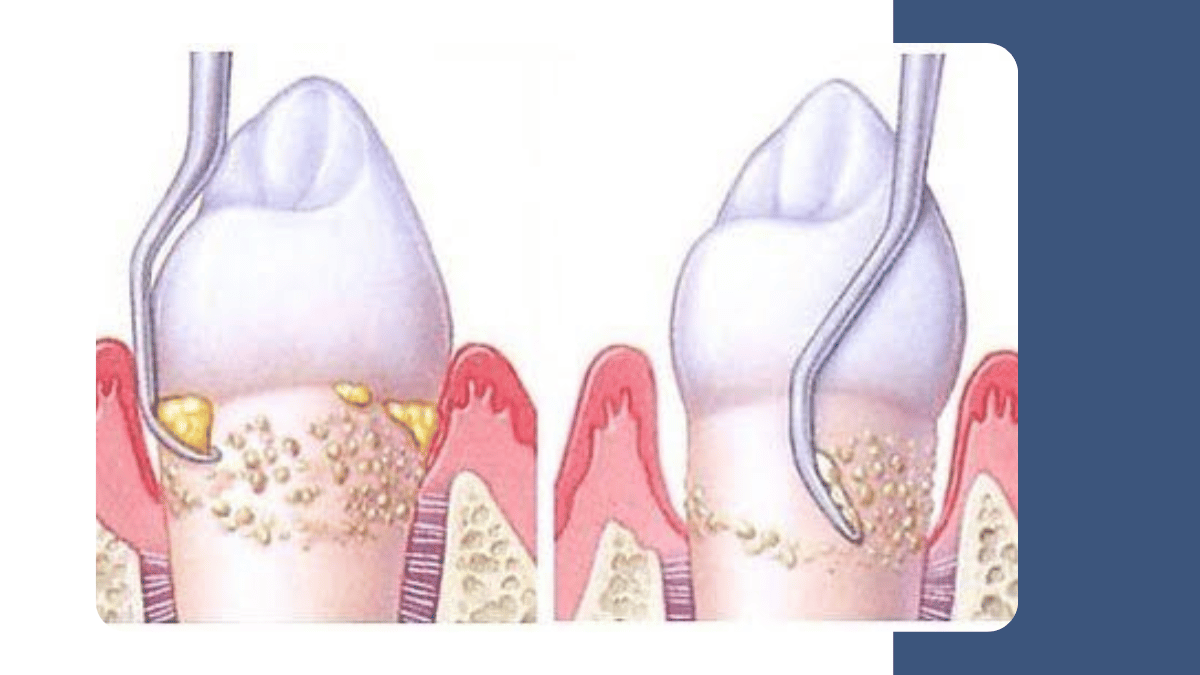
Scaling and root planing -- often called a deep clean -- goes significantly further. It cleans below the gumline, into the periodontal pockets that form when gum disease causes the gum tissue to pull away from the tooth. The procedure has two parts:
● Scaling: removing plaque and calculus from the root surfaces deep within the pocket
● Root planing: smoothing the root surface so that bacteria have less to adhere to and the gum can reattach more effectively
It is carried out under local anaesthesia, usually across two appointments, and may be followed by a review to assess how the gum tissue has responded.
How the Decision Is Made
The choice between a routine clean and scaling and root planing is based on clinical findings, not preference. At your assessment, I measure periodontal pocket depths at multiple points around each tooth. Pockets deeper than 3 to 4 mm, combined with signs such as bleeding on probing, bone loss visible on X-ray, or visible calculus below the gumline, indicate that a routine clean will not reach where the disease is active.
You are likely to be recommended scaling and root planing if:
● Pocket depths are 4 mm or more at multiple sites
● There is evidence of bone loss on a dental X-ray
● Bleeding, swelling, or suppuration is present at the gumline
● A routine clean has not resolved persistent gum inflammation
What Happens If It Is Left Untreated
Gum disease does not resolve on its own. Without treatment, bacterial deposits below the gumline continue to trigger inflammation, deepening the pockets and causing progressive bone loss around the teeth. The longer treatment is delayed, the more difficult it becomes to manage the condition without surgical intervention.
Scaling and root planing, when done at the right stage, is highly effective at halting disease progression and, in many cases, allowing the gum to re-establish a healthier attachment to the tooth. At DENTACURE, Kasturi Nagar, Bengaluru, I assess each patient's gum health thoroughly and explain exactly what the findings mean and what treatment will achieve before we proceed.
Written by: Dr. Prerana G K, BDS, MDS Periodontology (Distinction), Consultant Periodontist and Implantologist, DENTACURE Multispeciality Dental Clinic & Implant Centre, Kasturi Nagar, Bengaluru.




Comments
No comments yet.
Leave a comment
Sign in with Google to comment. Your comment appears after the doctor approves it.