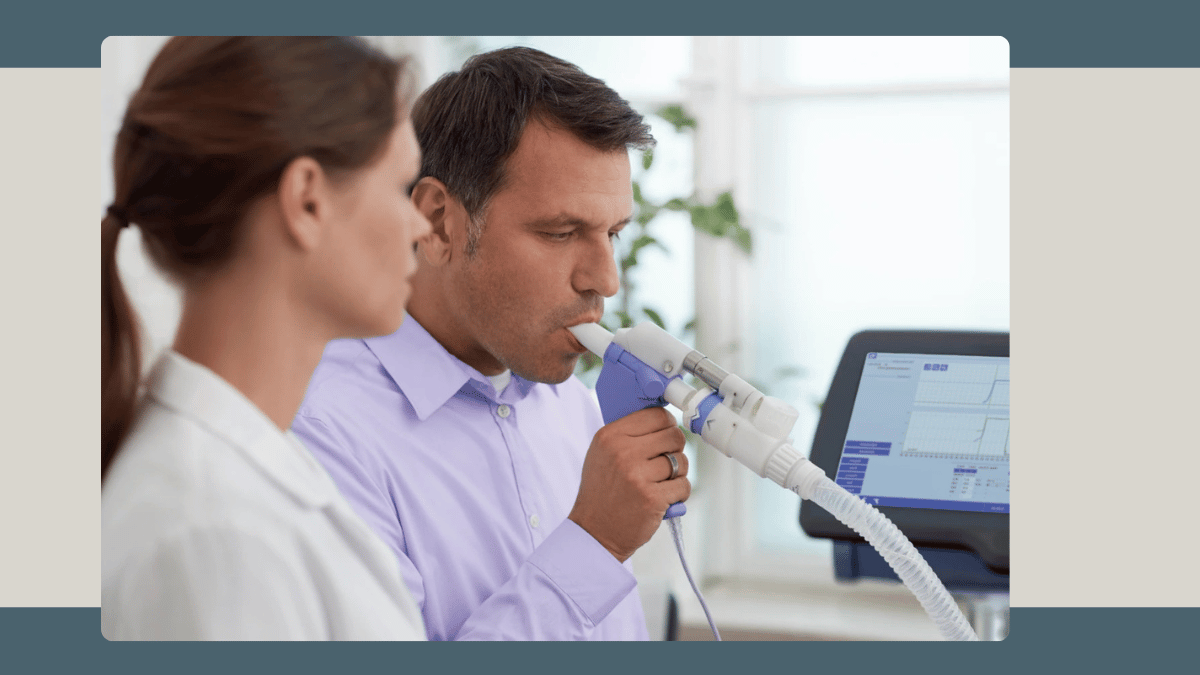
Pulmonary Function Testing, or PFT, is the most important objective investigation in respiratory medicine and the one I use most frequently in my practice at Neotia Getwel Multispecialty Hospital, Siliguri. Yet despite its importance, it is one of the investigations that patients most frequently arrive having had performed elsewhere without any clear explanation of what the numbers mean or why the test was done. This matters because the PFT result is not just a diagnostic label. It is a physiological portrait of how a patient's lungs are working right now, whether they are getting better or worse over time, whether the treatment they are on is producing objective improvement, and whether the symptom they are experiencing correlates with a measurable abnormality of lung function or lies outside what objective testing can detect. As a pulmonologist with MD Respiratory Medicine qualification and 17+ years of clinical experience, interpreting PFT results in the full clinical context of the patient in front of me is one of the most important things I do in every consultation.
What PFT Measures and What the Key Numbers Mean
The standard spirometry component of PFT measures two primary values. FVC, or Forced Vital Capacity, is the total volume of air a person can forcefully exhale from full lung inflation to complete exhalation. It reflects the overall lung capacity available for breathing. FEV1, or Forced Expiratory Volume in One Second, is the volume of air exhaled in the first second of that forced exhalation. It reflects the rate at which air can move out of the lungs, which is determined by the calibre and resistance of the airways. The ratio of FEV1 to FVC is the most important single number in basic spirometry. A normal FEV1/FVC ratio is approximately 0.70 to 0.80 in most adults, meaning that 70 to 80 percent of the total exhaled volume moves in the first second. When the airways are narrowed by inflammation, bronchospasm, or structural damage, air moves out more slowly, the FEV1 falls disproportionately relative to the FVC, and the ratio falls below 0.70. This obstructive pattern is seen in asthma, COPD, and bronchiectasis. When the lungs are restricted and cannot expand fully, both FEV1 and FVC fall together while the ratio is preserved: this restrictive pattern is seen in interstitial lung disease, pulmonary fibrosis, and conditions limiting chest wall expansion. The distinction between obstructive and restrictive patterns on PFT guides the entire subsequent diagnostic and treatment approach.
Bronchodilator Reversibility and When Patients Need a PFT
After the baseline spirometry, a bronchodilator is administered by inhaler and the spirometry is repeated after 15 minutes. An improvement in FEV1 of 12 percent or more and 200 millilitres or more from baseline is defined as significant reversibility and is one of the strongest objective indicators of asthma, confirming that the airway narrowing is at least partly reversible with bronchodilation. This test is particularly important in Siliguri and the surrounding Terai region, where asthma is frequently misdiagnosed as recurrent chest infection and treated with repeated antibiotics rather than with inhaled corticosteroids and bronchodilators, because the reversibility test provides objective evidence that changes the diagnosis. A PFT is indicated for any patient with breathlessness, wheeze, recurrent cough, reduced exercise tolerance, or occupational lung disease exposure; for any patient being started on or monitored on treatment for a chronic respiratory condition; and for any patient in whom the clinical picture does not match the expected response to treatment. At Neotia Getwel Multispecialty Hospital, Siliguri, PFT is available in-house as part of the pulmonary assessment, allowing the result to be interpreted and acted on in the same consultation.
To book a consultation with Dr. Tarun Kumar Baid at Neotia Getwel Multispecialty Hospital, Uttorayon Township, Matigara, Siliguri, West Bengal 734010 (Monday to Saturday, 10:00 AM to 5:00 PM), call +91 7980181145.
Written by Dr. Tarun Kumar Baid, MBBS, MD (Respiratory Medicine), IDCCM (Indian Diploma in Critical Care Medicine, Indian Society of Critical Care Medicine), DAAI (Diploma in Asthma, Allergy and Immunology), DAA (Christian Medical College, Vellore), Senior Consultant Pulmonary Medicine and Critical Care, Allergy and Asthma Specialist, Neotia Getwel Multispecialty Hospital, Uttorayon Township, Matigara, Siliguri, West Bengal 734010. 17+ years. 10,000+ patients. Phone: +91 7980181145 / +91 7596019132.
Related reading
Know Your Doctor: Dr. Tarun Kumar Baid, Pulmonologist and Allergy and Asthma Specialist in Siliguri



Add a Comment