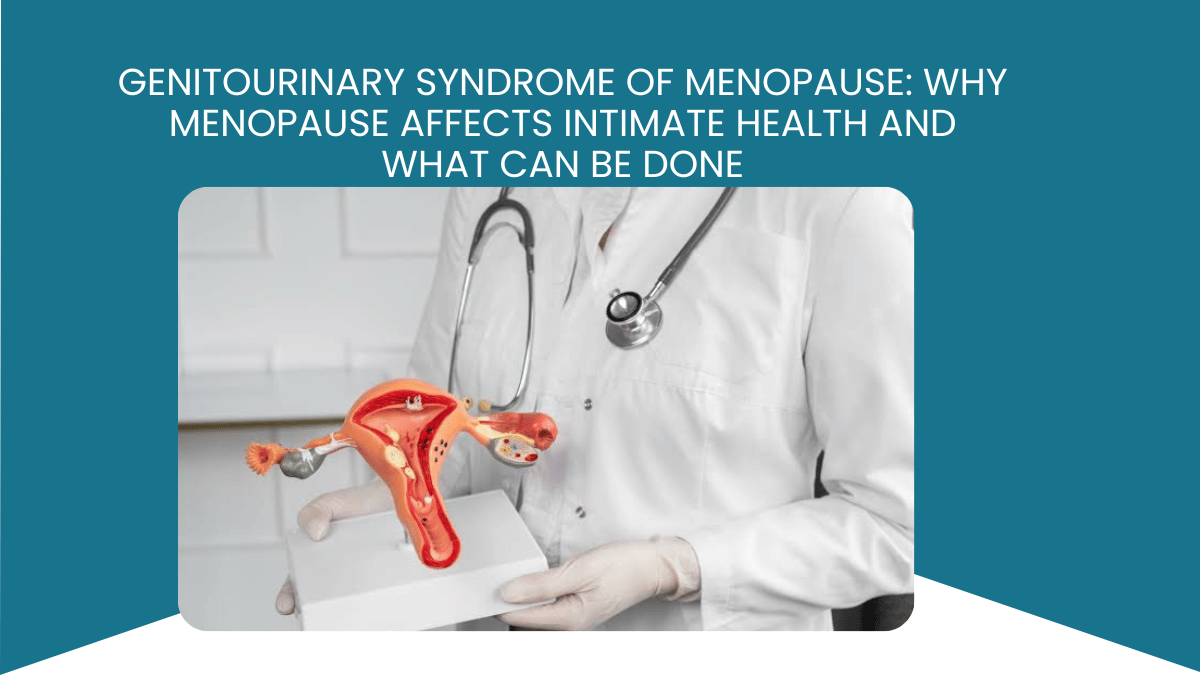
One of the most consistently undertreated conditions in women's health is genitourinary syndrome of menopause. In my practice in Beed, I see women who have been living with vaginal dryness, burning, pain during intimacy, and recurrent urinary symptoms for years, often dismissing them as a normal and unavoidable part of getting older. They are not. They are the predictable consequences of a specific hormonal change, they have a name, they have a mechanism, and they have safe and effective treatment options available at Shri Kripalu Hospital, Asef Nagar, Beed. Genitourinary syndrome of menopause affects the majority of postmenopausal women and is one of the most underreported intimate health conditions in India, because many women are too embarrassed to mention it or assume their doctor cannot help.
What Is Genitourinary Syndrome of Menopause?
Genitourinary syndrome of menopause, or GSM, is the medical term for the collection of vulvar, vaginal, and urinary symptoms that develop as a result of declining oestrogen levels during and after menopause. Oestrogen plays a critical role in maintaining the health, elasticity, thickness, and lubrication of the vaginal mucosa, as well as the normal pH balance of the vaginal environment and the integrity of the urethral and bladder tissue. When oestrogen levels fall at menopause, the vaginal epithelium becomes thinner, drier, less elastic, and more fragile. The labia and vulvar tissues lose fullness. The vaginal pH rises from its normal acidic range, disrupting the protective bacterial environment and predisposing to recurrent infections. The urethral tissue thins and becomes more reactive. These changes are progressive and do not reverse spontaneously; they worsen over time without treatment, which is why women who notice early symptoms are better served by early management than by waiting.
Symptoms: What GSM Feels Like in Daily Life
The symptoms of genitourinary syndrome of menopause fall into two overlapping groups. Vaginal and vulvar symptoms include dryness, a sense of rawness or sandpaper-like discomfort, burning that is present at rest or aggravated by movement or sitting, pain during intimate contact ranging from mild discomfort to severe pain that makes intimacy impossible, and light bleeding after intercourse from the fragile mucosal surface. Urinary symptoms include urgency, frequency, recurrent urinary tract infections, and worsening of stress urinary incontinence. These two groups of symptoms coexist in many women because the same oestrogen deprivation affects both the vaginal and the urethral tissue simultaneously. In clinical practice in Beed and the Marathwada region, GSM is one of the most frequently missed diagnoses because women present with individual symptoms, such as recurrent UTIs or incontinence, without the connection to menopause being made.
Treatment at Shri Kripalu Hospital, Asef Nagar, Beed
The treatment of genitourinary syndrome of menopause at Shri Kripalu Hospital addresses the underlying tissue changes rather than only their surface symptoms. IntimaLase GSMCare is a laser-based treatment that delivers controlled photothermal energy to the vaginal mucosa, stimulating collagen remodelling, mucosal thickening, restoration of tissue elasticity, and improvement in lubrication. Most patients require two to three sessions spaced four to six weeks apart. The procedure is performed without anaesthesia and takes approximately twenty minutes, with no downtime required. PRP-based regenerative protocols complement laser treatment by improving vascularity and tissue healing. For women who prefer or require a hormonal approach, topical oestrogen therapy remains an evidence-based option that can be used alongside laser treatment for a more comprehensive result. The important message for women in Beed and across Marathwada is that GSM is not a condition you have to manage with lubricating gel for the rest of your life; it is a condition that responds to appropriate treatment, and that treatment is available locally without travelling to Pune or Mumbai.
To book a consultation with Dr. Rahul Yande at Shri Kripalu Hospital, Asef Nagar, Beed, Maharashtra (Monday to Saturday, 9:00 AM to 5:00 PM), call +91 9370232645 or visit linqmd.com/doctor/rahul-yande
Written by Dr. Rahul Yande, MBBS, MS (Obstetrics and Gynaecology), Fellowship in Cosmetic Gynecology, Consultant Cosmetic Gynecologist and Aesthetic Specialist, Shri Kripalu Hospital, behind Civil Hospital Road, Asef Nagar, Beed, Maharashtra 431122. Monday to Saturday, 9:00 AM to 5:00 PM. 10+ years. 5,000+ patients. Phone: +91 9370232645.
Related reading
Cosmetic Gynecology in Beed: A Complete Guide for Women
Non-Surgical Cosmetic Gynecology: Safe & Effective Solutions for Women’s Wellness



Add a Comment