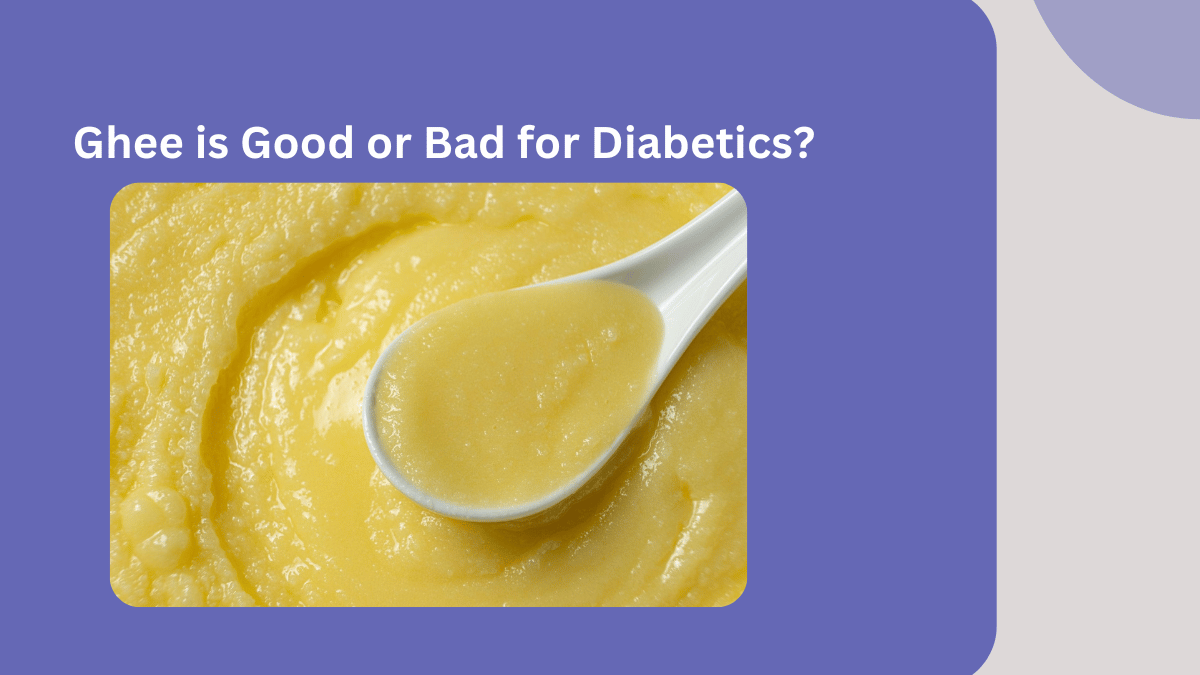
Ghee something used in many of our homes for cooking or adding flavor to food.
You may have heard mixed opinions:
- Some people say it’s healthy
- Others say it’s bad for the heart or sugar levels
👉 Let me help clear up the confusion, especially for people with diabetes.
What is Ghee?
Ghee is a type of clarified butter, made by heating butter to remove the water and milk solids. It contains mostly saturated fats, with some healthy fat compounds like:
- Butyrate - a short-chain fatty acid good for gut health
- Conjugated Linoleic Acid (CLA) – may help reduce inflammation and body fat
Is Ghee Good or Bad for Diabetics?
In small amounts, ghee can be part of a healthy diet for people with diabetes. Here's why:
Benefits of Ghee (in moderation):
- Improves satiety – makes you feel full, so you may eat less
- May support gut health and digestion
- Contains fat-soluble vitamins (A, D, E, and K)
Risks of Too Much Ghee:
- High in saturated fats, which can increase cholesterol if overused
- Too much can lead to weight gain, which worsens blood sugar control
- Cooking at very high temperatures can cause ghee to produce oxidized fats, which may harm heart health
How Much Ghee is Safe?
For most people with diabetes:
- Limit ghee to 1 to 2 teaspoons per day
- Avoid deep-frying in ghee
- Use it to flavor food, not drown it
Also, balance it with other healthy fats, such as:
- Olive oil
- Mustard oil
- Groundnut oil
- Nuts and seeds
Practical Tips:
- Use ghee on roti or dal in small amounts
- Don’t mix ghee with sugar-heavy foods (like halwa or laddoos)
- Choose homemade or pure ghee, not vanaspati or hydrogenated fats
👉 Summary: Ghee is not bad, but portion control is key. When used wisely, it can be part of a healthy diabetes-friendly diet.




Add a Comment