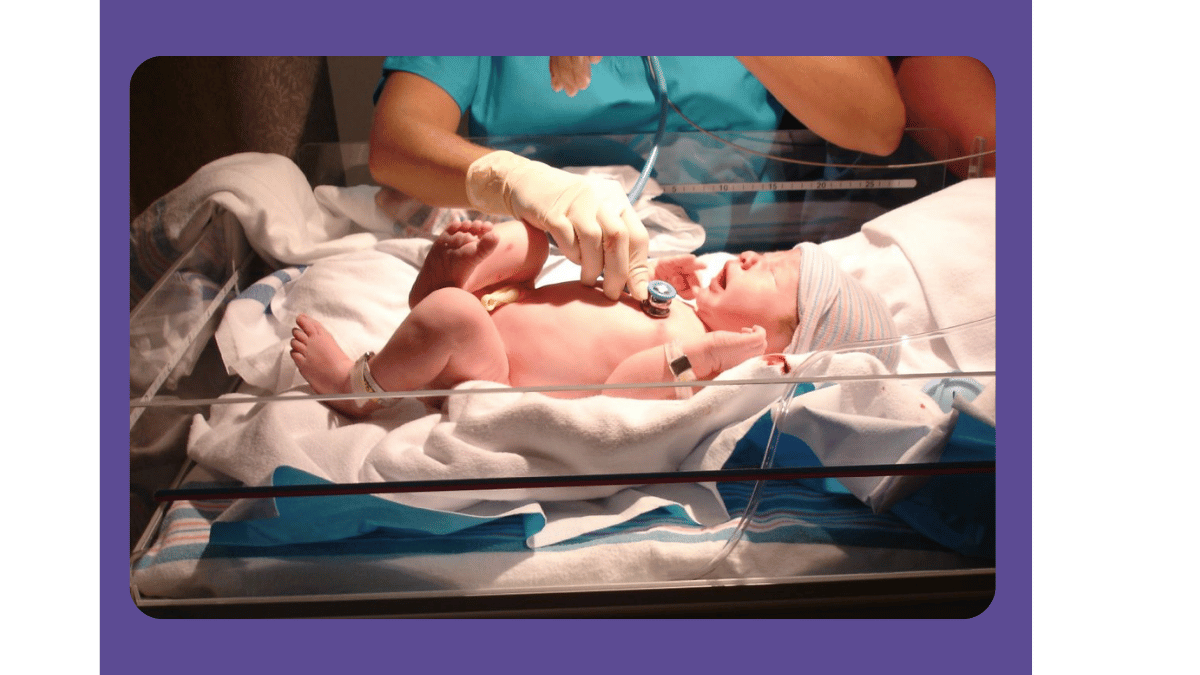
In 13 years of paediatric practice in Vijayapura, the newborn period has been among the most clinically consequential and the most rewarding to manage well. The first 28 days of a child's life, the neonatal period, encompass a set of physiological transitions that no other equivalent span of time in childhood matches for complexity and clinical consequence: from placental to pulmonary respiration, from foetal to neonatal circulation, from passive maternal glucose supply to independent metabolic regulation, and from a sterile intrauterine environment to a world of microbial exposure. When these transitions are accomplished smoothly, the newborn period is a time of feeding establishment, weight recovery, bonding, and the family's growing confidence in their new role. When any transition is incomplete or interrupted, the clinical deterioration can be rapid in ways that make the paediatrician's early involvement essential. My MD Pediatrics from KIMS Hubli, one of Karnataka's well-established postgraduate medical training institutions, provided the clinical foundation for neonatal assessment and management, and 13 years of practice in Vijayapura's district setting has deepened that foundation with the specific clinical experience of managing newborns in a context where the paediatrician is often the only accessible specialist. For families across Vijayapura and the surrounding taluk areas of north Karnataka, having a paediatrician with MD Pediatrics training and 13 years of district neonatal experience accessible at Mano-Jyothi Clinic is a level of newborn care that previous generations in this region could not easily access.
Vijayapura's Hot Climate and the Jaundice-Dehydration Risk That Every Family Must Understand
Neonatal jaundice in Vijayapura carries a specific additional risk that families and clinicians in cooler or more humid parts of Karnataka may not appreciate in the same way: the hot, dry climate of north Karnataka accelerates the dehydration risk in the first days of a newborn's life in a manner that directly compounds the bilirubin rise. Jaundice in newborns arises from the breakdown of foetal haemoglobin after birth. The liver of the newborn, still maturing its bilirubin conjugation and excretion capacity, allows bilirubin to accumulate in the blood and skin, producing the yellow colouration that is visible from day two to three in most term infants. This physiological process is self-limiting in most cases: bilirubin peaks around day three to four and falls naturally by two weeks as the liver matures and breastfeeding drives bilirubin clearance through stool. But in Vijayapura's summer heat, where ambient temperatures regularly exceed 38 to 40 degrees Celsius in the first quarter of the year, the newborn loses fluid through insensible perspiration at a rate that is higher than in cooler environments. If breastfeeding has not yet established fully, the colostrum and early milk volume may be insufficient to replace this fluid loss. Dehydration in a jaundiced newborn concentrates bilirubin, slows bowel transit and reduces stool frequency which is the primary route by which bilirubin is cleared, and allows bilirubin levels to rise toward thresholds that require phototherapy. A newborn who is jaundiced and appears adequately yellow on day three but whose family does not return for review because the yellow colour seemed stable, and whose feeding has been poor and weight loss significant, may by day five have a bilirubin level that requires hospital-level phototherapy. The specific clinical message for Vijayapura families is this: frequent feeding of eight to ten feeds in 24 hours is essential in the first five days, any significant worsening of yellowing or spreading of jaundice to the palms and soles requires same-day paediatric assessment, and review by the paediatrician at day five regardless of how the newborn appears is non-negotiable in this climate.
Breastfeeding in Vijayapura's Agricultural Community Families and the Warning Signs That Cannot Wait
Breastfeeding establishment in the first days of life is the single most important factor in preventing the dehydration-jaundice cycle that Vijayapura's climate creates, and it is also the dimension of newborn care that the agricultural community context of this district makes most challenging. A significant proportion of families in Vijayapura and the surrounding villages are involved in agricultural work that is seasonal and physically demanding. Mothers from these families face pressure to return to activity within days of delivery, sometimes before breastfeeding has fully established. Extended family members, while often supportive of childcare, may not be equipped with current breastfeeding guidance and may introduce supplements or diluted cow's milk out of concern when the mother's milk has not yet visibly increased. The clinical consequences are predictable: poor milk transfer, inadequate bilirubin clearance, excessive weight loss in the first days, and a newborn who is dehydrated and jaundiced by day four or five. My approach at every neonatal consultation is to assess feeding before anything else: the mother's comfort and latch, the frequency and duration of feeds in the preceding 24 hours, the pattern of wet nappies, and the newborn's weight relative to birth weight. Practical breastfeeding support, explaining the mechanics of milk establishment in a way that addresses the specific concerns of each family, is part of every neonatal visit. The warning signs that require immediate paediatric assessment are: yellow colour appearing within the first 24 hours of life, which is never physiological; jaundice that reaches the palms and soles before day seven; a newborn who is feeding fewer than six times in 24 hours or not waking for feeds; a temperature below 36.5 degrees Celsius; central blue discolouration of the lips or tongue; or a parent who simply feels that their newborn is not right, even when they cannot specifically say why.
To book a paediatric consultation with Dr. Shivakumar Indi at Mano-Jyothi Clinic, Ganapati Chowk, Kori Chowk, Vijayapura, Karnataka 586101 (Monday to Saturday, 7:00 PM to 9:00 PM), call +91 7795597484.
Written by Dr. Shivakumar Indi, MBBS (KIMS Bellary), MD Pediatrics (KIMS Hubli), IAP PAAC (Indian Academy of Pediatrics, Paediatric Asthma and Allergy Care), Consultant Paediatrician, Mano-Jyothi Clinic, Ganapati Chowk, T L Building, Kori Chowk, Atal Bihari Vajpayee Road, Vijayapura, Karnataka 586101. Monday to Saturday, 7:00 PM to 9:00 PM. 13+ years. 10,000+ patients. Phone: +91 7795597484.
Related reading
Meet Dr. Shivakumar Indi: 13+ Years of Trusted Paediatric Care in the Heart of Vijayapura


Add a Comment