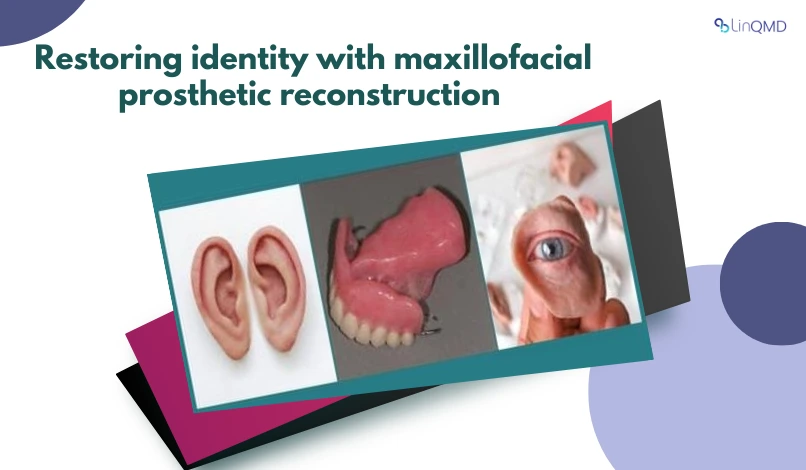
Maxillofacial prosthetic reconstruction is a unique intersection of science, medicine, technology, and artistry. As a Maxillofacial Rehabilitation Specialist, I have spent years working with individuals whose lives have been impacted by trauma, cancer, congenital anomalies, or disfiguring surgical interventions. Unlike routine dental rehabilitation, maxillofacial reconstruction addresses something deeper, it rebuilds identity, restores confidence, and reshapes how a person interacts with the world.
Through this journey, I have developed profound respect for the power of custom maxillofacial prosthetics and the patients who trust us with their most personal challenges. From designing a life-like silicone facial prosthesis to crafting complex craniofacial prosthetic restorations, each case carries emotional, psychological, and clinical dimensions that demand sensitivity and precision.
Understanding Maxillofacial Prosthetic Reconstruction:
Maxillofacial prosthetic reconstruction involves creating artificial replacements for missing or deformed facial and cranial structures. These may include:
Nose Ear Eye and orbital structures Mid-facial segments Extraoral defects after cancer surgery Hard and soft palate
Mandibular or maxillary continuity defects:
The goal extends far beyond appearance, these prostheses help patients regain vital functions such as chewing, swallowing, breathing, speech, and social confidence.
In my practice, one truth has remained constant: every prosthesis is a blend of biomechanics, aesthetic detail, and emotional healing.
A Real Case From My Practice: The Story of Mr. Ahmed, 38:
Among the many patients I’ve worked with, Mr. Ahmed, a 38-year-old engineer, left a lasting impact on me. His story captures the essence of what maxillofacial prosthetic reconstruction truly means. His Challenge
Mr. Ahmed had undergone surgical removal of his right eye and surrounding tissues following a severe fungal infection, an aggressive complication that left him with an orbital defect. Beyond the functional challenges, the emotional toll was immense. He avoided social interactions, skipped work meetings, withdrew from family gatherings, and could not bear looking at himself in the mirror.
He told me something I will never forget:
- “Doctor, people don’t see me. They see my defect first.”
- For him, the treatment was not cosmetic, it was a chance to reclaim his identity
- Challenges in Maxillofacial Prosthetic Rehabilitation
Every patient comes with unique hurdles, but certain challenges are universal:
- Anatomical Complexity Maxillofacial defects vary widely in shape, size, tissue flexibility, and residual bone support. Recreating symmetry is extremely demanding.
- Psychological Trauma Most patients face depression, anxiety, social withdrawal, or loss of confidence. Emotional rehabilitation becomes as important as physical reconstruction.
- Retention and Stability Ensuring the prosthesis stays in place may require adhesives, anatomical undercuts, implants, or magnet-based retention.
- Color Matching Recreating natural skin tones including freckles, translucency, and texture is one of the most intricate aspects of facial prosthetic reconstruction.
- Durability Facial prostheses wear out due to sun exposure, movement, and daily use. Patients require periodic replacements or repairs.
- Social Stigma Many patients fear being judged, stared at, or pitied. Counselling and empathy become essential parts of treatment.
Despite these challenges, the transformation we witness at the end makes every step worth it.
Types of Maxillofacial Prosthetic Reconstruction:
Different cases require different prostheses, each designed with unique functional and cosmetic requirements:
- Orbital Prosthesis Used when the eye and surrounding tissues are missing. Designed to match the remaining eye in color, position, and movement.
- Nasal Prosthesis Restores the nose after trauma, cancer, or congenital absence. Requires highly detailed sculpting and advanced retention systems.
- Auricular (Ear) Prosthesis Replaces missing ears using silicone facial prosthesis technology that blends seamlessly with the skin.
- Mid-Face Prosthesis For combined orbital, nasal, or cheek defects are some of the most complex restorations.
- Obturator Prosthesis Used to close defects inside the oral cavity involving the palate.
Craniofacial Prostheses These involve larger defects, often requiring implants, magnets, or frameworks for support.
In Mr. Ahmed’s case, we planned an orbital craniofacial prosthetic restoration. The Procedure: Step-by-Step Reconstruction
Each prosthesis is custom-made, and the process involves several stages:
- Assessment and Counselling Mr. Ahmed’s first visit focused on understanding his expectations and addressing his emotional fears. He wanted a prosthesis that felt natural and allowed him to rejoin social life confidently.
- Digital Scanning and ImpressionsWe used an advanced 3D facial scanner to accurately map his defect and his unaffected eye. This minimized discomfort and improved precision.
- Designing the Prosthesis Using specialized software, we mirrored his natural eye and orbital structures to ensure symmetry. CAD-CAM technology helped us design the framework for retention.
- Sculpting and Wax Try-In Traditional artistry remains crucial. The wax prototype allowed us to evaluate contours, eyelid shape, and facial proportions.
- Fabricating the Silicone Prosthesis The prosthesis was crafted using medical-grade silicone, replicating skin tone, texture, and translucency. We color-matched: under-tones, surface tones, freckles, highlights, and vascular shades. This step demands immense attention to detail.
- Retention Method For Mr. Ahmed, anatomical undercuts and a medical-grade adhesive system provided secure and comfortable retention.
- Final Fit When we placed the final prosthesis, his expression shifted instantly from anxiety to disbelief, and then relief. He whispered:
“Doctor… this looks like me.” That moment is why this field is so powerful.
- Follow-Up and Support We scheduled regular visits to monitor the prosthesis, skin health, hygiene, and psychological well-being. Support continues long after the prosthesis is delivered.
Technological Evolution in Maxillofacial Prosthetics
The field has undergone remarkable advancement:
- Digital Facial Scanning Eliminates the discomfort of conventional impressions and improves accuracy.
- CAD-CAM Design Allows precise replication of anatomical structures and reduces production time.
- 3D Printing Revolutionizing framework fabrication, mold creation, and try-ins.
- Osseointegrated Implants Implant-retained prostheses provide superior stability and comfort.
- Advanced Silicone Materials Modern silicone facial prosthesis technology offers: natural translucency durability lifelike flexibility better color retention
- AR and AI-Driven Facial Symmetry Tools Assist in designing perfectly symmetric restorations.
- Digital Shade-Matching Systems Ensure highly accurate, personalized color matching. These technologies allow us to deliver prostheses that are more natural, durable, and comfortable than ever before. Mr. Ahmed’s Transformation
Three months after receiving his prosthesis, Mr. Ahmed reported remarkable improvements:
- He rejoined his workplace.
- He regained confidence in social interactions.
- His family noticed a positive emotional shift.
- He resumed hobbies like traveling and photography.
- He no longer avoided mirrors.
He shared something I consider the true success of maxillofacial prosthetic care:
- “I feel like myself again. People look at me, not my defect.”
- Such outcomes reaffirm why our work matters deeply.
Conclusion:
Restoring More Than a Face—Restoring Identity
Maxillofacial prosthetic reconstruction is more than a technical discipline. It is a journey that blends compassion, innovation, artistry, and medical precision. For patients like Mr. Ahmed, custom maxillofacial prosthetics offer a second chance at confidence, dignity, and normalcy. With advancements such as computer-aided design, silicone facial prosthesis technology, and craniofacial prosthetic restoration, we can now provide solutions that are remarkably natural and life changing.
As specialists, our mission is not just to recreate a missing structure, but to help patients reclaim their identity and rebuild their emotional strength. In every prosthesis lies a story of courage, healing, and hope. It is my privilege to be part of that transformative journey.
Add a Comment