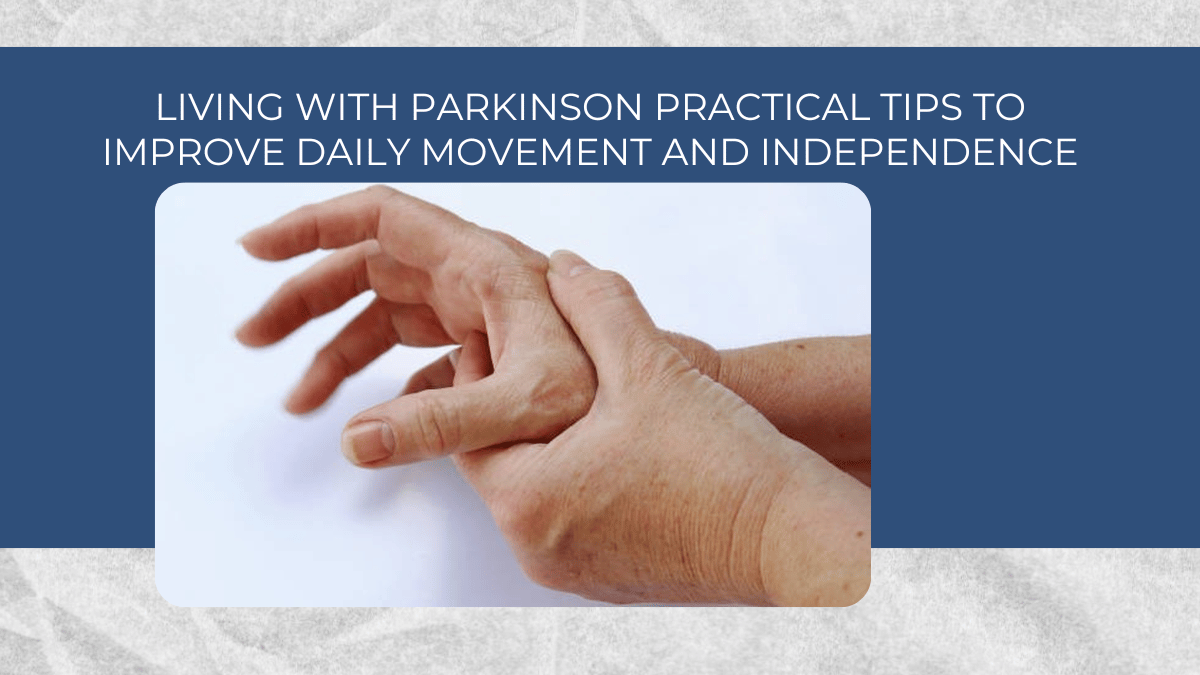
Parkinson’s disease is a progressive neurological condition that affects movement and daily activities over time. While it can feel overwhelming at first, many patients lead fulfilling lives for years with the right medical care, rehabilitation, and everyday adjustments. As a neurologist, I often tell my patients that living well with Parkinson’s is about combining effective treatment with practical lifestyle strategies.
Understand Your Symptoms:
Parkinson’s primarily causes tremors, stiffness (rigidity), slowness of movement (bradykinesia), and balance issues. Some people may also have changes in speech, handwriting, or facial expression. Recognizing which symptoms affect you the most will help you and your family plan better.
Stay Active Movement is Medicine:
Regular physical activity is one of the best ways to maintain mobility and strength. Simple exercises like walking, gentle stretching, and balance training can reduce stiffness and help with coordination. Physiotherapy plays a big role a trained therapist can teach you exercises that fit your stage of Parkinson’s and help prevent falls.
Practice Safe Movement at Home:
Small adjustments around your house can make daily activities easier and safer:
- Use sturdy chairs with armrests to make getting up and down easier.
- Install grab bars in the bathroom.
- Keep pathways clear of clutter to avoid tripping.
- Use non-slip mats to prevent falls.
👉 Try breaking down tasks into smaller steps. For example, when standing up, place both feet firmly on the ground, lean forward, and push up slowly.
Use Assistive Devices When Needed:
Some patients benefit from walking aids like a cane or walker, especially if balance is a challenge. Special utensils with larger handles can make eating easier. Occupational therapists can suggest practical tools to help with dressing, writing, and daily chores.
Eat Well to Maintain Energy:
Constipation and swallowing difficulties are common in Parkinson’s. A diet rich in fiber and plenty of fluids can help. If swallowing is hard, work with a speech therapist to learn safe swallowing techniques and modify food textures when necessary.
Plan Rest and Manage Fatigue:
Fatigue is a frequent but often overlooked symptom. Pace your day plan activities during times when you feel more energetic. Take short breaks and don’t hesitate to ask for help when you need it.
Stay Connected and Keep Your Mind Active:
Social interaction and mental stimulation are just as important as physical activity. Stay engaged with family, friends, and hobbies you enjoy. Reading, puzzles, or light music can help keep your mind sharp.
Communicate Openly:
Parkinson’s can affect your speech and facial expression. Speech therapy can help you speak clearly and communicate with confidence. Let your loved ones know how you feel emotional support is vital.
Regular Check-ups Matter:
Never skip follow-ups. Medication doses often need adjusting as Parkinson’s progresses. New treatments, including advanced therapies and surgical options, may be helpful at certain stages.
Remember, you don’t have to face Parkinson’s alone. With the right support, practical planning, and a proactive mindset, it’s possible to maintain independence and live meaningfully for years to come.
👉 If you or a loved one need guidance on Parkinson’s care, my team and I are here to help you every step of the way.



Add a Comment