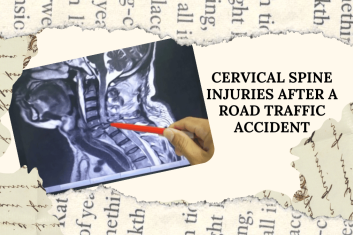
In my work as a neurosurgeon, I often meet patients on what has been one of the worst days of their lives. Neck injuries following road traffic accidents are particularly frightening, because the neck protects the spinal cord — the structure that carries signals between the brain and the rest of the body. I want to share a typical example to explain how these injuries happen, how they are assessed, and how they are treated.
The accident:
Mr. C, a 45-year-old office worker and father of two, was brought to hospital after his car was struck from the side at speed. He was wearing a seatbelt and did not lose consciousness, but immediately noticed severe neck pain. He also felt a strange tingling in his hands. At the scene, the ambulance crew placed his neck in a rigid collar. This is standard practice after any significant accident, even if the person is awake and talking. The aim is simple: protect the spine until it is proven to be safe
What is a cervical spine fracture?
The cervical spine is the upper part of the spine in the neck. It is made up of seven bones (vertebrae) that support the head and protect the spinal cord. In high-energy accidents, such as car collisions, these bones can crack or break — this is known as a cervical spine fracture. Some fractures are stable and heal well with support alone. Others are unstable and can put the spinal cord at risk. This is why neck injuries are always taken seriously, even when symptoms seem mild at first.
Assessment in hospital:
When Mr.C arrived in the emergency department, the priority was to assess his spine safely and quickly.
This involved:
- A careful neurological examination (checking strength, sensation, and reflexes)
- A CT scan of the neck to look for fractures
- An MRI scan to assess the spinal cord and ligaments
His scans showed a fracture in one of the cervical vertebrae. Fortunately, there was no severe damage to the spinal cord, but the fracture was unstable, meaning it could move and cause harm if left untreated.
Management and treatment
The type of fracture
- Whether the spine is stable
- Whether the spinal cord or nerves are affected
In Mr.C’s case, surgery was recommended. The aim of surgery is not just to “fix a bone”, but to:
- Protect the spinal cord
- Restore stability to the spine
- Allow safe healing
He underwent an operation to stabilise the neck using screws and plates. The surgery was performed through a carefully planned approach, with the goal of minimising risk and maximising long-term function. Other patients with different fracture patterns may be treated without surgery, using a collar or brace for several weeks. Every case is assessed individually.
Recovery and outlook:
After surgery, Mr.C spent a short time in hospital before beginning rehabilitation. Neck stiffness and discomfort are common early on, but these usually improve with time and physiotherapy. The most important message I give patients is this: early assessment and appropriate treatment make a huge difference to outcome. Many people with cervical spine injuries go on to make an excellent recovery and return to normal life.
Final thoughts:
Neck injuries after road traffic accidents are alarming, but modern imaging, careful assessment, and timely treatment allow us to manage them safely and effectively. If you or a loved one has been involved in a significant accident and is experiencing neck pain, numbness, or weakness, it is essential to seek urgent medical assessment. When it comes to the cervical spine, caution saves lives.

Add a Comment