For many people living with chronic pain, the most difficult part is not just the pain itself, but the way it slowly narrows life. That was certainly the case for one of my recent patients, whom I will call David.
David had lived for several years with persistent back and leg pain. He had tried what we would consider the standard NHS pathway: physiotherapy, medications, pain management programmes, and injections. Some treatments helped temporarily; others not at all. Despite best efforts from multiple teams, his pain remained intrusive, exhausting, and life-limiting.
By the time I met him in clinic, his scans showed no surgically correctable compression, and further spine surgery was unlikely to help. However, his pain had a strong neuropathic component, radiating down the leg, with burning and electric-shock sensations. This is exactly the type of pain where spinal cord stimulation (SCS) can be considered.
What Is High-Frequency Spinal Cord Stimulation?
Spinal cord stimulation is a form of neuromodulation. Instead of removing tissue or decompressing nerves, it works by delivering carefully controlled electrical signals to the spinal cord, altering how pain signals are processed by the nervous system. Traditional SCS systems produce a tingling sensation (paraesthesia). High-frequency SCS (10 kHz) is different:
- It does not cause tingling
- Pain relief is often felt without any sensory distraction
- It can be particularly effective for back and leg pain together
👉 NICE supports the use of spinal cord stimulation for adults with chronic neuropathic pain who have not responded to conventional treatments and who have undergone appropriate multidisciplinary assessment.
Who Is Considered for This Treatment?
High-frequency SCS is not a first-line treatment. It is considered only after careful evaluation. Typical indications include:
- Chronic neuropathic pain (usually present for more than 6 months)
- Persistent back and/or leg pain after previous spine surgery (often referred to as "failed back surgery syndrome")
- Neuropathic pain where further surgery is unlikely to help
- Pain that significantly affects quality of life and daily function
- Patients who have engaged with conservative and pain-management strategies
👉 Equally important are exclusion factors. Active infection, untreated psychological issues, or unrealistic expectations may make spinal cord stimulation unsuitable. Hence, patients are evaluated by a multidisciplinary team, including pain specialists, psychologists, and neurosurgeons, to ensure safe and appropriate selection.
The Trial Phase: Testing Before Committing
Before a permanent implant is considered, patients usually undergo a trial of stimulation. Temporary leads are placed, and pain relief is assessed over several days. In David's case, the trial resulted in a clear and meaningful reduction in pain, improved sleep, and greater confidence in movement. This is crucial: spinal cord stimulation is only offered long-term if the trial demonstrates worthwhile benefit.
The Operation: What Actually Happens?
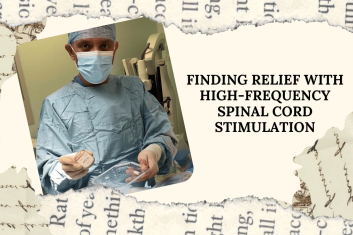
David's permanent implant was performed under general anaesthesia, which is my usual practice. It is worth noting that the procedure can also be done under local anaesthetic, depending on patient preference, anatomy, and clinical context. Both approaches are established within UK practice. During surgery:
- Thin electrical leads are placed into the epidural space of the spine
- These leads are connected to a small battery (implantable pulse generator), usually placed under the skin
- The system is tested and secured
- Incisions are closed with care to minimise infection risk
👉 The operation typically takes less than an hour. Patients are mobilised early and usually discharged after a short hospital stay.
Recovery and Early Aftercare
Recovery focuses on allowing the system to settle and heal. Wound care and infection prevention are priorities:
- Heavy lifting and excessive bending are avoided initially
- The stimulation settings are gradually adjusted by the neuromodulation team
👉 Patients are supported by specialist nurses who fine-tune the device. This is not a "fit and forget" treatment; optimisation over time is key to success.
Outcomes: What Can Patients Expect?
David's progress has been very encouraging. He reports a significant reduction in daily pain levels, as well as:
- Improved sleep and mobility
- Reduced reliance on pain medication
- Greater confidence in returning to normal activities
👉 It is important to be realistic. Spinal cord stimulation is not a cure, and it does not remove the underlying cause of pain. Instead, the aim is meaningful pain reduction:
- Improved function and quality of life
- Better participation in daily activities
👉 Published evidence suggests that high-frequency SCS can provide sustained benefit for appropriately selected patients, particularly for combined back and leg pain, though outcomes vary between individuals.
Safety and Risks
As with any surgical procedure, there are risks. These include infection, as well as:
- Lead movement or device malfunction
- Pain at the implant site
- Need for revision surgery in some cases
👉 These risks are discussed carefully during the consent process, in line with GMC guidance on shared decision-making. Patients are supported to weigh potential benefits against risks in the context of their own priorities.
Looking Forward
For patients like David, high-frequency spinal cord stimulation can be a turning point. Not because it erases pain completely, but because it gives control back — allowing people to sleep, move, and engage with life again.
Neuromodulation is a rapidly evolving field, and ongoing follow-up is essential. The best outcomes come from careful patient selection, MDT input, and realistic expectations.
👉 David continues to do well, and his progress is a reminder that even when pain has been present for years, there are still options worth exploring.
Add a Comment