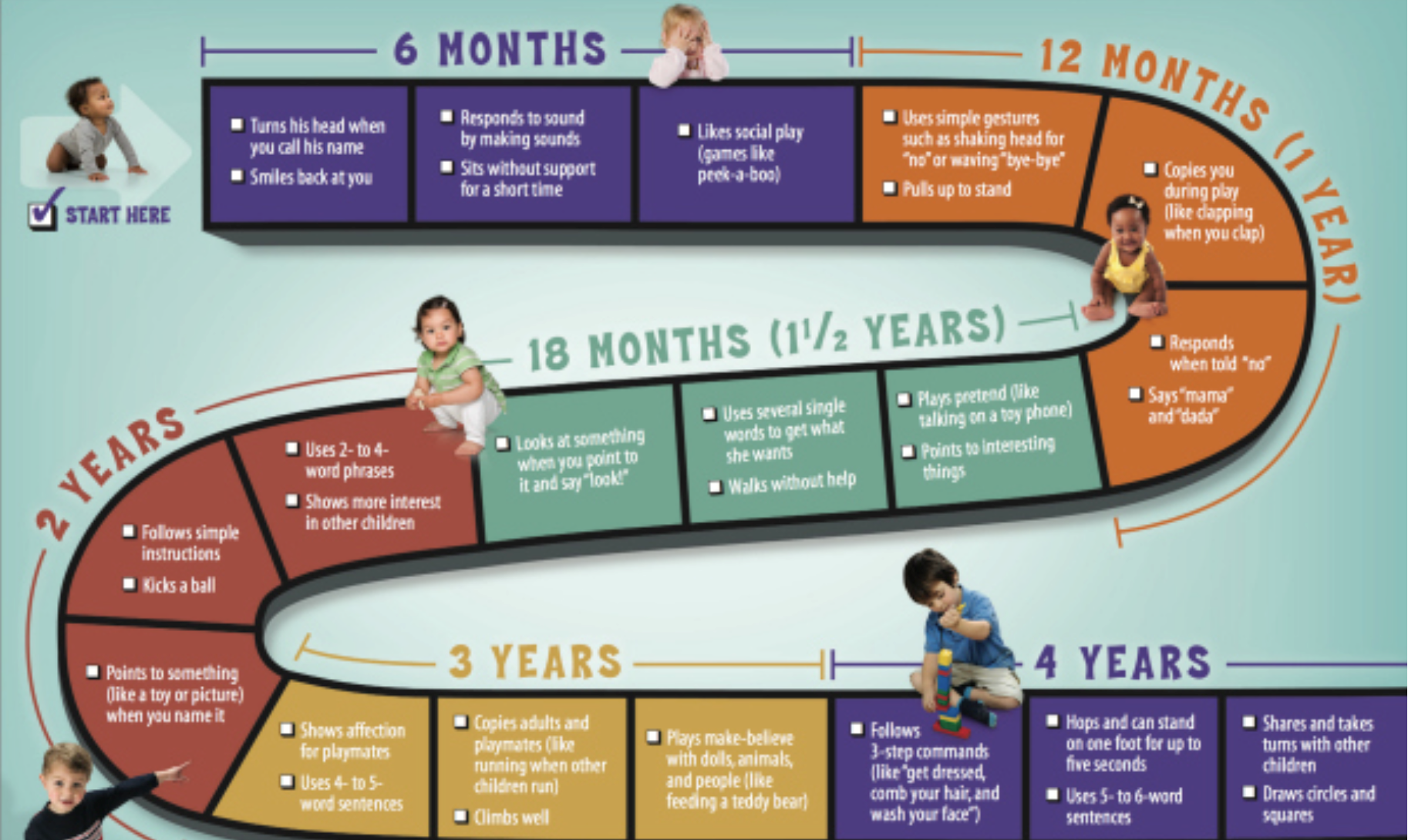
Children’s brain develops constantly, and the fastest pace of development is set between the first few years of life, more so during early infancy. There is a normal pattern in which all children develop, and we usually divide them into four domains:
- Gross motor,
- Fine motor and vision,
- Language and hearing and finally
- Social domains of milestones.
If there is a divergence in any of the milestones, whether in one domain or affecting more than or all of the domains, this divergence is a cause for concern, as it indicates that the developing brain of the child, that is responsible for these milestones, is affected and unable to generate the milestones as expected. In most countries, when we start vaccinating and immunising our infants and children, parents are given a road map on expected milestones, so that they can track them and seek help when there is a divergence. A vast majority of neurological issues seen in children often show this in attaining milestones and hence it is always better to seek medical help and evaluation. The basis for this is that, earlier the problem is recognised, the sooner the child can benefit from early intervention and reduce the gap between the affected child in comparison with other children their age.
A child with delayed walking is often brought into see the doctor for evaluation, and while that is important, many a times speech delay gets missed. Some of the commons presentations of developmental delay seen are delayed walking, which could be due to many different reasons including cerebral palsy or other disease-causing issues in the brain that interferes with the brains’ control and co-ordination of walking. Another common presentation is children who early on walk on their toes called toe walking. This could mean any number of underlying reasons such as brain white matter changes causing this, to muscular dystrophies causing muscle weakness or even the child not liking the sensation of the feet resting on the floor, which means sensory issues and could be an early warning sign for social communication disorders such as autism. Similarly, a childhood onset “squint” always needs assessment from both the ophthalmologist as well as the neurologist as there might an underlying condition causing a central visual impairment (CVI), or the squint itself might cause damage to the visual cortex and led to amblyopia, which during the early years is very treatable and amenable to rehabilitation.
Similarly other signs to watch out for is an infant developing early handedness or preference for using the right or the left hand. Infants are Bi dextrous till 18 to 24 months. Hence early handedness implies a weakness in the hand that is not used and might have an underlying brain injury or malformation that might be driving it. Despite all the various types and patterns of developmental delay, the one thing that all of them have in common is that early detection, followed by early intervention along with treatment of the underlying cause can change the lives of affected children. We can help them become well-adjusted and contributing members of society.


Add a Comment