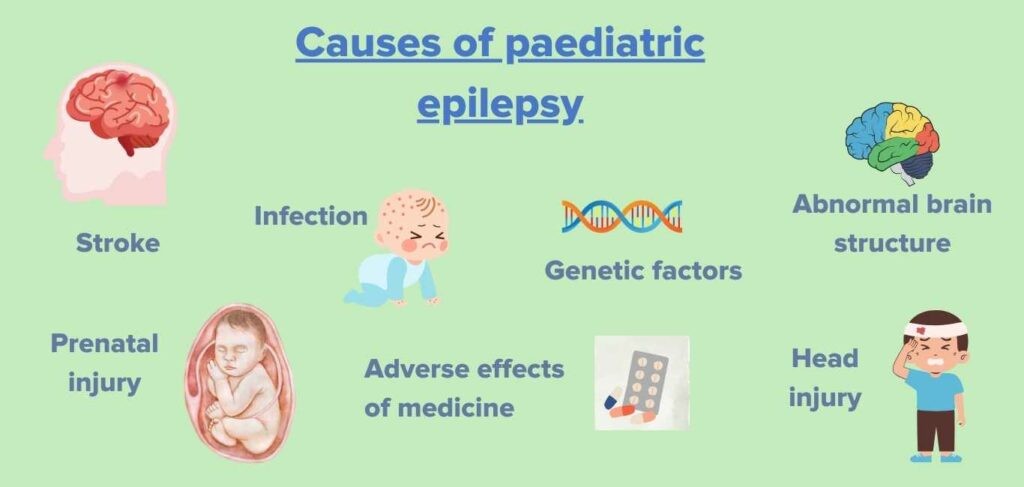
Epilepsy is a fairly common condition that is mostly treatable, affecting over 50 million people, the vast majority of whom are children. Hence obtaining a diagnosis as to what caused it and accessing the right treatment is of paramount importance as 70% are treatable. Many myths and beliefs exist regarding people having epilepsy being unable to lead normal lives. But that is often, untrue. A smaller proportion of epilepsy can become difficult, and some are called refractory epilepsy. But even here there is still a lot of hope.
The name epilepsy lends itself to many stigmas and negative connotations, due to the fear it evokes. The affected child has no control over themselves, and the events are often unpredictable. Epilepsy in children is not the same as in adults, as children’s brain is growing and developing and hence there can be negative impact from this. It is hence better managed by professionals who have experience with children and their development. The treatment of epilepsy is thus often tailormade bearing in mind the developmental consequences that the child’s brain would pay for the epilepsy versus the anti-seizure medication (ASM). Caring for children with epilepsy also goes hand in hand with ensuring that we minimise the behavioural, sleep and potential educational burden having epilepsy can leave behind if not identified and dealt with promptly and in a timely fashion. Overall, most children and families can be helped to get rid of fears and live a fulfilling and satisfying life, thus attaining the best of their potential.
There are various modalities of managing epilepsy, such as medications (known as anti-seizure medication or ASM), ketogenic diet, epilepsy surgery and vagal nerve stimulation. Managing children with epilepsy requires help from specialists, as children affected with these conditions do best with personalised care which falls into the realm of personalised medicine.
In refractory epilepsy, the goals of treatment are streamlined and can more often than not, be achieved by using other modalities of epilepsy management such as ketogenic diet, to which many children respond, especially those with genetic epilepsies. Epilepsy surgery too is a good tool in this armamentarium of treating childhood epilepsies as nearly 10% of epilepsies are amenable to surgical treatment. Vagal nerve stimulation is another tool that can bring relief and help improve quality of life, starting but not ending by reducing seizure frequency. But to summarise, there is always hope for epilepsy irrespective of whether it is simple epilepsy or complex and refractory in nature.
Add a Comment